
From Wikipedia, the free encyclopedia
| Unity Day | |
|---|---|
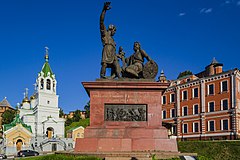
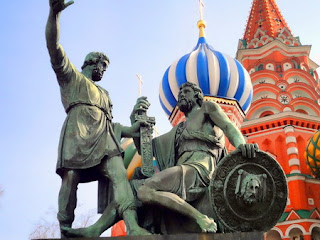
Monument to Minin and Pozharsky in Nizhny Novgorod |
|
| Official name | Day of People’s Unity |
| Observed by | Russia |
| Significance | The expelling of Polish–Lithuanian occupation forces from Moscow in November 1612, the end of the Time of Troubles and the turning point of the Polish-Russian War (1605–1618) |
| Celebrations | Flag hoisting, parades, fireworks, award ceremonies, singing patriotic songs and the national anthem, speeches by the President, entertainment and cultural programs |
| Date | 4 November |
| Next time | 4 November 2023 |
| Frequency | Annual |

Unity Day (also called Day of People’s Unity or National Unity Day; Russian: День народного единства, romanized: Denʹ narodnogo yedinstva) is a national holiday in Russia held on 4 November [O.S. 22 October]. It commemorates the popular uprising which expelled Polish–Lithuanian occupation forces from Moscow by a militia from Nizhny Novgorod in November 1612, and more generally the end of the Time of Troubles and turning point of the Polish-Russian War (1605–1618).
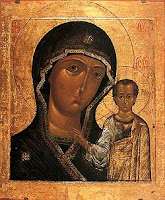
The day’s name alludes to the idea that all classes of Russian society united to preserve Russian statehood when there was neither a tsar nor a patriarch to guide them. In 1613 tsar Mikhail Romanov instituted a holiday named Day of Moscow’s Liberation from Polish Invaders.[1] It was celebrated in the Russian Empire until 1917, when it was replaced with a commemoration of the Russian Revolution. Unity Day was reinstituted by the Russian Federation in 2005, when the events of the year 1612 have been celebrated instead of those of 1917 every 4 November since. The day is also the feast day of the Russian Orthodox icon of Our Lady of Kazan.
Popularity[edit]
According to a poll in 2007, only 23 percent of Russians know the name of the holiday, up from 8 percent in 2005. 22 percent identified the holiday as the Day of Accord and Reconciliation, the name of the holiday on 7 November during the 1990s. Only 4% knew that the holiday commemorates the liberation of Moscow from Polish invaders, and in 2005, only 5%. [2]
Controversy[edit]
President Vladimir Putin reestablished the holiday in order to replace the commemoration of the October Revolution, known as the Day of Great October Socialist Revolution during Soviet period and as the Day of Accord and Conciliation in post-Soviet times,[3] which formerly took place on 7 November. His decision angered some sections of the public,[4] particularly the Communist Party, who continued with celebrations on 7 November. Putin’s predecessor, Boris Yeltsin took a limited action of changing the name of the holiday; by completely removing it, Putin initiated a controversy that continues to this very day.
Events (2005 onwards)[edit]
2005[edit]
The center of the first of the revived tradition was Nizhny Novgorod, where monument to Kuzma Minin and Dmitry Pozharsky and Vladimir Putin laid flowers. The Patriarch of Moscow and all Rus’, Alexy II was also in attendance. Activities in Moscow, included two processions and a «Russian March». Religious processions occurred with local heads of administration in attendance. Fundraisers were held in Tula, a district art festival occurred for children with disabilities, and in Kaluga, veterans and orphans were given local confectionery products.
2006[edit]
A Russian March took place, despite bans in cities such as Moscow. A ninety-minute show involving more than a thousand actors was staged in Nizhny Novgorod.
2007[edit]
1612, Vladimir Khotinenko’s historical film dramatizing the event the holiday commemorates, was released on November 1. Thirty-nine events were held in Moscow alone. Vladimir Putin laid flowers at the monument to Minin and Pozharsky and presented the Pushkin Medal at a reception in the Moscow Kremlin, «for the preservation of Russian spiritual heritage» and «promotion of the Russian language».
2008[edit]

President Dmitry Medvedev laid flowers at the monument to Minin and Pozharsky and organized a reception in the Grand Kremlin Palace. In Revolution Square, 7,000 attended a meeting devoted to the Day of National Unity. Activists of the youth movement «Nashi» called for a day of «under the covers» — 10,000 young people gathered on Vasilevsky Descent Square to sew a patchwork of thousands into the so-called «blanket the world». There was a free rock festival «Call», aimed at combating negative phenomena among young people, such as drugs.
2010[edit]
A celebration was held of the consecration of the restored gate icon of St. Nicholas Mozhaiskogo on the Nikolskaya Tower of the Moscow Kremlin, with the participation of the Patriarch of Moscow and all Rus’, Kirill I.
See also[edit]
- Public holidays in Russia
- Russian march
- 1612, a historical film dramatizing the purpose of Unity Day
- Unity Day (disambiguation), in other countries
References[edit]
- ^ «Russia Newsroom article».
- ^ «The Moscow Times».
- ^ «Trinity College Page».
- ^ For example, see Акция против дня «Народного единства»
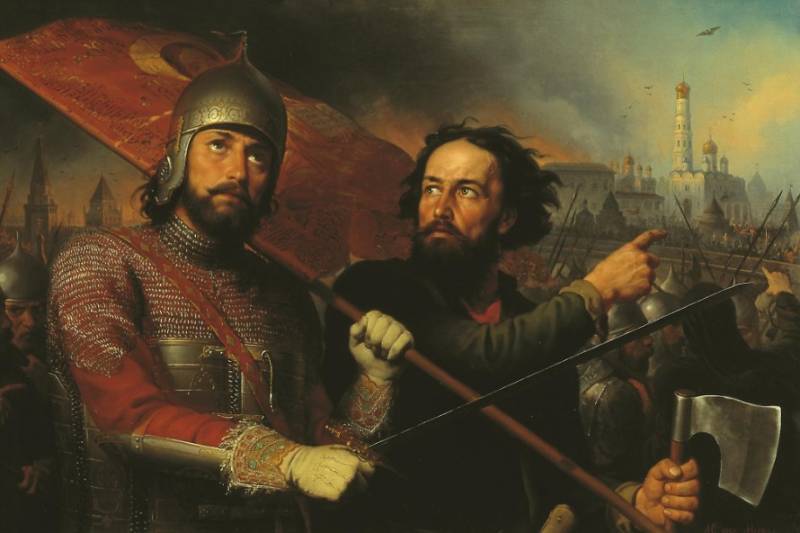
For the last 16 years, since 2004, Russia has developed a tradition to celebrate the Day of National Unity on November 4 every year. On this day, festive concerts, mass celebrations and other entertainment events are held throughout the country. Officially, November 4 is considered a non-working day, which makes our citizens very happy. Face masks and other precautions related to the coronavirus pandemic are being added to all the holiday chores this year.
The date is marked in red on the calendar. As they said before, «November 7 is the red day of the calendar», only now they celebrate not the 7th, but 4 November.
And although the holiday has been celebrated for more than a decade and a half, not everyone in our country knows what it is dedicated to.
In fact, the Day of National Unity symbolizes the solidarity and unity of the Russian people, ensuring the country’s well-being and prosperity. On this day in 1612, the people’s militia, which included representatives of different nationalities, estates and religions, liberated Moscow from the Polish invaders and defended the independence of Russia. The militiamen were led by the zemstvo headman Kuzma Minin and prince Dmitry Pozharsky, whose monument can be seen on Red Square near St. Basil’s Cathedral.
And today, as then, peace, cohesion and harmony between the citizens of Russia of all nationalities, political and religious views are able to perform a miracle and lead Russia to power and prosperity. Therefore, the editorial board of Voennoye Obozreniye calls on all Russians to congratulate each other on this great holiday — National Unity Day.

National Unity Day, which will be celebrated tomorrow on November 4, is one of the newest holidays in Russia. The public holiday has been celebrated since the Kremlin introduced it in 2005.
So tomorrow when schools, post offices, public buildings and most businesses are closed and Russians are celebrating, what is it that we celebrate?
In short: Russia is celebrating the liberation from Polish-Lithuanian invaders in 1612.
With a little bit more background: This public holiday commemorates an uprising that freed Moscow from Polish-Lithuanian occupation forces on November 4, 1612. Leaders of the uprising Kuzma Minin and Dmitry Pozharsky, became national heroes. In 1649, Russian Tsar Alexei Mikhailovich made November 4 a public holiday.
Many Russians celebrated this day until 1917. In 1918, the Bolsheviks replaced it with a new holiday, November 7, to commemorate the October Revolution of 1917.
In 2005 President Vladimir Putin reestablished the holiday from 1649 in order to replace the commemoration of the October Revolution.
So now when you know the background, I bet you wonder how to celebrate? Well, some people lay flowers to the monument of the national heroes, Kuzma Minin and Dmitry Pozharsky in front of St Basil’s Cathedral on Red Square here in Moscow. Russian Orthodox Christians attend church services. However, for many Russians, November 4 is just another day off or a substitute for a holiday that was held on November 7 in the Soviet times.
Good to know is that a political meeting will be held at Triumphalnaya ploshad, avoid it if you can.
Happy National Unity Day!
День Народного Единства, который будет отмечаться завтра, 4 ноября, – один из молодых праздников в России. Статус государственного он получил только в 2005 году.
Таким образом, завтра, когда в школах, на почтах, в общественных и коммерческих компаниях будет выходной день, и россияне будут праздновать, что же все-таки будет праздноваться?
Коротко: Россия отмечает День освобождения от польско-литовских интервентов в 1612 году.
Если заглянуть чуть глубже в историю: это государственный праздник в память событий 4 ноября 1612 года, когда народное ополчение освободило Москву от польско-литовских захватчиков. Предводители восстания Кузьма Минин и Дмитрий Пожарский стали национальными героями. В 1649 году царь Алексей Михайлович объявил 4 ноября государственным праздником.
Многие россияне отмечали этот день до 1917 года. В 1918 большевики провозгласили новый праздник – 7 ноября в часть годовщины Октябрьской революции 1917 года.
В 2005 году президент Владимир Путин вернул традицию праздника 1649 года взамен годовщины Октябрьской революции.
Теперь, когда Вы понимаете значение праздника, уверена, Вы поймете, как его празднуют. Некоторые несут цветы к памятнику народных героев Кузьме Минину и Дмитрию Пожарскому, напротив Собора Василия Блаженного на Красной площади. Православная церковь проводит памятную службу. Однако, для многих россиян, 4 ноября – это всего лишь дополнительный выходной, который в советское время приходился на 7 ноября.
Также следует знать, что в этот день пройдет политический митинг на Триумфальной площади, поэтому это место лучше избегать.
Счастливого Вам Дня Народного Единства!
4 November holiday — the Day of People’s Unity
So far, many more such people in Russia, who knows, that the date for the 4 November? This holiday is devoted to the events 1612 of the year. When two people Minin and Pozharsky led the militia and with the help of liberated Moscow from the enemies. But what else does this date 4 November for Russians?

The reason for the creation of a holiday 4 November Russia
Earlier in the Soviet times, there was a feast 7 November. October Revolution Day was celebrated always with the scale of the whole country. After the collapse of the USSR the holiday by inertia continued to celebrate as this date remained the official holiday on the calendar. WITH 1996 year holiday called the Day of Accord and Reconciliation. AT 2004 by order of the President of Russia introduced a new National Unity Day holiday.

Why exactly 4 November?
The decision to choose the name and date of the holiday was made at the highest level. Russian Patriarch offered to make the National Unity Day holiday the initiated events Time of Troubles. At the time, Moscow was in a state of siege. With Kozma Minin and Prince Dmitry Pozharsky organized militia, and with its help liberated Moscow from strangers.
4 November 1649 , became an official state holiday, and to 1917 year, this date was special for all Russian people.

National Unity Day
meaning of the holiday is, that Russia is a multinational country and to solve difficult situations all must unite. This date is to forget about the contradictions and disagreements, that cause conflicts. 4 November is a holiday, which makes it clear to the people, that we should be kind to each other, because all the nations living on the territory of our country are closely interrelated.
To ensure that all have felt good attitude to each other a variety of events across the country. Themed presentation, festivities, Exhibition of Folk Art, concerts and culminates with fireworks.
This year 4 November falls on a day off Sunday. Therefore, on Monday 5 November most of the Russians will be able to relax more and Monday.
Congratulations!
Unity Day (Russia) — National Unity Day or Day of People’s Unity
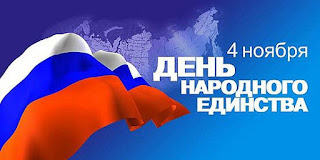 День народного единства отмечается в нашей стране ежегодно 4 ноября, начиная с 2005 года. Этот праздник установлен в честь важного события в истории России — освобождения Москвы от польских интервентов в 1612 году, и приурочен к Дню Казанской иконы Божией Матери.
Источник: http://www.calend.ru/holidays/0/0/94/
© Calend.ru
День народного единства в России – это государственный праздник, который ежегодно отмечается 4 ноября. Дата эта была выбрана отнюдь не случайно. Несмотря на свою кажущуюся молодость, исторически День народного единства связан с далекими событиями начала 17-го века, когда в 1612 году Москва, наконец-то, была освобождена от польских интервентов. Именно 4 ноября (22 октября по старому стилю) народное ополчение под предводительством нижегородского воеводы Козьмы Минина и князя Дмитрия Пожарского успешно штурмовало Китай-Город, вынудив командование польской армии подписать немедленную капитуляцию. Первым в освобожденный город вступил Дмитрий Пожарский со священной иконой Казанской Божьей Матери в руках. Именно она, как свято верили на Руси, и помогла защитить Государство Московское от польского нашествия.
В 1625 году Дмитрий Пожарский в честь Казанской иконы Божьей Матери и победы над поляками на собственные средства возводит на Красной Площади деревянную церковь. Каменный Казанский Собор появился только в 1635 году, он был построен на месте сгоревшей во время пожара Москвы деревянной церкви. В 1649 году царь Алексей Михайлович издал указ, что 4 ноября – это государственный праздник, день Казанской иконы Божьей матери. Праздник отмечали в России вплоть до Революции 1917 года.
День народного единства России в наше время
В честь дня Казанской иконы Божьей матери и славной победы русской армии над польскими интервентами, президент РФ В. Путин в 2005 году подписал указ об учреждении в России 4 ноября нового государственного праздника, Дня народного единства. А сама идея отмечать праздник именно в этот день принадлежит Межрелигиозному совету России. Поэтому День народного единства является не только светским, но и межрелигиозным праздником, который отмечают все жители страны и представители разных религий и конфессий.
Традиции Дня народного единства России
Было бы ошибкой считать, что День народного единства в России заменил собой всеми любимое 7 ноября. Но, как и 7-го ноября, в этот торжественный день проходят концерты, демонстрации и массовые шествия, благотворительные акции. Также в этот день обязательно устраивается торжественный правительственный прием в Большом Кремлевском зале, на котором награждаются люди, внесшие большой вклад в развитие и процветание России. Вечером 4 ноября стало доброй традицией устраивать визуальные шоу и фейерверки, праздничные гуляния и концерты.
Сейчас в России День народного единства становится все популярней. Ведь гордость за свою Родину, за ее прошлое и настоящее, и вера в ее счастливое будущее – это то, что неизменно объединяет людей и делает их единым народом.
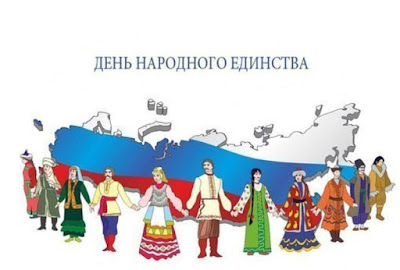
Unity Day calls for tolerance between various ethnic and religious groups in the Russian Federation. However, the holiday’s purpose can at times be misunderstood. Ultranationalists may organize demonstrations on this day, and many others see it as a day off.
What Do People Do?
Russians may celebrate Unity Day in many ways. Some may lay flowers to the monuments of national heroes, Kuzma Minin and Dmitry Pozharsky, who led a popular uprising that freed Moscow from occupation forces on November 4, 1612.
Russian Orthodox Christians may attend a church service to honor Our Lady of Kazan, one of the most important Russian Orthodox icons. November 4 is this icon’s feast day. The church service usually ends with a procession. Many politicians, public and religious figures stress in televised addresses the need for unity of all ethnic and religious groups in the Russian Federation. Concerts and exhibitions take place on this day.
However, for many Russians, November 4 is just another day off or a substitute for a holiday that was held on November 7 in the Soviet times. Yet others may see it as a call for unity of ethnic Russians against non-Russians. Some ultranationalists and neo-Nazis may have demonstrations on this day.
Public Life
November 4 is a public holiday in the Russian Federation. Schools, post offices, public buildings and most businesses are closed on this day. Public transport schedules may vary due to religious processions and political demonstrations. If November 4 falls on a weekend, the public holiday usually moves to the following Monday.
 Background
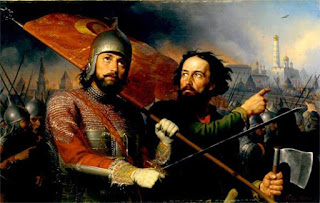
Unity Day commemorates a Russian popular uprising that freed Moscow from Polish-Lithuanian occupation forces on November 4, 1612. Leaders of the uprising, Kuzma Minin and Dmitry Pozharsky, became national heroes. In 1649, Russian Tsar Alexei Mikhailovich made November 4 (October 22 of the then used Julian calendar) a public holiday. Many Russians celebrated this day until 1917. In 1918, the Bolsheviks replaced it with a new holiday, November 7, to commemorate the Revolution of 1917. November 4 once again became a public holiday in 2005, when the Russian Parliament removed November 7 from the list of official public holidays and introduced Unity Day.
Symbols
Monuments dedicated to Minin and Pozharsky, Our Lady of Kazan icon and the Russian flag are the most common symbols of Unity Day in Russia.
Back to archive
So… What’s 4th November?
Internationally, it is of little significance, but in Russia it is a national holiday.
The Russians commemorate the popular uprising which expelled Polish-Lithuanian occupational forces from Moscow in November 1612, and it was also during this time that Time of Troubles ended and it was also the turning point of the Polish-Muscovite War (1605-1618). Unity Day (also called Day of People’s Unity or National Unity Day; Russia: День народного единства, Denʹ narodnava yedinstva) is a national holiday in Russia held on November 4 (October 22, Old style).

The name of the national holiday alludes to the ideology that all classes of Russian society should remain united to preserve Russian statehood when there is neither a tsar nor a patriarch to guide them. In 1613, tsar Mikhail Romanov instituted a holiday named Day of Moscow’s Liberation from Polish Invaders. It was celebrated until 1917, when it was replaced with the commemoration of the Russian Revolution. Unity Day was reinstituted by the Russian Federation in 2005, when the events of the year 1612 have been celebrated instead of those of 1917 every November 4 since.
Monuments devoted to Minin and Pozharsky, Our Lady of Kazan icon and the Russian flag are the most common symbols of Unity Day in Russia.
As the holiday is also the feast of the Russian Orthodox icon of Our Lady of Kazan, Russian Orthodox Christians usually attend a church service to honour and celebrate Our Lady of Kazan, one of the most prominent Russian Orthodox icons. The service usually concludes with a procession. Many politicians, public and religious figures will utilise this occasion to stress the need for unity of all ethnic and religious groups in their respective televised addresses. Concerts and exhibitions are also common on this holiday.
To summarise, Unity Day is a reminder of existing tolerance between various ethnic and religious groups in Russia. However, the holiday’s purpose has been forgotten at times. Ultranationalists may organise demonstrations on this day, and many others see it as a day off. However, all is not lost as the true purpose behind the holiday has trickled forth to this generation. As long as the tradition to celebrate Unity Day in Russia remains, it will always serve as a reminder of what tolerance and triumph can help a state achieve in trying times.
Author: Arissa Vikander
|
Английский язык для 7-го класса |
|
|
|
|
| Предмет: | Английский язык |
| Класс: | 7 класс |
| Автор учебника: | Афанасьева О.В. Михеева И.В. |
| Год издания: | 2016 |
| Издательство: | |
| Кол-во заданий: | |
| Кол-во упражнений: | 541 |
|
Мы в социальных сетях |
|
|
Телеграм • ВКонтакте |

Описание и ответ на задание[править | править код]
A. Make sure that you know the Russian national holidays and festivals and match the names of the holidays, the dates and their descriptions. (снизу дан правильный ответ)

|
|
- New Year Holiday — This is the day when gifts are given by Ded Moroz (Father Frost), decorating New Year trees and joyful parties.
- Orthodox Christmas — This day is celebrated with all-night services in church.
- Maslenitsa — This festival marks the end of winter and the beginning of spring and Lent. During this festival people make pancakes, sing traditional songs and dance traditional dances or go visiting each other.
- The Motherland Defender’s Day — This holiday is devoted to soldiers and officers and everyone else who ever defended the country or is in the Army. These people are sent special cards and given presents. Concerts are also given in their honour.
- International Women’s Day — This is a day off. Probably the busiest people on this day are flower sellers. Men and young boys try to please their mothers, sisters and friends by giving them presents, flowers and chocolates.
- Easter (Paskha) — It is the main Orthodox festival. People colour eggs and enjoy traditional Russian dishes. Churches hold special services on this day.
- Day of Spring and Labour — We celebrate the day when Russia became an independent country, the Russian Federation, after the breakup of the Soviet Union in 1991. This is an official holiday.
- Victory Day — It celebrates the end of the Soviet Union’s participation in World War II in Europe. Parades and processions of veterans are held in big cities. People lay flowers in Moscow’s Park Pobedy and at the Tomb of the Unknown Soldier.
- Russia Day — On this spring day people prefer to go out into the streets and take part in all kinds of outdoor activities.
- Day of People’s Unity — This is a new holiday in Russia to celebrate the unity of the nation. Now this day is marked by marches and demonstrations in central parts of Russian cities and towns. For many people it’s just another day off. This day was chosen as four centuries ago at the beginning of November the Polish invadors were driven out of Moscow by Russian troops under Citizen Minin and Prince Pozharsky.
B. Speak about one of the holidays in greater detail. Ask your parents for more information, if necessary. To make your story more logical write its outline first.
Maslenitsa is one of the most popular and cheerful religious holidays in Russia. It originated from pagan times before Russia was converted to Christianity. At first, this holiday was a symbol of the spring solstice, but nowadays it is considered a Christian holiday which goes right before the Great Lent. During Maslenitsa people enjoy almost any food, except meat. Usually Maslenitsa lasts for seven days and on the last day of this holiday people burn a doll which is made of branches and straw and dressed in bright clothes. This doll is called “Maslenitsa” and it symbolizes the cold and severe winter. By burning “Maslenitsa” people say goodbye to winter and greet a warm spring.[1]
Перевод задания[править | править код]
A. Убедитесь, что вы знаете русские национальные праздники и фестивали, сопоставьте их названия, описание и с их датами.
|
|
- Новый год — это день, когда Дед Мороз дарит подарки, когда украшают новогодние ёлки и делают весёлые вечеринки.
- Православное Рождество — этот день отмечается ночными службами в церквях.
- Масленица — этот праздник знаменует конец зимы и начало весны и Великого поста. Во время этого праздника люди делают блины, поют народные песни и танцуют национальные танцы или ходят друг к другу в гости.
- День защитника Отечества — Этот праздник посвящен солдатам и офицерам, а также всем, кто когда-либо защищал страну или служил в армии. Мужчинам отправляют специальные открытки и дарят подарки. Проводятся многочисленные концерты в их честь.
- Международный женский день — это выходной день. Вероятно, самые занятые люди в этот день — продавцы цветов. Мужчины и юноши стараются угодить мамам, сестрам и подругам, даря им подарки, цветы и шоколад.
- Пасха — это главный православный праздник. Люди красят яйца и наслаждаются традиционными русскими блюдами. Церкви проводят специальные службы в этот день.
- День весны и труда. — Мы отмечаем день, когда Россия стала независимой страной (Россия всегда была независимой страной и до распада Советского Союза), Российской Федерацией, после распада Советского Союза в 1991 году. Это официальный праздник.
- День Победы — Празднование окончания участия Советского Союза во Второй мировой войне в Европе. Проводятся парады и шествия ветеранов в крупных городах. Люди возлагают цветы в московском парке Победы и у Могилы Неизвестного солдата.
- День России — в этот весенний день люди предпочитают выходить на улицы и принимать участие во всех видах активного отдыха.
- День народного единства — это новый праздник в России, чтобы отпраздновать единство нации. Теперь этот день отмечен гуляниями и демонстрациями в центральных частях городов России. Для многих это просто еще один выходной. Этот день был выбран так, как четыре века назад в начале ноября польские захватчики были изгнаны из Москвы русскими войсками под командованием Минина и князя Пожарского.
Б. Расскажите об одном из праздников подробнее. Спросите своих родителей для получения дополнительной информации, если это необходимо. Чтобы сделать вашу историю более логичной, сначала напишите ее схему.
Масленица — один из самых популярных и веселых религиозных праздников в России. Он возник с языческих времен до обращения Руси в христианство. Сначала этот праздник был символом весеннего солнцестояния, но сейчас он считается христианским праздником, который отмечается прямо перед Великим постом. Во время масленицы люди готовят много разной еды, кроме мяса. Обычно Масленица длится семь дней, и в последний день этого праздника люди сжигают куклу, которая сделана из веток и соломы и одета в яркие одежды. Эта кукла называется «Масленица» и символизирует холодную и суровую зиму. Сжигая «Масленицу», люди прощаются с зимой и встречают теплую весну.
Другие задачи учебника[править | править код]
- ↑ О масленнице на сайте Википедии

-
сочинение на английском день народного единства БЫСТРО!!!
-
Предмет:
Английский язык
-
Автор:
marleymckinney296
-
Создано:
3 года назад
Ответы
Знаешь ответ? Добавь его сюда!
-
-
Химия14 минут назад
Как читаются химические вещества?
-
Литература14 минут назад
Напишите пожалуйста сюжет «Дамма с собачкой» А.П.Чехов
-
Алгебра24 минут назад
Помогите решить номер 3 и 4 умоляю 8 класс алгебра
-
Физика29 минут назад
Помогите с задачей по физике. тут легко.
-
Окружающий мир35 минут назад
Охарактеризуйте реформи Солона. Як вони вплинули на зміцнення афінської демократії?
Информация
Посетители, находящиеся в группе Гости, не могут оставлять комментарии к данной публикации.
Вы не можете общаться в чате, вы забанены.
Чтобы общаться в чате подтвердите вашу почту
Отправить письмо повторно
Вопросы без ответа
-
География2 часа назад
Мероприятия по рациональному использованию почвенных ресурсов и их улучшению.
-
Математика3 часа назад
Составьте уравнение параболы с вершинной в начале координат, если её фокус находится в точке F(0;2). Постройте параболу
Топ пользователей
-

Fedoseewa27
23365
-
Sofka
7419
-
zlatikaziatik
5908
-
vov4ik329
5111
-
DobriyChelovek
4625
-
olpopovich
3461
-
TheDenty
3258
-
dobriykaban
2540
-
Udachnick
1867
-
ViktoriaBell0
1810



Войти через Google
или
Запомнить меня
Забыли пароль?
У меня нет аккаунта, я хочу Зарегистрироваться
Выберите язык и регион
Русский
Россия
English
United States

How much to ban the user?
1 hour
1 day