
История создания, анализ и интерпретации главного творения Фрэнсиса Форда Копполы.
«Апокалипсис сегодня» — монументальное произведение, получившее статус культового еще до выхода в прокат. Фильм стал настоящей сенсацией в Голливуде: уже на момент релиза он был одним из самых дорогих и ожидаемых проектов в истории мирового кино.
С тех пор картина Фрэнсиса Форда Копполы успела добиться впечатляющих результатов: «Золотая пальмовая ветвь» на Каннском кинофестивале, восемь номинаций на «Оскар» (из которых фильм взял две: за операторскую работу и лучший звук), успешные кассовые сборы, великолепные отзывы от кинокритиков и профессиональных киноделов (14 место в списке лучших фильмов от издания Sight & Sound и 30 место в списке 100 лучших американских фильмов от Американского киноинститута) и безоговорочная любовь зрителей по всему миру (51 место в рейтинге лучших фильмов по версии пользователей IMDb и 170 место в рейтинге лучших фильмов по версии пользователей Кинопоиска).
В данном тексте я попытаюсь дать цельный и исчерпывающий разбор этого фильма, включающий в себя анализ идей и мыслей, заложенных в сценарии, а также закулисную историю создания «Апокалипсиса сегодня». Данный текст писался на основе режиссёрской, так называемой Redux-версии картины, а также документального фильма Hearts of Darkness: A Filmmaker’s Apocalypse 1991 года выпуска. Помимо этого, в тексте используются мои собственные мысли и интерпретации, которые могут не совпадать с вашим видением фильма.
Этот анализ будет большим, так что советую добавить его в закладки. В тексте содержатся серьёзные спойлеры — перед прочтением лучше всё же ознакомиться с фильмом.
Вы предупреждены.
Фрэнсис Форд Коппола: краткий экскурс
Этот человек без всякого сомнения является одним из самых прославленных и значимых постановщиков в истории кино. Коппола держит звание общепризнанного гения: ни один список лучших режиссёров в истории мирового кино не обходится без его имени.
Первые две части «Крёстного отца» до сих пор остаются на вершине мирового кино — и оригинал, и сиквел взяли «Оскар» в категории «Лучший фильм», и удерживают второе и третье место в рейтинге лучших фильмов по версии пользователей IMDb, уступая лишь «Побегу из Шоушенка».
Доходит до смешного — в 1975 году Коппола соревновался с самим собой в номинациях «Лучший фильм» и «Лучший оригинальный сценарий», выпустив годом ранее «Крёстного отца 2» и «Разговор». О серьёзной конкуренции, впрочем, тогда не шло и речи. «Крёстный отец 2» стал настоящей сенсацией среди публики и заслуженно получил шесть наград Киноакадемии, обеспечив Копполе первую (и единственную) статуэтку за «Лучшего режиссёра».
Но, кажется, Копполе в любом случае светил успех, если и не в качестве постановщика, то за написанные им сценарии. Он занимался этим с 23 лет, и впоследствии практически всегда писал сюжеты для своих фильмов самостоятельно. Лучше всего ему удавалось перерабатывать историю на основе чужого сценария: трилогия «Крёстного отца» была создана в тандеме с Марио Пьюзо, автором оригинального произведения, а «Апокалипсис сегодня» был создан по сильно переписанному сценарию Джона Милиуса, который изначально задумывал фильм как сатирическое произведение.
Вплотную занявшись продюсированием после выхода «Крёстного отца», Коппола стал одним из самых влиятельных режиссёров в Голливуде. Молодой и талантливый, он мог рассчитывать на поддержку любого проекта, который ему только захочется сделать. В паре с Джорджем Лукасом, который в итоге станет создателем «Звёздных войн», Коппола ещё в 1963 году создал киностудию American Zoetrope, в которой молодые и талантливые режиссёры могли рассчитывать на поддержку в производстве своих картин.
Продюсерам в 1969 году были предложены два проекта: «Крёстный отец» и «Апокалипсис сегодня». Оба фильма рассматривались как малобюджетные фильмы с минимальным риском убытков, но если «Крёстный отец» в итоге получил финансовую поддержку, то «Апокалипсис» был временно отвергнут по причине своей политизированности и излишней рискованности. Тогда война во Вьетнаме всё ещё продолжалась, а потому фильм о таком конфликте выпускать было опасно. Правительство США безуспешно пыталось снять напряжение, царившее в американском обществе, путём прямой пропаганды и выпуска специализированных фильмов и документальных картин. Из-за этого фильм отложили в долгий ящик.
Коппола вернулся к «Апокалипсису сегодня» в 1973 году, после кассового успеха «Американских граффити» от Джорджа Лукаса. Изначально фильм предложили поставить Джону Милиусу, сценаристу картины, но тот отказался, предложив передать дела Лукасу. Тот с энтузиазмом взялся за проект, но и он вынужден был отказаться от фильма в пользу разработки «Звёздных войн».
В 1974 году, уже после выхода «Крёстного отца 2», Коппола решил взять «Апокалипсис сегодня» в свои руки и сделать его по-своему.
Идея создания
Фильм, как известно многим, основан на повести Джозефа Конрада «Сердце тьмы», вышедшей в 1902 году. В ней рассказывается о путешествии моряка Чарльза Марлоу в самую глубь Центральной Африки с целью вернуть обратно Курца, агента бельгийской компании по продаже слоновой кости. «Апокалипсис сегодня» использует повесть Конрада как сюжетную основу, но в то же время он является самостоятельным произведением: знание первоисточника необязательно для понимания фильма.
Проекта не случилось бы без его идейного вдохновителя, сценариста Джона Милиуса, написавшего первый вариант сценария в 1969 году. О том, как у него возникла идея фильма о Вьетнаме, он рассказал в своем эссе, опубликованном в 2017 году.
Истоки сценария идут с тех времён, когда я учился в киношколе Университета Южной Калифорнии, вместе с Джорджем Лукасом. Мы тогда ещё не были знакомы с Фрэнсисом [Фордом Копполой]. Мы с Джорджем были двумя заводилами, создавали фильмы и получали за них награды. Джордж был прилежным парнем, я — плохим. Жил в своей машине. Был сёрфингистом-анархистом, полным, непревзойдённым бунтовщиком и антиинтеллектуалом в самом плохом смысле слова. Каждый день мне угрожали отчислением. У меня всегда были проблемы с властями.
Вьетнамская война нависала над нашими головами. Я был единственным студентом, который хотел уйти на передовую. Все остальные либо думали о переезде в Канаду, либо стремились жениться. Я осознал, что уйду во Вьетнам рано или поздно, поэтому записался в морской десант. Но меня туда не взяли из-за астмы, и пришлось осознавать свою жизнь заново, так как я не планировал жить больше двадцати шести лет — в то время никто не планировал жить долго. Тогда я подумал о том, что скорее всего моим наследием этому миру будет лишь дымящаяся дыра в земле.
[…]
В Университете Южной Калифорнии у меня был учитель по сценарному мастерству, мистер Ирвин Блэкер […]. Он рассказывал нам чудные истории, включая ту, в которой многие режиссёры, среди которых был Орсон Уэллс (режиссёр «Гражданина Кейна», прим. автора), пытались экранизировать «Сердце тьмы» Джозефа Конрада, но у них ничего не выходило. Сам я прочёл эту книгу в семнадцать, и полюбил её.
Тогда я понял: я собираюсь не только создать фильм о Вьетнамской войне, но и использовать «Сердце тьмы» в качестве аллегории […]. У меня была амбициозная идея отправиться во Вьетнам и снимать фильм там.
Джон Милиус
, сценарист
Джон Милиус писал свой сценарий ещё и как своеобразный ответ на вышедший в 1968 году фильм «Зелёные береты» с Джоном Уэйном в главной роли. Эта картина создавалась при поддержке Министерства обороны США и, по сути, являлась откровенной пропагандой американского правительства.
В картине американские военные были показаны исключительно в положительном свете, идея войны во Вьетнаме преподносилась как что-то правильное и само собой разумеющееся. Выход фильма породил протесты граждан, считавших Вьетнамский конфликт абсолютно бессмысленной кровопролитной бойней. Вдохновившись такой реакцией, Милиус понял, что обществу необходим фильм с другим взглядом на Вьетнамскую войну, в котором отобразилась бы её бессмысленная жестокость и абсурдность.
Милиус также находил источники вдохновения для сценария в окружающей действительности. Однажды он увидел у одного из хиппи значок с надписью «Nirvana Now» и символом мира. Вскоре Милиус купил такой же значок и превратил символ мира в самолет B-52, пририсовав ему хвост и крылья. Надпись, соответственно, изменилась с «Nirvana Now» на «Apocalypse Now».
Так на свет и появилось название фильма, а рисунок Милиус поместил в одну из раскадровок. Закончив сценарий, Милиус отдал его на рассмотрение Джорджу Лукасу, который уже отнёс работу в American Zoetrope. За проект Джон Милиус предварительно получил пятнадцать тысяч долларов, а в 1979 году, в год выхода картины, — ещё пятнадцать.
Сценарий фильма предполагал, что это будет экспериментальный проект среднего уровня. Милиус хотел снимать его на недорогую 16-миллиметровую камеру в джунглях прямо посреди боевых действий, придавая фильму оттенок псевдодокументалистики. Образы персонажей в первоначальном варианте сценария отдавали пафосом: у Курца было большое количество пространных монологов о необходимости войны, Уиллард в концовке фильма присоединялся к нему, чтобы вместе отбиваться от вертолётной атаки американской армии, в истории было много абсурда и чёрного юмора.
Джордж Лукас видел фильм как сатиру на военные картины и собирался следовать первоначальному варианту сценария. Но, проработав над ним некоторое время, Лукас вовремя понял, что проект его интересует не в такой степени, как создание собственного фильма. Это вызвало конфликт между ним и Копполой, считавшим, что тот поступает бездумно. В итоге Лукас покинул режиссёрское кресло.
Когда режиссёром стал Фрэнсис Форд Коппола, «Апокалипсис сегодня» в одночасье превратился в самый ожидаемый фильм у зрителей и профессиональных медиа. Обещания были громкими: Коппола заявил о том, что фильм полностью финансируется им самим на деньги, заработанные с двух частей «Крёстного отца». Планировались 16 недель съёмок в Филлипинах, участие большого количества массовки и невиданные в те времена боевые сцены. «Апокалипсис сегодня» стал картиной мечты для многих киноманов: масштабный военный фильм, не являющийся бездумной пропагандой, от прославленного режиссёра «Крёстного отца», с большим бюджетом и съёмками на натуре.
Нетрудно понять, почему возник такой градус ожидания. Фрэнсис Форд Коппола в свои 35 лет уже стал именитым постановщиком, получившим почти все высшие награды в мире кино за двух «Крёстных отцов». Помимо признания в США, Коппола считался настоящим гигантом и в Европе: «Разговор» принёс ему «Золотую пальмовую ветвь», высшую награду Каннского кинофестиваля. Коппола уже не мог снимать простое кино. Его фильм должен был стать масштабным событием, высказыванием гения мирового кино на тему, которую ещё никто не исследовал в полной мере.
Однако, как и любой безумный проект, «Апокалипсис сегодня» столкнулся с массой проблем. Реализовать его оказалось гораздо сложнее, чем казалось Копполе изначально. Запланированные 16 недель съёмок превратились в долгие месяцы производственного ада и настоящего кошмара для любого постановщика.
Но Коппола не считался бы великим режиссёром, если бы не смог довести такую громоздкую идею до конца.
Процесс съёмок и трудности производства
С приходом Копполы значительно изменился и сценарий фильма. Картина из сатиры со значительным уклоном в абсурдный юмор превратилась в серьёзное, мрачное полотно, с успехом показывающее как тёмные уголки человеческой души, так и ужасы войны, до неузнаваемости меняющие всех участников конфликта.
Тем не менее, Коппола оставил в сценарии элементы абсурда: полковник Килгор, больше всего на свете любящий запах напалма по утрам и сёрфинг, девушки из Playboy, сцену с нападением тигра и так далее. Но постановщик не знал, что делать с концовкой фильма, которая ему пришлась не по нраву — он считал бредом союз Уилларда и Курца, которые шли против своих бывших союзников. Решив, что разберётся с этим попозже, Коппола начал пре-продакшн картины, а затем отправился на Филиппины для старта съёмок.
Большим источником вдохновения для режиссёра послужила картина Вернера Херцога «Агирре, гнев божий» 1972 года выпуска. История о путешествии испанских конкистадоров в глубь южноамериканских джунглей в поисках мифического Эльдорадо очень понравилась Копполе — он посчитал, что это великолепное полотно о проблематике человечности и уходе человека в своё звериное начало. Подобного он добивался для своего проекта, считая, что «Апокалипсис сегодня» должен стать для зрителей сюрреалистичным и незабываемым путешествием, но в больших масштабах.
Съёмки фильма стартовали в марте 1976 года. Коппола заручился поддержкой правительства Филлипин, пообещавшего своё содействие и предоставившего военную технику для боевых сцен. Режиссёр руководил процессом постройки декораций и подбирал места для съёмок, твёрдо намереваясь сделать фильм максимально реалистичным.
Производство шло по плану: было снято несколько начальных сцен, но при просмотре материала Коппола понял, что фильм идёт в неправильном направлении. Дело, однако, было не в постановке или технических деталях. Режиссёра категорически не устраивал Харви Кейтель, которого он изначально взял на роль капитана Уилларда.
Копполе пришлось уволить Кейтеля и прервать съёмки на время. Позднее он признавался, что решение было правильным: производство зашло не так далеко. Однако затем режиссёру пришлось объяснять команде, что сложные сцены тоже необходимо переснимать заново, из-за чего он получил массу критики.
Мартин Шин, в спешке прилетевший в Филиппины, устроил Копполу. Съёмки продолжились в обычном режиме, пока не произошел серьёзный и непредвиденный казус: в Филиппинах начался преждевременный сезон дождей, под который и попала съёмочная команда из-за отстающего графика.
Дожди смыли часть декораций, из-за чего производство фильма пришлось прервать. Съёмочная команда решила переждать непогоду в отеле, а у Копполы появилось время для полировки сценария и переписывания некоторых сцен. Задержка составила около двух месяцев. Однако во время дождей была снята одна сцена, не вошедшая в театральную версию и появившаяся лишь в расширенном Redux-издании.
Также среди команды царило постоянное напряжение из-за сложного процесса съемок. Режиссёр как мог старался поддерживать своих людей: устраивал торжественные ужины, вечеринки, обеспечивал постоянный надзор врачей и технического персонала. Но это помогало лишь отчасти.
Бытуют слухи о том, что среди людей, участвовавших в производстве, распространялись наркотики, а некоторые сцены были сняты под галлюциногенным воздействием. Совершенно точно алкоголем злоупотреблял Мартин Шин, который позже получил инфаркт прямо во время съёмок — из-за этого актёр не мог работать на протяжении шести недель. Широко известна фраза, которую Фрэнсис Форд Коппола сказал продюсерам фильма, считавшим, что «Апокалипсис сегодня» обречён из-за возможного риска смерти актёра.
Даже если он [Мартин Шин] умрёт, он не умрёт, пока я так не скажу.
Фрэнсис Форд Коппола
, режиссёр
Настоящей голливудской легендой стала история с Марлоном Брандо, произошедшая на съёмках. Режиссёр заверил оскароносного актёра в том, что тому не придется потратить много дней на снятие материала, так как его участие требуется лишь в концовке.
Брандо согласился на участие в проекте, получив предварительный гонорар в несколько миллионов долларов. Взамен Коппола попросил актёра скинуть лишний вес, чтобы соответствовать образу Курца из повести Джозефа Конрада, и прочитать «Сердце тьмы». В итоге всё обернулось кошмаром: Брандо прилетел на Филиппины ещё более располневшим, и, хотя этого было бы достаточно — он не прочёл не только «Сердце тьмы», но даже сценарий фильма.
Копполе пришлось в спешке читать ему повесть и кратко объяснять суть персонажа Курца. Брандо, в своей привычной манере, сделал всё по-своему — большая часть монологов полковника была импровизированной. Чтобы скрыть полноту актёра, оператору Витторио Стораро пришлось снимать его в полутьме.
Из-за множества проблем Фрэнсис Форд Коппола сильно похудел и пережил несколько нервных срывов. Кроме того, он заложил собственный дом для того, чтобы продолжить съёмки фильма. В случае кассовой неудачи Коппола мог стать банкротом и лишиться всех сбережений. Из-за этого производство фильма стало для него собственной миссией, которую он должен был завершить успешно. Режиссёр мог не спать днями из-за того, что ночами занимался сценарием, который его всё ещё не устраивал. В конце концов он решил кардинально изменить концовку фильма, добавив в него философские размышления и неоднозначные трактовки.
Первоначальная версия «Апокалипсиса» длилась пять часов — чтобы как-то вместить фильм в нормальный хронометраж, Копполе пришлось сократить картину на два часа, пожертвовав множеством снятых сцен. Для релиза в кинотеатрах фильм был дополнительно сокращён на тридцать минут.
Мой фильм — не о Вьетнаме. Он и есть Вьетнам.
Фрэнсис Форд Коппола
, режиссёр
Далее следует анализ непосредственно составляющих картины, в котором будут исследоваться различные смыслы и темы «Апокалипсиса сегодня».
Образ главного героя
Бенджамин Уиллард, на первый взгляд, может показаться поверхностным персонажем, нужным лишь для того, чтобы зритель мог наблюдать за историей его глазами. Однако он является достаточно проработанным и самостоятельным героем, в шкуру которого зритель, при всём желании, не сможет влезть. В этом он сильно отличается от, например, рядового Криса Тейлора из фильма «Взвод», с которым аудитория могла себя сравнить.
Мотивы и поступки Уилларда при первом просмотре почти не поддаются объяснению. Он одинаково пугает как своих сопровождающих, так и зрителей своим холодным взглядом на вещи. Он не гнушается убийства гражданских (хоть он убил вьетнамскую девушку из милосердия), не боится разговаривать на равных с начальством и никогда ничему не удивляется. Его невозмутимость — главное оружие против окружающей действительности, давящей на остальных членов лодки.
Но то, что не проявляется во внешней среде, сполна находит отражение, когда Уиллард остаётся наедине с собой. Вся полнота характера этого персонажа отражается в одной из лучших открывающих сцен в истории кино.
Уиллард — потерявшийся человек, не различающий грань между мирной жизнью и войной. В его ушах звучат джунгли, вентилятор на потолке напоминает лопасти вертолета. Он живет в постоянном напряжении, но это напряжение является для него необходимым. Тихие радости бытия для него больше не существуют, он отвергает мирную жизнь, война для него никогда не закончится.
Уиллард является подлинным социопатом, и он прекрасно отдаёт себе в этом отчёт. В военное время, однако, он оказывается нужным и полезным — и держится за эту возможность, пока она есть.
Сайгон… Чёрт. Я по-прежнему в Сайгоне. Каждый раз мне кажется, что я проснусь там, в джунглях.
Когда я очутился дома, после первой вылазки, было ещё хуже. Я просыпался в пустоте. С женой почти не разговаривал, пока не ответил «да» на вопрос о разводе. Когда был здесь, хотелось домой. Дома только и думал: «Поскорее бы в джунгли». Здесь я уже неделю. Жду задания. Размякаю. С каждой минутой, проведённой в номере, силы уходят. И с каждой минутой Чарли, засевшие в джунглях, становятся сильнее.
Окидываю комнату взглядом и вижу, как стены смыкаются ещё плотнее.
Бенджамин Уиллард
Неслучайно Уиллард является капитаном. Старше его по должности лишь четыре персонажа в фильме: генерал Корман, дающий ему задание устранить Курца, полковник Лукас в исполнении Харрисона Форда, подполковник Килгор в исполнении Роберта Дювалля и сам полковник Курц. Уиллард возвышается над другими персонажами, которые являются невольными участниками войны.
Для Уилларда задание по устранению Курца не является первым и уж точно не является последним. Командование в Нячанге мимоходом упоминает про сборщика налогов, которого по секретному заданию устранил капитан. Прилежный и послушный Уиллард является идеальным инструментом в руках государства, которое заставляет его рисковать жизнью в миссиях, которые никогда не попадут в официальные отчёты.
Уиллард — часть системы. Винтик, интегрированный в государственный механизм. Именно поэтому в конце, столкнувшись с Курцем, он принимает решение покончить с ним и вернуться к цивилизации.
Но как мы видим из открывающей сцены, Уиллард не находит покоя и причиняет себе вред. Он вспоминает эту историю, обращаясь к зрителю.
Меня поджидало самое скверное место на Земле, но я пока ничего об этом не знал. Долгие недели и сотни миль вверх по реке, продёрнутой через всю войну, как силовой кабель, подключённый прямиком к Курцу.
Не случайно сохранить воспоминания о полковнике Уолтере Курце выпало именно мне. Ведь не случайно я снова оказался в Сайгоне. Невозможно рассказать о нём, не рассказав о себе. Если его история — исповедь, то значит и моя тоже.
Бенджамин Уиллард
В качестве равного себе его и принимает Курц, видя в нём своего наследника. Если Уиллард действительно сохранил о нём воспоминания, то возможен и такой исход, что в дальнейшем он пойдет по стопам Курца. История повторит свой цикл, ведь в конце фильма он упоминает о том, что за выполнение этого задания ему дадут звание майора.
До звания полковника, в таком случае, у него останется лишь две ступени.
«Апокалипсис сегодня» как (анти)военное высказывание
«Апокалипсис Сегодня» был написан тандемом Джона Милиуса и Фрэнсиса Форда Копполы, которые исповедовали различные взгляды на войну. Милиус-милитарист со знанием дела подошел к написанию сценария, наполнив его экшен-сценами и создав второстепенных персонажей, образы которых мгновенно впечатываются в сознании зрителя. Самыми яркими примерами служат подполковник Килгор и фотожурналист, яро поклоняющийся величию Курца.
Коппола-пацифист наполнил абсурдное действие смыслом, придал новое значение сценарию и сделал фильм антивоенным, ни разу не применив банальные и морализаторские фразы в устах героев о том, что война это плохо. Таким образом, фильм одновременно является как самым военизированным, так и самым антивоенным фильмом в истории.
Как это и должно происходить, историю здесь показывают, а не рассказывают. Зритель должен делать выводы о поступках героев самостоятельно. В этом «Апокалипсис сегодня» стоит на голову выше других фильмов о войне, где история подаётся глазами рядовых, впервые столкнувшихся с войной. По факту, такой персонаж здесь лишь один — семнадцатилетний рядовой Чистый, сыгранный тогда ещё никому не известным Лоуренсом Фишберном, неведомо как попавший во Вьетнам. Молодой салага олицетворяет собой всю наивность и глупость новичков, впервые попавших на поле битвы. Тем не менее, даже его научили правильно держать в руках оружие и стрелять из него не хуже матёрых профессионалов.
Что уж говорить об остальных членах экипажа катерной лодки. Шеф, возбудимый и вспыльчивый мужик, в жизни является поваром, специализирующимся на соусах. Лэнс, стрелок передней спарки 50 калибра, на родине прославился благодаря своим исключительным умениям в сёрфинге. Рулевой по прозвищу Главный является самым адекватным из компании. Джон Милиус в их лице показывает архетипы американских солдат, посланных на войну.
Команда лодки сбалансирована в расовом плане: два афроамериканца — молодой юнец и зрелый мужчина, выполняющий волю белых колонизаторов, и двое белых мужчин, один из которых олицетворяет сельскую часть населения, а другой — привилегированную молодёжь. Принадлежность к разным социальным слоям, впрочем, никак не мешает команде работать слаженно: за весь фильм ни один персонаж не показывает признаки ксенофобии. В этом видны собственные взгляды сценариста, верившего в то, что на войне все люди становятся равными друг другу, а социальные противоречия, всплывающие в мирное время, уходят на второй план.
Солдатская дисциплина, впрочем, улетучивается, когда члены экипажа сталкиваются с хаосом и анархией, царящей вокруг. То и дело герои находят солдат, оставшихся без командования, и не разбирающихся в происходящих событиях. Наиболее наглядным примером этого является ночная сцена с мостом.
Каждый день мост разрушают и отстраивают вновь. Военнослужащие лишены централизированного командования и не получают приказов сверху. В такой ситуации остаётся лишь отбиваться от вьетконговцев, которых, кажется, не становится меньше. Неразбериха — важная тема фильма, которая повторяется в нём не раз.
Все главные персонажи — солдаты. Когда у них есть вышестоящий начальник, то у них сохраняется боевой дух и твёрдая уверенность в завтрашнем дне, даже если командующим является сумасбродный подполковник, рискующий жизнями своих людей ради удачных волн для серфинга.
Когда же они лишаются приказов, то бессмысленной и особенно жестокой становится для них война, становящаяся ежедневной рутиной. В таких условиях они и сходят с ума. Не сходит с ума лишь Уиллард, у которого есть чёткий приказ, и люди Курца, которые нашли в нём Бога.
Каждому человеку нужен объект поклонения. Без него люди лишаются смысла существования, и они стремятся найти его в любой вещи. Уиллард знает, что не может жить без очередной миссии в джунглях, и поклоняется войне как явлению.
Килгор нашел себе поклонение в сёрфинге, самом неуместном виде спорта во Вьетнаме, и это дает ему чувство покоя. Люди Курца основали свою религию в честь него, так как именно это позволило им отбросить в сторону оружие и найти себя. За Курца выступают абсолютно все стороны конфликта: северные вьетнамцы, южные вьетнамцы, местные племена и американцы.
Когда они нашли Бога для себя, то забыли о войне, которая была навязана им их правительствами. Именно по этой причине командование послало Уилларда убить Курца: полковник подчинил себе стихию войны и завёл её в своё русло. Увеличивающееся влияние нового пророка могло пойти боком обеим сторонам конфликта, так как Курц стоит выше, чем любая нация, любая родина. Став идолом, Курц превзошёл любого живущего человека, так как он превратился в нечто большее.
Война, с одной стороны — это всё. Война пробуждает в человеке всё самое лучшее и всё самое худшее, раскрывает его настоящий потенциал и пробуждает внутреннего зверя. Слабые люди вроде Шефа и Лэнса ломаются. Сильные, как Килгор и Курц, возносятся над другими и захватывают стихию войны под свой контроль.
Чувствуешь запах? Это напалм, сынок. Больше ничто в мире не пахнет так. Я люблю запах напалма поутру. Однажды мы бомбили одну высоту двенадцать часов подряд. И когда всё закончилось, я поднялся на неё. Там уже никого не было, даже ни одного вонючего трупа. Но запах! Весь холм был им пропитан. Это был запах… победы! Когда-нибудь эта война закончится.
Билл Килгор
, подполковник
Война, с другой стороны — жестокое и дикое явление, которому нет места в цивилизованном обществе. Разрушительным влиянием войны пропитан каждый кадр фильма. Зрителям показывают антипримеры, так как в «Апокалипсисе» нет ни одного по-настоящему положительного персонажа.
В каждом из них сидит свой внутренний демон, не отпускающий из Вьетнама. У каждого есть причины продолжать борьбу, а не насаждать мир. Именно поэтому названием фильма выбрана фраза «Апокалипсис сегодня». Нет нужды ждать Апокалипсис, так как его люди устраивают здесь и сегодня. Чтобы достичь своих бессмысленных целей, солдаты убивают невинных, готовы расстреливать женщин, сжигать деревни и отрезать руки детям.
Курц является милитаристом, так как он взял людей под свой контроль и построил первобытное общество, дал им луки и стрелы. Курц является пацифистом, так как выступает против обеих сторон конфликта и не наносит удар первым, засев в другой стране. Такой человек, совмещающий в себе несовместимое, является угрозой для всех, кому выгодна война.
Приняв решение убить Курца, Уиллард поступил двояко. С одной стороны, он покончил с убийственным влиянием полковника на людей, но с другой — подчинился системе и не вырвался из неё. Из-за этого ему навечно уготовано оставаться в цикле войны, своём персональном Рае и Аде.
Цивилизация и первобытное общество
Незадолго перед финальным актом Уиллард и команда лодки попадают на французскую плантацию. Многие зрители и критики раскритиковали этот эпизод, назвав его излишне затянутым. Но эта сцена всё же несёт в себе глубокий смысл и придаёт фильму дополнительный оттенок.
Французы пришли во Вьетнам как носители цивилизации. Французский Индокитай являлся типичной колонией, со своими плюсами и недостатками. Колониальная система после Второй мировой войны начала разваливаться, словно карточный домик. Франция вела войну с Демократической Республикой Вьетнам с 1946 по 1954 год, и в итоге проиграла, дав вьетнамцам независимость.
Тем удивительнее, что Уиллард находит плантацию французов в целости и сохранности. Ещё больше удивляет тот факт, что владельцам этой земли удаётся не только успешно отбиваться от атак вьетконговцев и американцев, но и сохранить комфортный быт: на столе подаются изысканные блюда, дома сохранили свой роскошный вид, а сами французы одеваются с шиком. Такой большой контраст удивляет американцев, по горло погрязших в грязи и крови.
Основа цивилизованности бывших владельцев этой земли, как оказывается, лежит на плечах вьетнамцев-слуг, сохранивших лояльность своим хозяевам.
Так в фильме появляется образ цивилизации, построенной на колониальной системе. Мирная и сытая жизнь возможна лишь благодаря подчинению одних людей другими. Нельзя сказать, что это отношения уровня раба и рабовладельца. Слуга и хозяин представляют друг для друга взаимную выгоду: хозяин получает защиту и комфорт, в то время как слуга получает крышу над головой и возможность прикоснуться к цивилизации.
Эта тонкая аллюзия на капитализм противопоставляется социалистическому образу Курца, который становится вождём уравнённого общества грязных и обездоленных. Что лучше — иллюзия безопасности в стране, в которой ведутся боевые действия, или истинное безумие первобытности? Однозначного ответа никто не даёт. У каждого — своя правда, в том числе и у французов, считающих Вьетнам своей землёй. Они справедливо замечают, что эту дикую землю не покорить и американцам, так как они совсем не понимают, во что ввязались.
Курц считает цивилизованность маской, за которой скрывается настоящая первобытная природа человека, звериная и жестокая. Он порицает тех, кто до сих пор думает, что настоящая цивилизованность существует. По его мнению, гораздо честнее будет принять тот факт, что истинной цивилизованности нет, а люди лишь обманывают себя.
Мы учим молодых парней убивать других людей, но их командиры никогда не позволят написать матерное слово на самолёте, потому что это неприлично.
Уолтер Курц
, полковник
Это высказывание Курца является одной из главных мыслей картины. Человек не может считать себя по-настоящему высшим существом природы, пока позволяет безумию вроде войн случаться. В обществе считается нормальным убивать других, но запрещается использовать бранные выражения. Где грань этой самой цивилизации? Может быть, её и вовсе нет?
Цивилизация является ложью. Тот же Килгор обожает музыку Вагнера, но при этом является массовым убийцей, из-за которого уничтожаются целые деревни и погибают ни в чём неповинные мирные жители. Единственным человеком, понявшим всю бессмысленность этого явления, является Курц. Он перестаёт притворяться цивилизованным существом и впускает джунгли в свою душу.
В общем смысле, в картине происходит противостояние идеологий – цивилизации и первобытностью. Но даже смерть Курца не заканчивает эту войну: на Земле всё ещё творится ужас, который стал последним словом из уст полковника. Лишь сам человек определяет для себя, какой путь ему выбрать и какой дорогой пойти.
В этом заключается главная мысль «Апокалипсиса сегодня».
Общий итог
«Апокалипсис сегодня» — настоящий шедевр, повлиявший на множество других произведений. Отголоски его сейчас есть во всех военных фильмах, образы Курца и Килгора стали по-настоящему культовыми, а практически весь фильм растащили на цитаты.
Даже спустя 39 лет фильм остаётся актуальным. Ещё не было и, возможно, не будет в истории кинематографа картины, который бы подобрался к произведению Копполы по важности и ёмкости исследования темы войны и тьмы в сердце человека. Этот фильм является настоящей классикой мирового кино, которая будет восприниматься новыми поколениями как подлинная жемчужина, определившая развитие кинематографа на годы вперед.
-
- Автор сценария:
- Джон Милиус
- Фрэнсис Форд Коппола
- Майкл Херр
- Джозеф Конрад
-
- Режиссер:
- Фрэнсис Форд Коппола
Пересказывать фильм «Апокалипсис сегодня» смысла нет никакого. Вряд ли остался еще человек, который еще не просмотрел это произведение об ужасах войны. Вьетнамской войны. И любой другой войны. Одна из основных мыслей, являющейся стержневой линией первоначального сценария Джона Милиу была такой: «Они учат парней сжигать огнем людей, но они никогда не позволят им писать матерные слова на самолетах». И еще слова Джозефа Конрада: «Я ненавижу зловоние лжи».
СКАЧАТЬ
A P O C A L Y P S E N O W
Original screenplay by John Milius.
Inspired by Joseph Conrad's "HEART OF DARKNESS".
This draft by Francis Ford Coppola.
December 3, 1975.
**************************************************
You can buy this script and many more
at The Script Shop.
Check it out !
This is an early version of the screenplay. It's quite
different from the final version but very interesting
anyway. It includes f ex The French plantation
scene, which was actually filmed, but later cut
from the movie.
For more info about this magnificent movie:
Check out the Apocalypse Now Tribute Page!
**************************************************
1 PRIMEVAL SWAMP - EARLY DAWN
It is very early in the dawn - blue light filters through
the jungle and across a foul swamp. A mist clings to the
trees. This could be the jungle of a million years ago.
Our VIEW MOVES CLOSER, through the mist, TILTING DOWN to
the tepid water. A small bubble rises to the surface;
then another. Suddenly, but quietly, a form begins to
emerge; a helmet. Water and mud pour off revealing a set
of beady eyes just above the mud. Printed on a helmet,
in a psychedelic hand, are the words: "Gook Killer."
The head emerges revealing that the tough-looking soldier
beneath has exceptionally long hair and beard; he has no
shirt on, only bandoliers of ammunition - his body is
painted in an odd camouflage pattern. He looks to the
right; he looks to the left; he looks INTO CAMERA, and
slowly sinks back into the swamp, disapperaring completely.
Our VIEW HOLDS, We begin to HEAR natural, though
unrecognizable JUNGLE SOUNDS, far off in the distance.
We PAN TO REVEAL a clump of logs half submerged in the
swamp; and part of what seems to be a Falstaff beer can
in the mud. A hand reaches out, and the beer can disappears.
As we TILT UP, we NOTICE that the log is hollow
and houses the rear of a M-60 machine gun, hand painted
in a paisley design.
Now the VIEW MOVES AWAY, ACROSS the ancient growth, PAST
the glimmer of what seems to be another soldier hiding in
ambush, wearing an exotic hat made from birds and bushes.
ACROSS to a dark trail where the legs of those in black
pajamas move silently across our ever TIGHTENING VIEW.
Their feet, boots and sandals leave no impression; make
no sound. A slight flicker of light reveals a pair of
eyes in the foliage across the path, waiting and watching.
The VIEW PUSHES ALONG WITH the Vietnamese, MOVING FASTER
AND FASTER WITH them, until suddenly, directly in front
about ten feet away, an enormous AMERICAN clad in rags
and bushes and holding a 12 gauge automatic shotgun
casually at his side, steps in front of them. He smiles
laconically, and BLASTS OUT FIVE SHOTS that rip THROUGH
US. By the second shot, the whole jungle blazes out
with AUTOMATIC FIRE.
Out VIEW TURNS as the men around us are thrown and torn,
screaming and scattering into the jungle. More AMERICANS
appear; unexplainably, out of the growth. It is now that
we fully SEE the bizarre manner in which they are dressed.
Some wear helmets, others wear strange hats made from
feathers and parts of animals. Some of them have long
savage-looking hair; other crew-cut or completely shaved;
they wear bandoliers, flak jackets, shorts and little else.
They wear Montagnard sandals or no shoes at all, and their
bodies and faces are painted in bizarre camouflage patterns.
They appear one with the jungle and mist, FIRING INTO US
as they move.
The soldier we saw earlier emerges from the swamp, dripping
mud, his MACHINE GUN BLASTING FIRE.
We begin to move quickly with one Vietnamese, breathlessly
running for his life; we MOVE INTO the jungle with him,
only to be impaled on a large spear of a smiling AMERICAN
painted and wearing feathers like an Indian. OUR VIEW
FALLS WITH him to the ground, STARING UPWARDS, as FLAME
and EXPLODING MUD scatter above us. Men scream and die
around us. The screams amid the GUNFIRE and EXPLOSIONS
are piercing and terrible, as though the jungle itself is
frightened.
An AMERICAN wearing a jungle hat with a large Peace Sign
on it, wearing war paint, bends TOWARD US, reaching down
TOWARD US with a large knife, preparing to scalp the
dead.
OUR VIEW MOVES AWAY, along with the running sandals of a
Vietnamese soldier, MOVING FASTER AND FASTER, only to be
stopped by still another of the savage-looking AMERICANS
with primitive ornamentation, wearing only a loin-cloth
and green beret. He opens his flame-thrower directly ON US
and the NVA soldier and we are incinerated in flame,
bright psychedelic orange-red flame. Outrageous, loud,
electric ROCK MUSIC OVERWHELMS the SOUNDTRACK :
MAIN TITLE : APOCALYPSE NOW
2 TITLE SEQUENCE
The CREDIT TITLES proceed as the FLANE CONSUME US,
growing more intense, brighter, more vivid, purifying;
transforming into an intense white heat that we can barely
look at, like the sun itself.
Then it EXPLODES, breking apart, and shattering once
again. It begins to cool, as the TITLES CONTINUE. It
is as though WE ARE MOVING through the white center of
cooling flame, forming a spinning web, and becoming more
distant. The TITLES CONTINUE.
We are MOVING TOWARD planetary nebulae; MOVING through the
stars; MOVING closer to the Earth. We can BARELY HEAR the
MUSIC now.
We MOVE CLOSER to the earth; beautiful, covered in clouds,
as though SEEN from a satellite. The TITLES CONTINUE.
We are MOVING CLOSER to the earth; through the soft clouds,
close enough that we can MAKE OUT the Western Hemisphere;
CLOSER to North America; CLOSER, to America, then California;
Los Angeles, STILL CLOSER to the odd, finger-like
shapes of :
3 EXT. MARINA DEL REY
The VIEW finally SETTLES ON a partically luxury cabin
cruiser harbored at a particular dock late in the day.
It is large, pleasure boat: The people are relaxing in
bathing suits and towels and robes. They are drinking
cocktails, and snapping pictures. The boat belongs to the
head of a large American Corporation, and this is his
party. This man, CHARLIE, is sitting, his shirt off to
catch some of the late sun. Others have their faces
smeared with white suntan oil that reminds us of war
paint. Charlie is going on and on :
CHARLIE
... It's crazy -- sugar is up to
200 dollars a ton -- sugar !
LAWYER
What about oil ?
CHARLIE
Food, oil --look, let me show you
something. This is the economy of
the United States in two years --
He takes a newspaper, draws a circle.
CHARLIE
(continuing)
This is West Germany.
(he draws another,
bigger circle)
This is Japan.
(another , bigger)
This is Italy.
(a dot)
This is Iran.
(a very big circle)
And this is Saudi Arabia... In
two years ?
(a gigantic circle)
Do you understand ?
ACCOUNTANT
What's to prevent it ?
CHARLIE
Maybe nothing. But I'll tell you,
I didn't build a two-billion-dollar
company in the last twenty years
by doing nothing. We can protect
our interests.
(pause, for a drink)
We are still the most powerful
nation in the world. Militarily.
He leans to his associates, in a half-whisper.
CHARLIE
(continuing)
You know bodyguard; he was a
captain in Viet Nam. You talk to
him, except he won't talk. This
kind of man can kill you with his
pinky. A nice quiet fella, though.
The VIEW BEGINS TO PULL AWAY from this group.
CHARLIE
(continuing)
Carries a attache case at all
times. You know what's in it ?
(another sip)
An Ingram Machine pistol.
Gradually, Charlie's voice softens as we MOVE AWAY, and a
NEW VOICE, the voice of someone thinking, COMES IN OVER it :
CHARLIE WILLARD (V.O.)
I don't tahe chances, and Bullshit. You can kill
neither should this country. with the ridge of your
If we're strong, we should hand to the throat; you
protect our interests, and can crush a skull with
we should have the respect your knee... but you
of the world, even if it can't kill anybody with
takes another war. your pinky.
The VIEW MOVE ALONG the guests of this small party :
Pictures being taken, some people are swimming. It is the
good life. Now WILLARD'S VOICE TRACK DOMINATES.
WILLARD (V.O.)
The attache case has been empty
for three years, but it makes him
safe to think there's a machine
pistol in it.
I don't like automatic weapons.
They jam.
I saw a friend of mine get
ripped open because he flicked his
M-16 to automatic, and it jammed.
How much money did the contractors
make on the M-16 ?
Our VIEW IS MOVING through the people on the boat; some
reading, flirting, drinking.
WILLARD (V.O.)
(continuing)
He likes to hear stories about Nam.
I tell him I can't; they're not
cleared. The truth is he wouldn't
understand.
We can now SEE A MAN with his BACK TO US, looking the
opposite way. An attache case resting near to him. We
MOVE CLOSER.
WILLARD (V.O.)
(continuing)
There's no way I can tell them...
what really happened over there.
I wouldn't've believed it if
someone'd told me.
We are now RESTING on his back. Occasionally, he sips
from a beer, but we cannot see his face.
WILLARD (V.O.)
(continuing)
There was only one part that
mattered -- for me, anyway. I
don't even know if I remember
all of it. I can't remember
how it ended, exactly -- because
when it ended I was insane.
DISSOLVE TO :
4 EXT. A STREET IN SAIGON - DAY
A Saigon boom street in late 1968. There are bars and
shops for servicemen; the rickshaws, the motorbikes.
Our VIEW MOVES TOWARD one particular officer; B.L.
WILLARD , in uniform, a Captain of the Airborne, followed
by four or five Vietnamese kids trying to shine his
shoes and sell him things.
WILLARD (V.O.)
But I know how it started
for me -- I was on R. and R.
in Saigon; my first time south
of the DMZ in three months. I
wasn't sure, but I thought this
guy was following me.
Willard looks back.
5 HIS VIEW
an American CIVILIAN.
6 MED. VIEW
Willard ducks into a bar.
7 INT. THE SAIGON BAR - DAY
Not much in this place -- a bar, linoleum flooring, a few
tables and chairs, and a juke box. The lounge is fairly
crowded. Willard takes off his cap and walks quietly
past the soldiers at the bar. Some of them, catching
sight of his ribbons, stop talking as he moves by.
An INFANTRY CAPTAIN enters the bar, buys a couple of
drinks and approaches Willard's table.
CAPTAIN
How about a drink ?
WILLARD
Sure, thanks.
He sits down at the table with the drinks.
CAPTAIN
Winning the war by yourself.
WILLARD
(he calls for the waiter)
Part.
CAPTAIN
Which part is that ?
WILLARD
My part.
(TO THE WAITER)
Beer, with ice and water.
CAPTAIN
That's good gin.
WILLARD
I'm sure it is, but I had hepatitis.
CAPTAIN
Delta ?
WILLARD
No.
CAPTAIN
North ?
WILLARD
Yeah. Way north.
CAPTAIN
What unit were you with ?
WILLARD
None.
CAPTAIN
Rangers, eh?
WILLARD
Sort of.
The JUKE BOX starts BLARING. Annoyed , Willard looks over
his shoulder.
CAPTAIN
Were you Longe Range Recon --
WILLARD
No -- I worked too far north for
LRRP.
He reaches into his shirt pocket for a cigarette, and the
Captain leans over the table to light it for him. Willard
notices the CIVILIAN on the street has glanced in the bar,
then enters and sits down at a table by the doorway.
CAPTAIN
That's quite an array of ribbons...
WILLARD
Let's talk about you.
CAPTAIN
I was an FO for the 25th.
WILLARD
Tracks ?
CAPTAIN
Yeah.
WILLARD
Fat. That's real fat.
CAPTAIN
Sometimes.
WILLARD
At least you always have enough
water. How many gallons does
each one of those damn things
carry ?
CAPTAIN
Thirty -- sometimes fifty.
WILLARD
You know, I can remember once,
getting back below the DMZ -- and
the first Americans we ran into
were a track squadron. I just
couldn't believe how much water
they had. We'd been chewing
bamboo shoots for almost a week,
and before that, for two weeks,
we'd been drinking anything --
rain water, river shit, stuff
right out of the paddies. And
there were these guys standing
by their trucks spilling water
all over. I could've killed them.
(solemnly)
I swear to God I would have, too,
if ...
CAPTAIN
I didn't know we had units up
there in North Vietnam.
WILLARD
We do.
CAPTAIN
How long were you up there ?
WILLARD
A long time.
CAPTAIN
A year ? Waiter another beer.
WILLARD
I go up on missions. Listen
Captain, buy me all the beer
you want, but you better tell
that asshole over there you're
not going to find out anymore
about me.
Willard glances over his shoulder and indicates the
Civilian. The Civilian is given a sign by the Captain.
He rises and comes over to the bar.
WILLARD
(continuing)
What do you want ?
CIVILIAN
(indicating the Army jeep)
If you're B.L. Willard, 4th Recon
Group, we'd like you to come with
us.
WILLARD
Whose orders ?
CAPTAIN
Headquarters 11 Corps -- 405th
A.S.A Battalion -- S-2 --
Com-Sec -- Intelligence --
Nha Trang.
WILLARD
Who are you ?
CIVILIAN
The agency.
Willard looks at the Civilian a moment, and then walks
roght out toward the jeep without saying another word.
The Civilian follows.
8 EXT. HELICOPTER - DUSK
A darkly painted "HUEY" ROARS over low paddies and jungle
before emerging onto an open plain. It crosses a barbed
wire and sand-bagged perimeter and lands in a heavily
fortified, concealed compound.
WILLARD (V.O.)
They took me to some place outside
Nha Trang... Intelligence Headquarters
for all operations in South East Asia.
I'd worked for Intelligence before --
Armed men jump from the Huey -- among them Willard. A
large camouflaged cover is moved, revealing an underground
corridor -- they enter.
9 FULL SHOT - UNDERGROUND PLOTTING ROOM
A door swings wide -- Willard steps through and comes to
attention, blocking the view of the room. A strange
reddish light pervades. The room is covered with plastic
maps and filled with smoke.
The whole place has been hewn out of the ground itself
and there is a sense of the cut-back jungle growth slowly
reclaiming it.
WILLARD
Captain B.L. Willard, G-4 Headquarters,
reporting as ordered, sir.
COLONEL (O.S.)
Okay, Willard, sit down.
Willard sits in a chair that is set in a center of a
bare concrete floor. Across from him, around steel desks
and tables sit several men. The nearest one, a COLONEL
puts his cigar out on the bottom of his shoe -- behind
him sits a MAJOR and a seedy-looking CIVILIAN.
COLONEL
Have you ever seen this officer
before, Captain Willard ?
He points to the Major.
WILLARD
No, sir.
COLONEL
This gentleman or myself ?
WILLARD
No, sir.
COLONEL
I believe on your last job you
executed a tax collector in Kontum,
is that right ?
WILLARD
I am not presently disposed to
discuss that, sir.
MAJOR
Very good.
He turns to the Colonel and nods his approval. The
Colonel gets up and goes to a large plastic map.
COLONEL
You know much about about Special Forces;
Green Berets, Captain ?
WILLARD
I've worked with them on occasions
and I saw the movie , sir.
The officer smiles at this.
COLONEL
Then you can appreciate Command's
concern over their -- shall we say
'erratic' methods of operation.
(pause)
I have never favored elite units,
Captain, including your paratroopers
or whatever. Just because a man
jumps out of an airplane or wears
a silly hat doesn't give him any
priviliges in my book -- not in
this man's army.
MAJOR
We didn't need 'em in Korea --
no sir, give me an Ohio farm boy
and an M-1 Garand, none of this
fancy crap -- no sir.
CIVILIAN
(stopping him)
Major.
COLONEL
We have Special Forces A
detachments all along the
Cambodian border. Two here and
another one here -- twelve or
fourteen Americans -- pretty
much on their own; they train
and motivate Montagnard natives;
pick their own operations. If
they need something, they call
for it, and get it within
reason. What we're concerned
with is here.
10 CLOSE VIEW - ON THE MAP
COLONEL
The A detachment at Nu Mung Ba.
It was originally a larger base,
built up along the river in an
old Cambodian fortress.
The area has been relatively
quiet for the past two years --
but --
11 MED VIEW
COLONEL
... Captain, we know something's
going on up there -- Major --
The Major looks at some papers in front of him.
MAJOR
Communications naturally dwindled
with the lack of V.C. activity,
this is routine, expected ... but
six months ago communication
virtually stopped.
COLONEL
About the same time -- large numbers
of Montagnards of the M'Nong descent
began leaving the area -- this in
itself is not unusual since these
people have fought with the Rhade
Tribe that lived in the area for
centuries. But what is unusual is
that we began to find Rhade refugees
too -- in the same sampans as the
M'Nongs. These people aren't afraid
of V.C. They've put up with war
for twenty years -- but something
is driving them out.
MAJOR
We communicate with the base
infrequently. What they call for
are air strikes, immediate --
always at night. And we don't
know what or who the air strikes
are called on.
WILLARD
Who ?
MAJOR
You see, no one has really gone
into this area and come back alive.
WILLARD
Why me ?
MAJOR
Walter Kurtz, Lieutenant Colonel,
Special Forces. We understand
you knew him.
He puts Kurtz' dossier in Willard's hand.
WILLARD
Yeah.
COLONEL
He's commanding the detachment
at Nu Mung Ba.
The Colonel gets up and walks over to a tape recorder,
flicks it on. The recording is first STATIC -- the
AIR CONTROLLER then asks for more information on target
coordinates -- it all sounds very routine, military.
Then a frantic VOICE comes on, talking slurred, like
someone dumb, except very fast.
VOICE (ON TAPE)
Up 2 -- 0 -- give it to me quick --
Mark flare -- affirmative damn --
Immediate receive -- hearing
automatic weapons fire man ...
GUNFIRE is HEARD and a lower, slower VOICE in background.
SECOND VOICE
Blue Delta five
This Big Rhine -- three
Need that ordinance immediately
Goddamn give it to me immediate
Christ -- Big Rhino --
Blue God -- Delta damn -- goddamn.
A heavy BURST of AUTOMATIC WEAPONS FIRE -- INSANE LAUGHTER
-- STATIC, and faintly, very faintly we HEAR HARD ROCK
MUSIC -- more STATIC -- suddenly a low, clear VOICE
peaceful and serene, almost tasting the words.
THIRD VOICE
This is Big Rhino six -- Blue Delta.
MAJOR
That's Colonel Kurtz.
KURTZ (V.O.)
I want that napalm dropped in the
trees -- spread it among the
branches.
We'll give you a flare -- an
orange one -- bright orange.
(STATIC)
We'd also like some white phosporous,
Blue Delta. White phosporous, give
it to me.
STATIC interrupts -- the Major turns the machine off.
WILLARD
I only met Kurtz once.
CIVILIAN
Would he remember you ?
WILLARD
Maybe.
COLONEL
What was your impression of him ?
Willard shrugs.
CIVILIAN
You didn't like him.
WILLARD
Anyone got a cigarette.
The Major offers him one; they wait as he lights up, thinks.
WILLARD
(continuing)
I thought he was a lame.
COLONEL
A lame ?
WILLARD
This is years ago, before he
joined Special Forces, I guess.
We had an argument.
COLONEL
About what ?
WILLARD
I don't know. He was a lame,
that's all.
COLONEL
But why ?
WILLARD
He couldn't get through a
sentence without all these
big words; about why we kill.
COLONEL
Well, he's killing now.
WILLARD
Maybe.
CIVILIAN
What does that mean ?
WILLARD
Maybe it's not Kurtz. I don't
believe he's capable of that.
I just don't believe it.
COLONEL
It's got to be Kurtz.
CIVILIAN
The point is that Kurtz or
somebody attacked a South
Vietnamese Ranger Platoon three
days ago. Last week a Recon
helicopter was lost in the area --
another took heavy damage --
direct fire from their base
camp.
WILLARD
Our Recon flight ?
CIVILIAN
Ours.
WILLARD
Touchy.
CIVILIAN
You can see, of course, the
implications, if any of this --
even rumours leaked out.
WILLARD
You want me to clean it up --
simple and quiet.
CIVILIAN
Exactly -- you'll go up the
Nung River in a Navy P.B.R. --
appear at Nu Mung Ba as if by
accident, re-establish your
acquintance with Colonel Kurtz,
find out what's happened -- and
why. Then terminate his command.
WILLARD
Terminate ?
CIVILIAN
Terminate with extreme prejudice.
12 FULL VIEW - ON THE DELTA
A waterway leading out to the ocean -- it is broken and
divided into hundreds of channels, islands, water farms.
A Navy patrol boat (P.B.R.) is waiting by a dock area.
This is small, light craft, very fast, and heavily
armed. Its men stand at attention in a small and simple
military ceremony. Willard approaches them in battle-
dress: Tiger suit, full field pack, forty-five, helmet,
M-16. The boat commander salutes Willard.
13 MED. VIEW
We hear the introductions faintly, UNDER Willard's VOICE.
WILLARD (V.O.)
I met the P.B.R. crew; they were
pretty much all kids, except for
Phillips, the Chief -- Gunner's
Mate Third Class L. Johnson --
Lance Johnson; Gunner's Mate
Third Class J. Hicks -- The Chef --
Radio Operator Second Class T.
Miller; they called him Mr. Clean.
WILLARD
Chief, try to keep out of where
we're going -- Why we're goin' and
what's gonna be the big surprise.
CHIEF
All right with me, I used to drive
a taxi.
WILLARD
Let's go.
The Chief nods. They all break formation and jump aboard
and otherwise go about their work.
The twin diesels kick up -- and t he boat moves away from
the dock. The Chef jumps aboard; Lance mans the forward
twin fifty-caliber machine guns -- they wave to the guards
on the dock and move away into the complexity that leads
to the ocean.
DISSOLVE TO :
14 FULL VIEW - STORMY SEA
The boat slams through the heavy sea ; hurtling off the
top of a wave and crashing full into the trough of another.
15 MED. SHOT - BOAT COCKPIT - WILLARD AND CHIEF
Willard holds on to whatever he can -- he looks very pale.
Water crashes over the bow and drenches everyone. The
Chief mans the wheel and the ENGINES WHINE. Lance climbs
back from his position. He looks at Willard, who just
stares ahead into space, swallowing.
DISSOLVE TO :
16 LONG SHOT - BOAT DUSK
The dusk is spectacular through the broken storm clouds --
the sea is calm again.
DISSOLVE TO :
17 VIEW ON THE BOAT - PROCEEDING UP THE COAST
The Chief is at the helm -- Willard approaches him.
CHIEF
The Delta closes off to us about
ten miles out of Hau Fat. We'll
be able to pick up some supplies --
bit I think there are only two
points we can draw enough water
to get into the Nung River. It's
all Charlie's turf from there on
out.
WILLARD
We're gonna have some help to
get in the river. You know
these waters, Chief ?
CHIEF
'Bout six months ago I took a man
up to Lo Mung Bridge. He was
regular Army too. Shot himself
in the head. I brought his body
back down.
WILLARD
Shot himself. What for ?
CHIEF
Beats me -- the sun was too much
for him, or the mud. Who knows ?
Pause, looking at Willard.
18 CLOSE SHOT - ON WILLARD
Suddenly, his attention is diverted -- there is a slow
buffeting, as if the air around them is being sucked out
and replaced quickly. The boat shakes slightly. There
is a distant ROLLING NOISE like interrupted thunder. All
the men have stopped whatever they're doing -- stand up
and look out toward the shore and the green jungle hills
beyond. The buffeting and NOISE CONTINUES -- they all
stand silently -- suddenly it stops.
WILLARD
Arch light.
CHEF
I hate that -- Every time I hear
that noise something terrible
happens.
CHIEF
Anybody see some smoke ?
CLEAN
Too far inland.
LANCE
There they are.
He points up to the sky.
19 FULL SHOT - ON THE SKY
Way up -- past any clouds and barely discernible, we SEE
the black silhouttes of four B-52 bombers, their vapor
trails streaming white against the dark blue sky.
CLEAN
Charlie don't ever hear 'em. Not
till it's too late -- don't have
to hit you neither, concussion'll
do it for a quarter mile or better.
Burst your ears -- suck the air
outta your lungs.
20 FULL SHOT - BOAT - CREW
They are looking up. Willard sits down, unconcerned.
He takes out the dossier given him by ComSec. He
flips through the letters and other documents.
WILLARD (V.O.)
The dossier on A detachment had
letters from Kurtz' wife and the
wives and families of his men.
All asking where to send future
mail, understanding the necessery
silence due to the nature of
their work -- None of the men had
written home in half a year.
Occasionally, in the b.g., we FEEL the terrifying buffeting
of the distant B-52 BOMBING.
21 CLOSE - ON WILLARD
studying, examining a report.
22 MONTAGE - PICTURES OF KURTZ
Kurtz' face evolves through the various stages of his
career as represented in the pictures in the dossier,
as Willard reads :
WILLARD (V.O.)
Lieutenant Kurtz has shown a
dedicated and well-disciplined
spirit. He is a fine officer,
combining military efficiency --
with a broad background in the
Humanities, the Arts and Sciences ...
Another picture of Kurtz in Germany, standing next to the
161st Petroleum Supply Group sign.
WILLARD (V.O.)
(continuing)
... He views his military career
as the dedication of his talents
to bringing our values and way of
life to those darker, less
fortunate areas in the world.
A SHOT of Kurtz at jump school.
WILLARD (V.O.)
(continuing)
... I feel Captain Kurtz' request
for Special Forces training is
highly unusual in regard to his
past humanitarian concerns, and
his somewhat liberal politics,
though I can see no reason to
deny it.
A CLOSE SHOT of Kurtz with Green Beret on in the Vietnam
jungle. His face is blank and vacant.
WILLARD (V.O.)
(continuing)
... We feel Major Kurtz' need to
bring a sense of Western culture
to the backward peoples of these
areas will be of use in
accordance with our 'Vietnamization'
programs ...
MOVE IN TO Kurtz' empty eyes until the photograph is just
a BLURRED MASS OF DOTS.
DISSOLVE TO :
23 EXT. HAU FAT - AN ADVANCE STAGING AREA
WILLARD (V.O.)
One day later we came to an
advanced staging area along the
coast. This was our last chance
to pick up supplies before
approaching the mouth of the
Nung River.
The VIEW OF THE COASTLINE leading up along the long load-
ing docks at Hau Fat, an advance staging area for opera-
tions "Brute Force" and "Mailed Fist."
Everywhere are tents -- oil drums -- sandbagged bunkers --
helicopters -- tanks -- guns -- men. Nobody builds
advanced staging areas like the Americans.
As the P.B.R. approaches the docking area, Lance notices
something.
LANCE
Hey.
They look as a Chris-craft speeds by pulling a fancy water-
skier who waves as he slaloms by. The men just look at
one another.
24 VIEW ON THE DOCK
The P.B.R. pulls in -- the men scan the busy surroundings.
CHIEF
Lance -- I want you to go with the
Captain an' get three extra drums
of fuel and maybe scrounge some
more 50 caliber.
LANCE
Yeah -- look at those uniforms.
25 FULL SHOT - PARADE GROUNDS - TROOPS
A platoon drills in the hot, lazy sun; they are clean and
pale, in contrast to Lance and the others, just off the
airplane.
CHIEF
Poor bastards, have a long year
to go.
The troops turn and march TOWARD US with six weeks of
Advanced Infantry Training to back them up.
26 FULL SHOT - DOCK - P.B.R. - CREW
They are tying up at the dock -- a young SERGEANT is fill-
ing cut papers concerning them and talking with Willard.
SERGEANT
I don't know anything about these
papers, sir.
WILLARD
They're in order -- it's perfectly
clean -- just check with ComSec-
Intel like I said.
SERGEANT
Well, you know I don't have the
priority to do that, sir. It
says here not to contact Com-Sec-
Int. Who's your commanding
officer ?
WILLARD
Right now -- I am.
SERGEANT
Well who the hell verifies that ?
WILLARD
I do.
He signs it quickly, leaving the Sergeant totally confused.
CHIEF
No shit -- what's all the activity
for around here ?
SERGEANT
The show --
WILLARD
What show ?
SERGEANT
Big show in the parade grounds
this noon -- some boss stuff --
WILLARD
This -- Bob Hope or the like --
SERGEANT
No sir, I think -- this'll be a
little bit different --
CHIEF
Where's it gonna be ?
He points --
27 FULL SHOT - PARADE GROUNDS - PEDESTAL
A large, well-built pedestal has been erected -- this is
surrounded by a deep moat filled with punji stakes and
garnished with concertina wire. It is empty --
DISSOLVE TO :
28 FULL SHOT - PARADE GROUNDS - TROOPS
The entire area around the pedestal and right up to the
wire is mobbed with seething American fighting men. Some
of these boys have just gotten here -- others have been in
the jungle for months. All have one thing in common, to
see and if possible grab an American girl. Their need far
surpasses that of the run-of-the-mill rapist, pervert,
or child-molester. To counter their need of course are
the moat, punji stakes and barbed wire -- but implementing
this are seven "riot control positions" equipped with the
lastest in teargas launchers, attack-trained German shep-
herds and assorted psychological warfare aides. Even so
armed, the great mass of wild men are right up to the wire.
29 FORWARD AREA
jammed in the crowd
CHEF
It's really too much -- I mean
I've collected every picture of
her since she was Miss December.
CLEAN
Yeah -- you can really get hung
up on them like the cat in the
Delta.
CHIEF
What cat ?
CLEAN
One that went up for murder -- he
was an Army Sergeant.
CHIEF
I never heard about that.
CLEAN
Yeah -- he really dug his Playboy
mag, man -- I mean like he was there
when it arrived -- He just knew.
CHEF
So what happened ?
CLEAN
He was working A.R.V.N. patrols
and had one a them little cocky
gook asshole Lieutenants -- anyhow,
the Lieutenant took his new Playboy
one day, sat on the end of the dock,
and wouldn't give it back.
CHEF
Yeah -- typical A.R.V.N.
CLEAN
Then went too far -- he sat
there and starts mutilating the
centerfold. Poking pins in her an'
all that. Sergeant says, don't do
her like that. You leave your
shitty little hands off that girl.
Gook Lieutenant says Fuck you in
Vietnamese -- Sergeant says, don't
do that again. You'll wish you
hadn't. Then he stood up, flicked
his iron to rock and roll and gave
the little zero a long burst
through the Playboy mag. Man, it
blew him clean off the dock --
Hell, just the magazine was floatin'
there all full of holes.
CHIEF
They nail him for it bad ?
CLEAN
He's in the L.B.J. -- didn't
give him no medals or nothing --
In the b.g., we begin to HEAR a SWELL of TWO THOUSAND
MALE VOICES; the ENGINES of four helicopters approaching.
All heads turn skywards while one descends onto the
pedestal kicking up a lot of dust and general resentment.
On the nose amd doors of the black Huey are painted large
Playboy rabbits. Finally the blades are trimmed and a
strange silence descends over the men. The door of the
copter slides partially open -- two young Green Berets
step out with M-16's to varied catcalls. When this
abates a young, extremelly well-dressed man emerges. He
is the epitome of a Hollywood AGENT. Hair is combed
impeccably and free of dandruff -- clothes are formal
but hip -- shoes are shined -- Quite some dude -- his
presence causes some stirring but seems to strangely
quiet the man.
He walks over to the microphone.
AGENT
I'd like to say hello from all of
us up here, to all of you out there.
All of you who've worked so hard
during Operation Brute Force --
Paratroopers -- Infantry -- Airmen
-- Medics -- Marines -- and Sailors.
And I want you to know that we feel
proud of you and know how hard your
job is. To prove it -- we've brought
some entertainment we think you're
gonna like: The Playmate of the Year
and her two runners up !
He pulls open the door and three unbelieveably beautiful
sex playmates in fringed go-go outfits leap out and start
dancing to the Creedence Clearwater Revival singing
"Suzy Q."
30 MONTAGE ON THE GIRLS AND MEN
VARIOUS SHOTS as the girls dance in an incredibly erotic
manner -- smiling.
The faces of the G.I.'s pass -- their jaws drop -- some
look almost horrified. Chef is hypnotized -- Mr. Clean
cries. Chief mouths unspoken obscenities with sentimental
tenderness.
Others grab the air in front of them. With each movement
their need increases by the square.
31 FULL SHOT - PEDESTAL - GIRLS - MEN
They crush forward starting to scream -- men fall on the
wire -- the guards in the "riot control positions" forget
-- the attack dogs are trampled. The mob as one surges
forward onto the wire. Men scream and fall into the moat,
which is filling up fast. The Agent sees this all as he
has seen it before. He casually pulls the pin of a smoke
grenade; the girls retreat into the copter -- he follows,
then the two Green Berets. The ROTARS WHINE -- the black
Playboy Huey lifts off just as the first crazed men reach
it. They grab frantically for the wheels, but miss. The
Huey wheels up into the blue sky, leaving them all below.
Such are the ways of war.
CUT TO:
32 EXT. FULL VIEW - DAY
The P.B.R. moving further up the primitive coastline.
There are few signs of civilization; no villages, no
boats -- just the overwhelming presence of the jungle.
WILLARD (V.O.)
Two days out of Hau Fat, there was
nothing but us and the coastline.
I felt like I had set off for
the center of the earth...
Suddenly, Chief looks out, ahead.
CHIEF
Smoke !
WILLARD
Where ?
They all turn. Chief points up the coast.
33 FULL SHOT - THE COASTLINE
A thick train of black smoke rises from the green jungle.
WILLARD
Black smoke ... secondary burning.
The Chief grabs field glasses.
CHIEF
Yeah -- fishing village --
helicopters over there. Hueys,
lots of 'em.
WILLARD
First Air Cavalry. They're the
ones gonna get us into the River.
34 FULL SHOT - THE BEACH AND VILLAGE
A vast field of devastation -- smashed and smoking palm
trees -- deep, ragged craters -- gutted and burning huts
-- shattered sampans and bodies washing around in the
surf.
35 MED. SHOT - BEACH - WILLARD AND CREW
They wade through the water to the beach where they are
met by a heavily armed group of men.
Overhead jets swoop by FIRING ROCKETS, the NOISE drowning
out Willard's attempt at conversation with some of the men.
We can't hear any of the talk, but we notice that the
Sergeant turns up to a particular Huey, and points to it.
36 FULL SHOT - HELICOPTERS
Three Hueys swoop in low -- they are heavily laden with
machine guns -- rockets and loudspeakers. The two out-
side copters hover, while the center copter lands, raising
a lot of dust. It cuts its rotors and the other copters
pull up and off to the side. Two armed soldiers jump
from the doors and stand with guns ready. Then a tall,
strong looking man emerges. He wears a well-cut and
neatly-stretched tiger suit. It is COLONEL WILLIAM KILGORE
-- tough looking, well-tanned, with a black mustache.
He crouches over, holding his hat in the rotor wash. It
is no ordinary hat but a L.A. Dodgers baseball hat. He
walks out, and then stards to his full immense height and
with his hands on his hips he surveys the field of battle.
His eyes are obscured by mirror-fronted sunglasses.
KILGORE
(bellowing)
Lieutenant: Bomb that tree line
back about a hundred yards -- give
me some room to breathe.
A Lieutenant and radio man nod and rush off.
37 CLOSE VIEW ON WILLARD
He was not quite prepared for this.
38 VIEW ON KILGORE
turning to his GUARDS
KILGORE
Bring me some cards.
GUARD
Sir ?
KILGORE
Body cards, you damn fool --
cards !
The soldier rushes over and hands him two brand new
packages of playing cards wrapped in plastic. Two other
soldiers get out of the copter and walk over. They are
well-tanned and carry no weapons. They seem more casual
about the Colonel than anyone else. The Sergeant walks
up, leading Willard, the Chief and Lance.
WILLARD
(formally)
Captain B-L. Willard, sir -- 4th
Recon Group -- I carry priority
papers from Com-Sec Intelligence
11 Corp -- I believe you understand
the nature of my mission.
KILGORE
(not looking up)
Yeah -- Na Trang told me to
expect you -- we'll see what we
can do. Just stay out of my way
till this is done, Captain.
He cracks the plastic wrapping sharply -- takes out the
deck of new cards and fans them. The Colonel strides
right past Willard with no further acknowledgement. The
others follow,
39 TRACKING VIEW
The Colonel walks through the shell-pocked field of
devastation. Soldiers gather around smiling; as Kilgore
comes to each V.C. corpse he drops a playing card on
it -- carefully picking out which card he uses.
KILGORE
(to himself)
Six a spades -- eight a hearts --
Isn't one worth a Jack in this
whole place.
The Colonel goes on about this business.
40 TRACKING ON KILGORE
moving through the corpses, dropping the cards.
On of the two tanned soldiers rushes up and whispers
something to him. He stops.
KILGORE
What ? Here. You sure?
The soldier points to Lance, who immediately puts down
the card he was holding. Kilgore strides over to the
young man, who almost instinctively moves closer t
Willard.
KILGORE
(continuing)
What's your name, sailor ?
LANCE
Gunner's Mate, Third Class --
L. Johnson, sir.
KILGORE
Lance Johnson? The surfer?
LANCE
That's right, sir.
Kilgore smiles -- sticks out his hand.
KILGORE
It's an honor to meet you Lance.
I've admired your nose-riding for
years -- I like your cutback, too.
I think you have the best cutback
there is.
LANCE
Thank you, sir.
KILGORE
You can cut out the sir, Lance --
I'm Bill kilgore -- I'm a goofy
foot.
41 VIEW ON WILLARD
His entire, top priority mission has been put in the
background.
KILGORE (O.S.)
This is Mike from San Diego and
Johnny from Malibu -- they're good
solid surfers -- none of us are
anywhere near your class, though.
Lance blushes, sort of mumbling thanks.
WILLARD
My orders are from Com-Sec
Intel -- B.L. Willard, 4th Recon --
KILGORE
Just hold up a second, Captain --
I'll get to you soon enough --
We've got things to do here.
Willard eats it, for now. Kilgore puts his hand on
Lance's shoulder, and continues flipping the cards in-
discriminately on the bodies as they talk.
KILGORE
(continuing)
... we do a lot of surfing around
here. Like to finish up operations
early and fly down to Vung Tau for
the evening glass. Have you ever
surfed the point at Vung Tau? I
liked the beach breaks around Na
Trang a lot -- good lefts.
He passes a twisted gun emplacement with about five
bodies -- sprinkles cards all over them.
KILGORE
(continuing)
... we keep three boards in my
Command Huey at all times. You
never can tell when you're gonna
run into something good. I got a
guy in Cam Rau Bay that can predict
a swell two days in advance. We
try to work it in.
He stops at a particularly wild-looking Viet Cong who
has died with his mouth agape -- staring wild-eyed in
horror at the sky. Kilgore pauses.
KILGORE
(continuing; to himself)
Hell, that's an Ace if I ever saw
one.
He puts the card in the gaping mouth.
42 CLOSE VIEW OVER THE VIET CONG
We SEE the Colonel and the others walk off -- the dead
Viet Cong and card are in the immediate f.g. The card
has the shield of the CAV printed bautifully, and above
it the motto: DEATH FROM ABOVE.
KILGORE
Where've you been riding, Lance?
LANCE
I haven't surfed since I got here.
KILGORE
That's terrible -- we'll change
that -- I'd like to see you work --
I've always liked your cutback;
got a hell of a left turn, too.
DISSOLVE TO :
43 EXT. THE HELICOPTER - MED. SHOT
Willard is sitting with Kilgore on acouple of chairs by
a table set up in front of the command copter.
Everywhere we SEE armed men, sandbags, barbed wire, oil
drums etc. Hueys are constantly ROARING over. ARTILLERY
BOOMS in the far distance. Kilgore looks at the map.
KILGORE
Why the hell you wanna go up
to Nu Mung Ba for?
WILLARD
I got bored in Saigon.
KILGORE
What's the furthest you been
in?
WILLARD
Haiphong.
KILGORE
Haiphong? Shit, you jump in ?
WILLARD
No. Walked.
KILGORE
What'd you do for supplies?
WILLARD
(he shrugs)
Mercenaries -- agents, traitors --
they put out caches.
KILGORE
Can you trust them?
WILLARD
No. They put out two or three
for every one I needed. When
you get to the one you'll use,
you just stake it out. If
something feels wrong, you just
pass it up. On one mission, I
had to pass up three and ended
up living on rats and chocolate
bars.
KILGORE
Nu Mung Ba. Last I heard, Walter
Kurtz commanded a Green Beret
detachment at Nu Mung Ba.
WILLARD
When did you hear?
KILGORE
'Bout a year ago? Is Kurtz
still alive?
WILLARD
Who knows.
KILGORE
Seems to me he got himself
fragged. i heard some grunt
rolled a grenade in his tent.
Maybe a rumor. Helluva man --
remarkable officer. Walter
Kurtz woulda been a General
some day. General of the Army.
Shit, Head of the Joint Chiefs
of Staff. Did you knew Kurtz?
WILLARD
I met him.
KILGORE
Don't you agree?
WILLARD
He musta changed !
(pointing to the map)
I got to get into the Nung
River, here or here.
KILGORE
That village you're pointing at
is kinda hairy.
WILLARD
Hairy ?
KILGORE
I mean it's hairy -- they got some
pretty heavy ordnance, boy --
I've lost a few recon ships in
there now and again.
WILLARD
So? I heard you had a good bunch
of killers here.
KILGORE
And I don't intend to get some of
them chewed up just to get your
tub put in the mouth of the
goddman Nung River. You say you
don't know Kurtz?
WILLARD
I met him.
KILGORE
You talk like him. I don't
mind taking casualties,
Captain, but I like to keep
my ratio ten to one in this
unit -- ten Cong to one.
WILLARD
You'll find enough Cong up there.
KILGORE
What about this point here?
He puts his finger on the map.
KILGORE
(continuing)
What's the name of that goddamn
village -- Vin Drin Dop or Lop; damn gook
names all sound the same.
He motions to one of his surfers.
KILGORE
(continuing)
Mike, you know anything about
the point at Vin Drip Drop?
MIKE
Boss left.
KILGORE
What do you mean?
MIKE
It's really long left slide,
breaks on the short side of the
point -- catches a south swell.
LANCE
Nice.
Willard looks at Lance -- then at Kilgore.
KILGORE
Why the hell didn't you tell me
about that place -- a good left.
(to Willard)
There aren't any good left slides
in this whole, shitty country.
It's all goddamn beach break.
MIKE
It's hairy ,though. That's
where we lost McDonnel -- they
shot the hell out of us. It's
Charlie's point.
KILGORE
How big it is?
MIKE
Six to eight feet.
Kilgore gazes out across the parked helicopters.
KILGORE
(to himself)
A six-foot left.
Willard nudges Lance -- who gets the idea.
LANCE
Boss. What's the wind like.
MIKE
Light off shore -- really hollow.
WILLARD
We could go in tomorrow at dawn
-- there's always off-shore wind
in the morning.
CHIEF
The draft of that river might be
too shallow on the point.
KILGORE
Hell, we'll pick your boat up and
lay it down like a baby, right
where you want it. This is the
Cav boy -- airmobile. I can
take that point and hold it as
long as I like -- and you can
get anywhere you want up that
river that suits you, Captain.
Hell, a six foot left.
(he turns to an advisor)
You take a gunship back to division
-- Mike, take Lance with you -- let
him pick out a board, and bring me
my Yater Spoon -- the eight six.
TOM
I don't know, sir -- it's -- it's --
KILGORE
(hard)
What is it?
TOM
Well, I mean it's hairy in there
-- it's Charlie's point.
Kilgore turns and looks to Willard, exasperated.
WILLARD
Charlie don't surf.
44 FULL SHOT - HELICOPTERS - DAWN
What seems like hundreds of Hueys standing, their rotors
churning a great wind -- Inside, the men of the 1st
Cavalry Airmobile -- toughest unit in Vietnam.
Kilgore's helicopter is being loaded with ammunition and
has surfboards strapped underneath.
45 MED. VIEW
Kilgore strides up to the side door, dressed for battle.
He looks out, around. He turns to his door GUNNER.
KILGORE
How do you feel, boy?
GUNNER
Like a mean motherfucker, sir.
He turns to his R.T. man.
KILGORE
Let's go.
46 FULL VIEW
Helicopter rotors build up speed -- gas turbines
belching fire from their jet pipes -- dust flying
as fifty helicopters rise; ROAR OVER CAMERA and
deploy into attack formation.
47 NEW VIEW
Helicopters moving THROUGH the FRAME: almost a dance of
dragonflies.
48 INT. COMMAND COPTER - MED. SHOT - KILGORE, WILLARD,
OTHERS
Willard looks ahead -- Kilgore sits near the door.
Below they see the jungle whisk by and they are
suddenly over the ocean, low and fast.
49 MONTAGE
CLOSE SHOTS of rocket pods -- mini-guns in bizarre
looking mounts.
CLOSE SHOTS of the three surfboards strapped below the
command helicopter, next to the fearsome weaponry.
And finally, CLOSE SHOTS of the men -- nervous, excited
very few of them really scared -- they fondle their
rifles, grenade launchers, anti-personnel grenades,
claymore mines; plastic explosives cord; flame-throwers;
M-60 machine guns; expandable rocket launchers; mortars
and bayonets.
50 INT. COMMAND COPTER
Kilgore cranes his neck and almost leans out to watch
the waves -- then he sits back relaxed.
KILGORE
(to Willard)
We'll come in low out of the rising
sun -- We'll put on the music about
a mile out.
WILLARD
Music?
KILGORE
Yeah. Classical stuff -- scares
the hell out of the slopes -- the
boys love it.
51 MED. SHOT
POV behind the PILOT and CO-PILOT -- the ocean rushes
below.
PILOT
Big Duke six to Eagle Thrust --
turn on coordinates 1-0 -- niner,
assume attack formation.
The helicopter banks into a tight turn and bears
toward the coast.
RADIO (V.O.)
Eagle Thrust formation target
2800 yards -- begin psch-war
operations.
52 CLOSE SHOT - LOUDSPEAKERS
The ocean rushes below as suddenly the LOUDSPEAKERS
BLARE out Wagner's "Ride of the Valkyries."
53 FULL SHOT - HELICOPTERS
From the water we SEE the massive grouping of Hueys -- gun-
ships -- troop carriers -- medevac and recon -- ROAR over
low in battle formation BLARING out "Ride of the Valkyries."
54 INT. HELICOPTER - MED. SHOT -CREW
POV behind pilot --
PILOT
700 -- 600 yards -- 500 --
Commence firing.
The whole copter shakes.
55 EXT. VIET CONG FISHING VILLAGE - FULL SHOT
A Vietnamese coastal fishing village built along the
beach and palm trees -- with rice paddies behind. This
village commands a delta where ocean and river merge.
Sampans are pulled into a cover where they are being
unloaded. We SEE bunkers with N.V.A. regulars ambling
about.
Suddenly we HEAR the distant MUSIC -- Everyone stops;
they stare out to see. Men scream orders -- women run
from huts bearing ammunition and rifles -- Everywhere
there is activity to prepare for the defense of the
village.
Camouflage is removed from anti-aircraft emplacements.
People feverishly unlimber weapons of all types and run
to tunnels and trenches.
The MUSIC GROWS LOUDER with the FAINT SOUND of ROTORS
56 EXT. THE HELICOPTER FORMATION - AERIAL VIEW
coming directly at us; WAGNER BLARING.
57 HIGH ANGLE
looking down through the helicopters as they approach
the village.
58 INT. HELICOPTER - MED. SHOT - CREW
POV behind pilot
PILOT
700 yards -- 600 -- 500 --
commence firing.
The whole copter shakes.
59 EXT. HELICOPTERS - MONTAGE
We SEE rockets ROAR from pods -- MACHINE GUNS RATTLE --
grenade launchers POUND away -- and MINI-GUNS pour
streams of lead and tracers with the SOUND of a DIESEL
HORN.
60 FULL SHOT - HELICOPTERS
POV behind lead gunship. They ROAR in over the beach
streaming FIRE from doors, pods and nose -- The ground
is alive with smoke and fire -- a hut EXPLODES. The
leads ship banks sharply up over the trees -- men run
below SHOOTING back.
61 MED. SHOT - ANTI-AIRCRAFT EMPLACEMENT
EXPLOSIONS crash around -- the MUSIC and SOUND of the
COPTERS almost drown them out. The gunner FIRES
frantically -- COPTERS are ROARING over -- GUNFIRE
rips around. The gunner is blown away.
62 MED. CLOSE ON WILLARD
as the ship he is in swoops down, its MACHINE GUNS
FIRING into the village.
63 MED. SHOT - SWOOPING COPTER
The Pilot leans out and SHOOTS a charging V.C. in the
head with his .38, then ducks back in.
CO-PILOT
We're down, Eagle Thrust -- we're
hit. We got a hot L.Z. here.
BULLETS RIP through the plexiglass. The Pilot FIRES
back.
CO-PILOT
(continuing)
Hell of a hot L.Z. Need immediate
air strike on the tree line, Eagle
Thrust.
64 INT. COMMAND COPTER - MED. SHOT - WILLARD, KILGORE,
OTHERS
Kilgore has R.T. equipment -- he leans out near the
door gunner.
KILGORE
Big Duke Six to Hell's Angels Four
-- bring it in on along tree line
and huts.
RADIO (V.O.)
Hell's Angels Four to Big Duke
Six -- we'll need green smoke --
suggest you have the FAC mark it.
KILGORE
Haven't got time, Hell's Angels --
lay it right up the tree line.
65 FULL SHOT - JET SQUADRON
Four F-4H Phantoms peel off and streak toward the
coast.
66 INT. COMMAND COPTER - VIEW ON WILLARD AND KILGORE
KILGORE
Fucking savages.
WILLARD
Who?
KILGORE
The enemy. Who else?
67 HELICOPTER'S POV - THE JETS
The jets streak by below laying in huge gobs of orange
napalm along the trees.
KILGORE (O.S.)
(on radio)
Very good, Hell's Angels -- suggest
you follow with cannon fire.
68 INT. COMMAND COPTER - MED. SHOT
They circle the battle.
RADIO (V.O.)
This is Baker Delta Four --
Captain hit bad -- need dust-off.
Receiving heavy automatic weapons
fire from huts about thirty yards
to our left.
KILGORE
Big Duke Six to Baker Delta Four
-- hold -- we're right over you.
He turns to door gunner.
KILGORE
(continuing)
Right along the doors, boy.
The gunner FIRES leaning out --
KILGORE
(continuing)
Fine... fine... little higher.
Through the roof; yeah, that's
good.
He leans back in.
KILGORE
(continuing)
Didn't anybody bring me any
bombs, grenades, claymores or
anything?
LIEUTENANT
You didn't tell me to, sir.
KILGORE
(grumbling)
You shoulda known.
Suddenly, BULLETS SMASH through the copter -- Plexiglass
SHATTERS; the copter vibrates and turns sharply. Kilgore
is thrown down where he hangs on.
KILGORE
(continuing)
Sonuvabitch -- anybody hurt?
WILLARD
Automatic weapons flashes along
those trees -- probably eleven
millimeter guns and AK-47's.
KILGORE
The trees, eh...
He grabs the R.T.
KILGORE
(continuing)
Eagle Thrust Four -- Big Duke
Six. Join me in sparaying some
trees.
RADIO (V.O.)
Affirmative, Big Duke Six -- We're
even got some rockets left.
KILGORE
Take her in low, Lieutenant.
69 FULL SHOT - THE TREES, HELICOPTERS
The two helicopters swoop up out of the smoke and blast
the trees with ROCKETS, MACHINE GUNS and GRENADE LAUNCHERS.
Other copters join -- The V.C. break and run through
the rice paddies in the f.g. -- BULLETS EXPLODING around
them -- they scream and fall FIRING back.
70 INT. COMMAND COPTER - MED. SHOT - KILGORE, WILLARD
Kilgore looks out as three V.C. break and run through
the rice paddies -- the helicopter turns and follows
them -- the door gunner swings out and BLASTS two of
them into the mud. He takes a bead on the third.
KILGORE
Hold it, boy.
He puts his arms across the sights -- the gunner swings
back inside.
KILGORE
(continuing)
Take her up to 300 feet,
Lieutenant.
They rise above the paddy -- the man below runs for
all he's worth. Kilgore motions to the door gunner who
steps aside. Kilgore buckles himself into the gunner's
harness.
KILGORE
(continuing)
Rifle.
A hand passes him a M-16.
KILGORE
(continuing; hard)
My rifle, soldier.
There is some fumbling and then a hand passes him a 300
Weatherby Magnum with a zebra wood stock -- mother of pearl
inlays and a variable power scope. Kilgore takes it and
opens the bolt.
71 VIEW ON WILLARD
Amazed at these proceedings.
72 VIEW ON KILGORE
as he loads the rifle with huge cartridges. He gets
into the sling and slams the bolt shut.
73 MOVING POV. ON THE V.C.
He is running hard, but starting to sink into the mud.
The Huey DRONES overhead, its huge shadow behind him
on the mud. He turns and FIRES with a pistol.
74 INT. COPTER - MED. SHOT - KILGORE, WILLARD
Kilgore leans out; pulls the gun in tight -- takes
careful aim and the Cong is BLASTED flat into the paddy.
Kilgore leans back, opens the bolt, ejecting the spent
cartridge out the door. He hands Weatherby back
into the copter.
75 VIEW ON WILLARD
The gaudy rifle passed by him.
SOLDIER (O.S.)
That's 27, sir.
WILLARD
Anyone got a card?
Somebody hands Willard the deck. He takes a card and
flips it out of the copter, never lifting his gaze from
Kilgore.
DISSOLVE TO :
76 FULL SHOT - BATTLEFIELD - THE CAV, V.C.
Americans run through the hooches FIRING and throwing
GRENADES. Helicopters swoop overhead -- JETS ROAR by
-- Uniformed N.V.A. regulars burst from a tunnel en-
trance and charge the Americans. The SHOOTING is at
point blank range -- automatic, as the V.C. are cut
down.
77 INT. COMMAND COPTER - KILGORE, WILLARD, LANCE, ETC.
Kilgore leans out carefully, looking over the battle-
field. He has the R.T.
He leans back, deliberately avoiding Willard to speak
to Lance.
KILGORE
The L.Z.'s cooling off fast --
we'll move in another company
an' then we'll own it.
(he laughs to himself)
Charlie's point.
He looks out toward the ocean.
KILGORE
(continuing)
Good swell.
LANCE
What, sir?
KILGORE
I said it's a good swell -- hell
of a good swell 'bout six feet.
Let's get a look at it.
Lance looks at Willard and then agrees.
78 FULL SHOT - COPTER, SURF
The pilots are used to this -- they bank sharply
and swoop in on the lineup of waves, coming in low
over the point and streaking down a long, lined-up
green wall as if surfing it. They tip up over and up
at the last minute as the wave breaks.
DISSOLVE TO :
79 FULL SHOT - BEACH HUTS, SOLDIERS
Americans line up blindfolded Viet Cong and N.V.A.
regular troops outside a burning hut. GUNFIRE is
DISTANT and sporadic -- an occasional MORTAR round
SCREAMS in. A soldier yells in Vietnamese in a
southern accent and the prisoners are marched away.
Other soldiers are already setting up heavy weapons
emplacements -- 50 cal machine guns etc. Three
Hueys ROAR in, fanning the smoke with their wind.
The center one, the command ship, lands. JETS SCREAM
over and the two gunships pull up at 200 feet. Another
Huey zooms in low and lands behind the Colonel's. The
doors open, guards jump out, check the situation, and
out steps Kilgore and Lance. From the other copter
are more guards, Kilgore's surfers and others of the
P.B.R. crew. Willard follows.
80 FULL SHOT - THE POINT
They stride out across the debris-strewn beach. Kilgore
stands majestically on the point watching the waves. A
SHELL SCREAMS overhead.
SOLDIER
Incoming !
They all dive, except Kilgore. He is watching a big set
-- the SHELL EXPLODES in the water about a hundred yards
away, sending up a huge geyser of spray. Kilgore is
unmoved.
KILGORE
Look at that.
They look.
LANCE
This L.Z. is still pretty hot,
sir, maybe we oughta stand
somewhere else.
Kilgore pays him no mention.
WILLARD
I'm waiting for the fucking boat,
Colonel.
KILGORE
(without looking)
It'll get here, soldier.
He turns to Mike and Johnny who have their faces in the
sand.
KILGORE
(continuing)
Change.
MIKE
Wh -- what?
KILGORE
Change -- get out there -- I
want'a see if it's ridable --
change.
MIKE
It's still pretty hairy, sir.
KILGORE
(bellowing)
You want'a surf, soldier?
He nods yes meakly.
KILGORE
(continuing)
That's good, boy, because it's
either surf or fight.
They turn and hurry off -- Kilgore grabs an M-1 from
one of the guards. They all think he's going to
shoot the surfers or someone. They move back uneasy.
KILGORE
(continuing)
I'm gonna cover for 'em -- that's
all.
He cocks thye weapon. Lance looks around uneasily. The
Colonel walks over.
KILGORE
(continuing)
You think that section on the
point is ridable, Lance?
LANCE
I think we ought to wait for
the tide to come in.
A SHELL SCREAMS OVER -- they all hit the dirt except
for Kilgore. It EXPLODES throwing sand through the
air. Kilgore leans down yelling over the NOISE.
KILGORE
Doesn't happen for six hours.
Lance looks up at him terrified, holding onto
his helmet.
KILGORE
(continuing)
The tide -- doesn't come in for
six hours.
DISSOLVE TO :
81 FULL SHOT - SURF - MIKE AND JOHNNY
They walk through shallows carrying brightly
colored boards. They look very scared. JETS SCREAM
overhead, FIRING CANNONS. Helicopters wheel by
carrying out wounded.
They wear olive drab surfing trunks with the Cav's
shield on the left leg. The same shield is emblazoned
on the boards along the word "Airmobile". They edge
into the water and paddle through the mild shorebreak.
82 FULL SHOT - THE POINT - SURFERS
They paddle up the point in the calm channel -- the
beautiful waves breaking beyond them.
83 CLOSE SHOT ON JOHNNY, MIKE
They paddle on their stomachs, keeping low -- breathing
hard and constantly looking around scared out of their
minds.
84 MED. SHOT - KILGORE AND LANCE
Kilgore looks at them with his field glasses. Lance
kind of sits below taking cover in a shell hole.
KILGORE
They far enough?
LANCE
Sure -- fine --
Kilgore turns and takes a giant electric megaphone from
a waiting lackey.
KILGORE
(through megaphone)
That's far enough -- pick one
up and come on in --
85 FULL SHOT - THE POINT, SURFERS
They line themselves up on the point. A good set is
building. Mike turns strokes into it -- takes off
-- drops to the bottom and turns -- trims up into a
tight section -- everything right except he keeps looking
around frantically.
86 CLOSE SHOT ON LANCE AND KILGORE
Another SHELL SCREAMS over and EXPLODES down the beach.
Lance looks over at Willard.
LANCE
(to himself)
Maybe he'll get tubed.
WILLARD
What?
LANCE
Maybe he'll get inside the tube --
where -- where they can't see him.
A SERIES of SHELLS ROAR in.
WILLARD
Incoming !
Lance ducks -- puts his hands over his head. The SHELLS
SCREAM over Kilgore and out towards the point. Kilgore
looks through his glasses -- two EXPLOSIONS in the water
are HEARD.
KILGORE
Son of a bitch.
Lance looks up and out toward the point in horror.
87 FULL SHOT - THE POINT
Two surfboards float in the channel bobbing up and down
on the waves.
88 MED. SHOT - LANCE AND KILGORE
LANCE
(to himself)
The tragedy of this war is a
dead surfer.
Willard looks over, beginning to think Lance is crazy,
too.
WILLARD
What's that?
LANCE
Just something I read in the
Free Press.
KILGORE
They just missed a good set --
the chicken shits !
Lance looks up.
89 FULL SHOT - THE POINT , SURFERS
They come up near their boards and climb on -- smoke
hangs over the water.
KILGORE (O.S.)
(megaphone)
Try it again, you little bastards.
90 BACK TO SCENE
He turns to Willard.
KILGORE
(continuing)
I?m not afraid to surf this place.
I'll surf this place.
91 CLOSE SHOT ON KILGORE
He turns, glowering to his lackeys.
KILGORE
Bring that R.T., soldier.
He grabs it.
KILGORE
(continuing)
Big Duke Six to Hell's Angels --
Goddamit, I want that treeline
bombed -- yeah -- napalm --
gimme some napalm -- son of a
bitch -- yeah, I'll take H.Z.
or C.B.U.'s if you got any of
them -- just bomb 'em into the
Stone Age, boy.
He throws the R.T. back to a soldier -- another SALVO
WHISTLES over -- everyone drops.
KILGORE
(continuing; to himself)
Son of a bitch.
As the SHELLS EXPLODES on the beach behind him, KIlgore
raises his M-16 and EMPTIES it full automatic in the
general direction of the trees. He mumbles a few un-
intelligible swear words and jams a new clip into his
rifle turning to Lance --
KILGORE
(continuing)
We'll have this place cleaned up
and ready for us in a jiffy, boy.
Don't you worry.
He FIRES another clip as the JETS SCREAM overhead.
92 FULL SHOT - RIVER - COPTERS
A sky-crane without pod descends slowly toward us --
The P.B.R. hangs below it.
The Chief, mr. Clean and Chef stand watching this sight
alomg with other soldiers. A man guides the descending
copter till the boat settles carefully in the shallows.
The Chief and others leap aboard; unshackle the hoists
-- load on ammunition and fuel. The battle is still
going on around them. They all look up as a wadge
of PHANTOMS streak over low and peel off one by one to
begin their bombing run.
93 FULL SHOT - PHANTOMS - MONTAGE
Phantoms RAKE the trees with 20 mm CANNONS -- FIRE five
inch ROCKETS in salvo -- "Bull Pup" MISSILES -- drop
H.E. (high explosives) and C.B.U's (Cluster Bomb Units)
and finally an immense amount of NAPALM.
94 FULL SHOT ON THE P.B.R.
The Chief is at the helm --the engine starts; Clean
and Chef work feverishly, ducking for cover every-so-
often when an EXPLOSION hits nearby. The boat begins
to back out of the shallows. The EXPLOSIONS of NAPALM
are reflected on their faces; the ROAR of the FIRE drowns
out almost everything.
CHIEF
Forget that extra drum -- it's
too damn hot.
CLEAN
Clear on starboard -- Where's
Lance an' the Captain?
CHIEF
I saw that Colonel's Huey on the
point --
Two HELICOPTERS SCREAM over FIRING ROCKETS.
CHIEF
(continuing)
Let's just get outta here.
95 FULL SHOT - THE POINT - KILGORE, WILLARD , LANCE,
OTHERS
Kilgore watches the waves with his field glasses --
smoke drifts over.
Lance crouches below. Willard is up looking off in another
direction. SHELLS SCREAM over, but even their noise is
drowned out by the fierce SHRIEK of the PHANTOMS and the
deafening BLAST of HIGH EXPLOSIVES. Willard stares at the
tree line where it comes down to the river. The JETS are
making a hell of the tree line; a hell of fire and bust-
ling steam thet nothing could live in. Willard's glance
goes further downriver through the black smoke and there
merging in the river -- small and vulnerable, is his boat.
WILLARD
(to Lance)
Look. There it is; the boat.
Lance looks over -- a tremendous relief on his face. But
still there remains the threat of Kilgore, standing stark
against the sky. Willard silently motions Lance toward
the boat.
LANCE
(whispers)
He'll kill us.
WILLARD
He can't kill us.
(realizing as he says it)
We're on his side.
Kilgore FIRES another clip at the tree line, and then
strides back without looking at them.
KILGORE
(almost to himself)
You smell that.
(louder)
You smell that?
LANCE
What?
KILGORE
Napalm, boy -- nothing else in
the world smells like that --
They reflect the glow from the burning trees.
KILGORE
(continuing; nostalgically)
I love the smell of napalm in
the morning.
One time we had a hill bombed
for 12 hours. I walked up it
when it was all over; we didn't
find one of 'em ... not one
stinking gook body. They
slipped out in the night -- but
the smell -- that gasoline smell
-- the whole hill -- it smelled
like ...
(pause)
victory...
He looks off nostalgically.
WILLARD
You know, some day this war's
gonna end..
KILGORE
(sadly)
Yes, I know.
Suddenly he senses something -- he stops -- lifts his
hand -- then frantically licks his fingers and puts
them up in the air.
KILGORE
(continuing)
The wind --
LANCE
What?
Sure enough there is a rushing breeze that increases.
KILGORE
(rising maniacally)
Feel it -- it's the wind -- it's
blowing on shore -- It's on shore !
He leans down and practically grabs Lance.
KILGORE
(continuing; screaming)
It's gonna blow this place out.
It's gonna ruin it ...
WILLARD
The kid can't ride sloppy waves.
They turn and stare out to sea.
96 FULL SHOT - THE POINT - SURFERS
The wind has changed. Instead of blowing spray back
over the waves and hollowing them out, this strange
wind is causing white caps and cross chop.. reducing
the swell to slop. Mike and Johnny lay low on their
boards, overjoyed.
WILLARD (O.S.)
The kid can't stand sloppy waves.
97 MED. SHOT - THE BEACH - LANCE, KILGORE, WILLARD
WILLARD
You don't expect this kid to
ride that crap, do you? He's
a goddamn artist, he needs
something to work with...
Slapping Lance on the shoulder.
LANCE
Yeah, I'm an artist, goddamit !
KILGORE
(apologetically)
Yeah -- yeah, I can understand
how you feel.
He turns toward the trees.
KILGORE
(continuing)
It's the napalm -- it's causing
the wind -- ruining my perfect
left.
He staggers off toward the trees followed by his
guards and other lackeys.
KILGORE
(continuing; mumbling)
The napalm -- ruin -- napalm
my perfect left -- my perfect
left point break -- napalm --
Lance motions with his eyes to Willard.
98 FULL SHOT ON THE P.B.R.
The P.B.R. along the river shallows -- The Chief and
crew waiting and yelling.
99 MED. VIEW ON WILLARD AND LANCE
WILLARD
Are you finished surfing?
LANCE
Yeah... thanks.
WILLARD
Want to say goodbye to the
Colonel?
LANCE
Nah.
WILLARD
Then let's get the hell out of
here.
They break and run like hell toward the boat in the
distance. OUR VIEW TRACKS with them. They are
cheered by the crew -- suddenly, Willard sees some-
thing and stops... Lance continuing. In a pile of
equipment that the Hueys have left are two surfboards
-- Willard looks at them.
LANCE
No -- no, Captain.
WILLARD
Which one's the Colonel's?
LANCE
The Yater -- the clear one
with the thin stringer.
Willard glances over to it with determination. There
is still MORTAR FIRE coming in between him and the
board. Suddenly, Willard makes a run for it.
CHIEF (O.S.)
Incoming ! Incoming -- son of
a bitch.
The ROUNDS bracket the P.B.R. and line up the beach
toward Willard. He stands there and doesn't move, the
surfboard under his arm. The shells kick up sand.
Lance has dropped. Fragments whistle by, one rips
a chunk of foam and fibreglass from the rain of the
board.
WILLARD
(calm)
This one , Lance?
LANCE
Yeah, Jesus Christ !
Once again, Willard takes off fast as hell with the
board under his arm. Lance follows toward the boat,
through the water. Willard hands the board up to Mr.
Clean, and they both scamper abroad, exhausted and
relieved.
CLEAN
What'd you that for?
WILLARD
When I was a kid I, never had
a Yater spoon.
Mr. Clean stuffs the board in the stern 50 Cal. mount.
The boat turns -- ENGINES RUNNING HARD and ROARS OFF
toward the deeper water of the river -- the board
clearly visible on the stern.
DISSOLVE TO :
100 FULL SHOT ON THE RIVER - P.B.R
The P.B.R. ROARS BY going down the river at full speed.
It is swerving and zig-zagging to avoid potential enemy
fire.
101 MED. SHOT ON THE CREW
They all are in full battle positions -- their twin
fifty Cal. guns turning; warily covering the jungled
banks. The Chief is at helm -- Willard crouches
against some armor plate, huddled with his M-16 ready.
Chef is behind him at the radio. Lance leans back
from his forward turret.
LANCE
(yelling)
Maybe we better stay in under
the trees till dark -- we got
his Yater.
WILLARD
He didn't look like he'd take
that sitting down.
They all look up into the sky -- expecting the worst.
WILLARD
(continuing)
Let's put some distance between
us and Charlie.
The Chief nods.
CHIEF
Lance ---
LANCE
Yeah.
CHIEF
Why don't you roll us a big
joint? I think the Captain'd
like that.
They all look at Willard uneasily. After a suspensful
pause, Willard smiles:
WILLARD
Take one a mine --
He fishes into his breast pocket -- pulls out a huge
cigar-sized joint. They all smile -- Willard lights
up.
DISSOLVE TO :
102 FULL SHOT - THE P.B.R.
It zig-zags away from us down the river at high speed.
DISSOLVE TO :
103 FULL SHOT - THE TREES, BOAT, CREW - NIGHT
The boat is hidden under some trees along the river
bank. The men wait tensely listening --
LANCE
You hear it again?
WILLARD
No -- I don't think so. But
it'll be back. They were
circling. It'll be back.
LANCE
You think he'd of shot us?
WILLARD
When?
LANCE
Any time -- us -- Americans.
Lance looks over at Willard.
WILLARD
I don't think he?d of shot us on
the beach but -- he'd of shot us
if he saw me taking the board --
LANCE
A Yater spoon is hard to get --
especially here.
WILLARD
He's a man who knows what he
wants -- he does know what he wants.
CHEF
Can I go get those mangos now?
CHIEF
I'll go with you in a while --
judt hold tight awhile --
LANCE
Captain -- that was all true
about the rats and chocolate
and stuff?
WILLARD
Sure.
LANCE
And you could just tell when
the supplies were booby trapped?
WILLARD
It's a feeling you get in the
jungle. When you get good, you
can find a track and tell not
only how many they are, but
their morale, how far they're
going, whether they're near
their camp, the weapons they're
carrying.
CLEAN
How can you tell their weapons..
an' how far they're going?
Willard smiles.
WILLARD
Mostly from the imprints when they
put them down to rest. their morale
from the way they drag their feet,
or the joints that may be lying
around. If they're near a base
camp, they wouldn't be conserving
food; they'll be throwing it away
half-eaten. If the branches aren't
broken, their weapons are slung.
But all this is just technique..
There's a feeling you get after a
while, that's what's important.
I was going through a village once.
I was looking for a certain party.
I took off my boots, and walked
into each hut. It was midnight.
I went into three like that and
suddenly I realized I?d gone into
each hut the same way -- standing
up -- so the next one I went in on
my belly. An RPD burst took out
the door a bit above my head.
(he shrugs)
Things like that.
A pause, and then suddenly his attention is diverted --
They all are silent -- It is pitch dark -- we HEAR the
distant SOUND of ROTOR-BLADES and indistinguishable
language on a loudspeaker -- The talk stops -- the
ROTORS grow LOUDER until almost overhead.
KILGORE (V.O.)
(over a loudspeaker)
I'm not gonna hurt or harm you,
boy -- I just want the board
back -- You can understand --
It was one of my best -- You
know how hard it is to get a
board you like, boy. I'm not
gonna hurt or harm you --
Just leave it where I can find
it --
The HELICOPTER DRONES on into the night -- the same
speech starts again further off -- Finally the noise
ceases.
CLEAN
Jesus -- that guy's too damn
much.
CHIEF
I wonder if that was the same
copter.
WILLARD
He's probably got 'em all over
the river with that recording.
We better move now while it's
dark.
Chef steps forward with a plastic basket.
CHIEF
Yeah, Chef -- go ahead -- take
Lance with you --
WILLARD
I'll go with him --
They all look at him.
WILLARD
(continuing)
I wanta get my feet on solid land
once in awhile --
He grabs an M-16 and follows Chef over the side.
104 MED. SHOT - THE JUNGLE - CHEF, WILLARD - NIGHT
They cautiously walk through the underbrush.
WILLARD
Chef.
CHEF
Yes, sir --
WILLARD
Why they call you that?
CHEF
Call me what, sir?
WILLARD
Chef -- is that 'cause you like
mangoes an' stuff?
CHEF
No, sir -- I'm a real chef, sir
-- I'm a sauciere --
WILLARD
A sauciere --
CHEF
That's right, sir -- I come from
New Orleans -- I was raised to
be a sauciere.. a great sauciere.
We specialize in sauces; my whole
family. It's what we do. I was
supposed to go to Paris and study
at the Escoffier School; I was
saving the money. They called
me for my physical so I figured
the Navy had better food.
WILLARD
What are you doing out here?
CHEF
Cook school -- that did it.
WILLARD
How?
CHEF
They lined us all up in front of
a hundred yards of prime rib --
magnificent meat, beautifully
marbled.. Then they started
throwing it in these big
cauldrons, all of it -- boiling.
I looked in, an' it was turning
gray. I couldn't stand it. I
went into radio school.
They move into a slight clearing.
WILLARD
(whispering)
-- quiet --
Chef crouches close -- redies his M-16. Willard ges-
tures that he heard something; he points.
105 MED. SHOT - DIFFERENT ANGLE
PAN SLOWLY over jungle -- END REVEALING Willard and Chef.
WILLARD
(silent)
There...
He points -- motions Chef to move away -- they cover
the spot. A few yards from them they hear something
move. It is obviously no small jungle creature. They
walk toward a patch of black elephant grass; their guns
at the ready. They look at each other. Willard is
cold, methodical, doing something he knows well. There
is a noise again -- some of the growth rustles. He
and Chef move a distance apart, and join in stalking
the probable V.C. Willard directs the Chef with hand
gestures, and bird and cricket sounds. They move
stealthily, closing the apex of their triangle on the
hunted. The two men drop low into the elephant grass,
and remain motionless. Then Willard makes the cricket
noise, and they move closer. Willard's left hand edges
out along the M-16's far end, so that he only has to
point the finger of that hand and he will hit what he
wants. He makes another command and they rush the
trapped enemy.
106 MED. SHOT - THE ELEPHANT GRASS - WILLARD AND CHEF
Suddenly there is a RUSHING SOUND -- The grass folds
down quickly toward them -- willard plants his feet and
from the hip lets go FULL AUTOMATIC. The Chef retreats
FIRING short BURSTS into the grass -- the grass folds
almost to Willard -- then a huge tiger leaps out at
them; snarling magnificently. They FIRE wildly,
emptying their clips.
CHEF
It's a motherfucking tiger --
goddamn...
He turns and bolts through the jungle, as scared as a
man can be.
CHEF
(continuing; screaming)
Goddamn -- Jesus Christ tiger --
motherfucking tiger -- ohhhhhhhhh --
Willard jams another clip in his gun and backs out of
the clearing, covering the bushes and runs, scared
out of his head as well.
107 FULL SHOT - THE BOAT - THE CREW
They all are armed -- Lance has the twin 50's pointed into
the jungle. Chef comes screaming out of the brush, throws
his rifle into the boat and dives headfirst after it.
CHEF
(hysterical)
Ohhhh -- tiger ! Oh goddamn !
It's a tiger ! Jesus Christ !
Goddamn, a tiger ! Ohhhhhhhh.
The Chief tries to grab him; takes his gun away, but is
unable to take a hold of the Chef, as he slithers around
the boat, trying to find safety. willard follows from the
jungle -- The Chef is moaning and stares off into the night.
LANCE
What's this tiger shit?
WILLARD
No shit... I think I shot the
hell out of him.
LANCE
You think?
WILLARD
I wasn?t looking.. I was running.
CLEAN
Was a big tiger -- no shit?
WILLARD
Who stopped to measure him -- let's
get the hell out of here.
CHEF
A motherfucking tiger -- I could've
been killed.
The ENGINE ROARS to life -- the P.B.R. pulls away with great
speed.
CHIEF
You forgot the mangoes, didn't
you?
CHEF
Mangoes? There as a fucking
tiger in the woods -- I could've
been eaten alive. I'm never
going into that jungle again.
I gotta remember never get out of
the boat; never get outta the boat.
They move off; swallowed by the darkness. The JUNGLE
NOISES remain, as OUR VIEW BEGINS a MOVE INTO the jungle.
WILLARD (V.O.)
He was right, the Chef -- never
go into the jungle, unless you're
ready to go all the way.
DISSOLVE TO :
108 EXT. THE BOAT IN MARINA DEL RAY - NIGHT
Willard, thinking, his BACK TO US. Suddenly, he turns
around, and we SEE his face.
WILLARD (V.O.)
What was in the jungle? What was
there, waiting for me?
He lights the cigarette; the light of his match illuminating
his face momentarily. There is something different about
him; a maturity, a cool inner peace.
WILLARD (V.O.)
(continuing)
... Kurtz was in there. Or was he;
was it Kurtz? He was just a name
to me now; I couldn't remember a
face, a voice -- he just didn't
add up to me. all his liberal
bullshit about the end of savagery
-- and the role of our culture,
our way of life...
Willard looks toward the group of people on the boat --
there is still some MUSIC. They talk and drink and laugh.
WILLARD (V.O.)
(continuing)
Our way of life -- I really
started to look forward to
meeting Kurtz again.
DISSOLVE TO :
109 WATERWAY - MOVING FORWARD - DAY
We HEAR:
RADIO
-- must remember that we owe
our thanks for these to the
wonderful services of the U.S.O.
-- here's another oldie -- this
one dedicated...
110 VIEW ON CHEF
by himself on the P.B.R.; he has wiped mud under his
eyes to kill the glare; it is incredibly hot. He is
barechested, wearing a hat made of a banana palm.
RADIO
... to the fire team at An Khe
from their groovy C.O. Fred the
Head --
111 VIEW ON THE GROUP
RADIO
The Rolling Stones and "Satisfaction..."
CHEF
Outa sight.
The SONG BLARES ON -- they all dig it.
PAN TO Willard, sitting alone in the rear, reading from
his file on Kurtz. We REVEAL Lance in the b.g., water-
skiing behind the P.B.R., slaloming back and forth on
his single ski to the MUSIC -- jumping the wake occasion-
ally.
112 NEW VIEW - ON THE P.B.R.
Lance waterskiing to "Satisfaction."
113 VIEW ON CLEAN
alert, at the rear of the boat -- his M-16 ready, just
in case.
114 VIEW ON WILLARD
Willard opens a letter from the packet.
We can SEE it is a private correspondence -- feminine
writing on the envelope.
WILLARD (V.O.)
The dossier of A Dtachment
contained letters from the families
and wives of Kurtz' men There
were letters from Kurtz' wife as
well.
115 CLOSE SHOT - ON THE LETTER
It is addressed to Colonel Walter Kurtz -- in the corner
is the return addess of Mrs. Colonel Walter Kurtz --
Willard's hand fushes through the packet and comes up
with apicture of a very attractive, thirty-five year
old American Beauty... She is classically American.
116 CLOSE SHOT - ON WILLARD
looking at the picture -- puts it back, then opens the
letter, straightens it.
WILLARD (V.O.)
Dearest Walt -- I have to confess
something. I know how you feel
about this, but I had to ask Bob
to find out what he could -- I
just couldn't stand it anymore,
not knowing where you are, whether
you're alive or dead. I'm sorry
Walt, I'm sorry I said that. Bob
didn't tell me anything -- he said
he couldn't -- I can't stand it
anymore, Walt -- I just can't
stand it.
Willard looks out at the jungle.
Deep imppenetrable jungle -- dark and primeval forests
pass by. The Rolling Stones CHANT on in the b.g.
WILLARD (V.O.)
(continuing)
I have to take the kids to school
every morning now -- carpools just
never work out.
Jeff came home with a black eye
on Tuesday but said he won anyway.
He wouldn't tell me what the fight
was about. Jeff keeps asking
where you are -- he has maps of
Viet Nam in his room now. He
misses you very much. I can't
take this much longer, Walt. I
love you and I just can't stand
it.
117 CLOSE ON WILLARD
He folds the letter up, files through some others quickly
and gets to a peculiar envelope stamped Top Secret with
a stenciled date on it. It is also noted that this was
the last correspondence to leave Nu Mung Ba. It is
addressed to Kurtz' wife. He opens the letter -- it is
written in a scrawled savage hand to no one in partic-
ular. It reads:
Sell the house
Sell the car
Sell the kids
Find someone else
Forget it
I'm never coming back
Forget it --
He folds up the letter.
118 CLOSE SHOT - WILLARD
He looks out at the ominous jungled mountains.
DISSOLVE TO :
119 FULL SHOT - P.B.R. - RIVER OUTPOST - RAIN
The P.B.R. pulls in towards an American outpost that is
being used as a forward medical evacuation center.
Various helicopters pads are SEEN, but only one heli-
copter -- the H-34 painted with Playboy rabbits that
brought the girls to Hau Fat. Several soldiers in rain-
coats come out the dock as the P.B.R. pulls up.
120 MED. SHOT - WILLARD, SOLDIERS
Willard looks into some empty tents -- looks around the
dreary muddy camp. Two soldiers pass.
WILLARD
Soldier -- where'?s your C.O.?
SOLDIER
Stepped on a booby trap, sir --
got blown all to hell --
WILLARD
Well , who's in command here?
SOLDIER
I don't know -- don't have any
idea -- I'm just the night man --
He turns and walks off babbling incoherently --
WILLARD
What about you, soldier?
The soldier he was talking to turns around smiling
idiotically and making animal noises. He stumbles off
after his friend.
121 MED. SHOT - DIFFERENT ANGLE - WILLARD
He looks around disgustedly
VOICE (O.S.)
(whispering)
Captain --
Willard turns around looking for where the voice came
from.
VOICE (O.S.)
(continuing)
Over here, Captain --
He turns to see the Hollywood Agent under the flap of a
large tent so that he won't get wet. He wears the same
clothes as before, but is much dirtier. He motions
Willard into the tent.
122 INT. TENT - MED. SHOT - WILLARD, AGENT
They duck inside -- it is dark and damp.
On cots around astove sit the three playmates and the
pilot. The nearest one, CATHY, a blonde, picks leeches
out of her feet. The other two, TERRI and LYNDA, play
cards with the helicopter pilot. Willard looks over
the situation.
AGENT
You came in on that boat, didn't
you?
WILLARD
Yeah --
AGENT
Where are you headed?
WILLARD
What's it matter? Get to the
point.
AGENT
Look -- you know the girls --
Thta's Terri -- she was playmate
of --
WILLARD
Yeah, I caught your show at Hau
Fat.
They all look over.
AGENT
Oh -- I see -- Well, girls, this
is Captain -- eh --
WILLARD
Captain Willard -- go ahead.
AGENT
Look -- we got in a little trouble
-- they rudely took our helicopter
for MedEvac work on this -- uh
Operation Brute Force -- They just
brought it back this morning.
WILLARD
Yeah.
AGENT
Well I mean like they also took
our fuel -- We've been here two
days.
WILLARD
Dreadful.
AGENT
Look -- the girls could get
killed -- we're not supposed to
be this close combat, I mean
real combat.
WILLARD
Well --
AGENT
We could use some fuel -- just a
half drum -- just enough to get
us out a here.
WILLARD
We need all our fuel.
He turns and starts to leave.
AGENT
But, Captain, think what these
girls have done for the boys --
think of how they've risked --
Willard is almost out of the tent.
TERRI
Captain --
He turns around.
TERRI
(continuing)
It's really rough here -- Captain
-- we're just not built for it --
The Pilot laughs.
PILOT
That's rich --
TERRI
Do us a favor -- I'd do one for
you -- if I could --
Willard just stares at her -- even though she's in jeans
and field jacket she is something to see -- The Agent
takes Willard aside -- Terri goes back to the others.
AGENT
Look -- you know who that is,
Captain -- you know what she's
saying -- you'll never see stuff
that good outside of a magazine
for the rest of your life.
WILLARD
I'm not that fond of blondes --
maybe I like brunettes --
AGENT
Take your pick -- they all like
you -- I can tell --
WILLARD
I like all of them --
AGENT
Good -- like I said, take your
pick.
WILLARD
I said I like all of them.
AGENT
Now just a second -- I'm doing
you a favor, buddy -- what're you
trying to pull?
Willard turns to leave again.
WILLARD
We need all our fuel anyway.
AGENT
Wait -- wait -- don't get up tight
-- what I meant was we'd need a
whole drum for that --
WILLARD
Sit down -- we'll talk about it.
Willard sits down on a metal chair -- motions the Agent
to do likewise.
AGENT
What's there to talk about -- this
whole thing disgusts me.
WILLARD
My men --
AGENT
What !
WILLARD
That's what there is to talk
about -- my man -- I take a good
care of my men --
The girls are trying to pretend they're not listening --
the helicopter Pilot is cackling to himself.
AGENT
You're out of your skull --
WILLARD
We have a lot of pride in our
unit --
AGENT
How far do you think you can
push -- what kind of people do
you think --
WILLARD
Esprit de corps --
AGENT
No -- absolutely not --
WILLARD
One for all -- all for one --
AGENT
You can keep your fucking fuel --
Willard gets up.
WILLARD
You make some of your closest
friends in the army -- war has a
way of bringing men together.
AGENT
Get out --
WILLARD
Men of all races -- nationalities --
He gets up and starts out.
AGENT
Two drums --
Willard turns around slowly.
AGENT
(continuing)
Two whole drums --
WILLARD
We can use some fifty caliber and
a 16 too --
AGENT
I don't know what you're talking
about -- Get fucked --
WILLARD
I will -- I assure you that --
You got a fifty on that H-34 --
leave the ammo in boxes -- I'll
get my men to bring the first drum
with 'em --
He turns to go under the tent flap.
WILLARD
(continuing)
Have the girls freshen up a bit --
comb their hair -- put on
something -- you know what I mean --
He leaves.
123 FULL SHOT - P.B.R. - CREW
They are all working on patching the boat and cleaning
it up in general. Mr. Clean sits in f.g., cleaning an M-16.
CLEAN
You keep this thing in this
condition an' it's gonna jam,
Lance -- mark my words.
LANCE
Why don't you go pet the water
buffaloes -- get off my back.
Behins them on the beach stand several water buffaloes
eating mud or whatever they do. They are painted jungle
brown and green camouflage with grey bottoms -- on their
sides the words have been stenciled in black:
1 Each --
Buffalo, Water B-1A
U.S. Army No. 15239
Willard walks through them down to the boat.
CHIEF
Careful, Captain, they've been
known to charge.
WILLARD
All right I got a little surprise
for you --
They all look up.
WILLARD
(continuing)
I've arranged with those people
we saw at Hau Fat to give us some
50 caliber in trade for a couple
a drums of fuel --
CHEF
No shit.
WILLARD
Chef -- since you're such a fan
of Miss December's I think you
should be detailed with Lance and
Clean to take the first drum up
there.
CHEF
I don't believe you --
CHIEF
What're you trying to say, Captain --
WILLARD
You'll see soon enough -- get going,
sailor --
CHIEF
No shit -- hot damn --
124 INT. TENT - MED. SHOT - LYNDA, CHEF
He has followed her into the tent awe-struck -- she
casuallu starts unbuttoning her fatigue jacket and taking
off her pants. he just stands there, his arms at his
sides.
CHEF
I've got every one of your
pictures -- I've got the
centerfold -- the Playmate's
review -- the Playmate of the
Year run-off -- everything, even
the calender --
LYNDA
Well, get undressed and let's
get it over with --
CHEF
I can't believe it -- I'd a
never even got to see you if it
wasn't for this war --
She lies down on the cot in only her panties.
CHEF
(continuing)
You wouldn't mind -- uh kinda
draping that jacket over you
sort of the way you were in the
calender, would you?
LYNDA
Come on -- cut this crap -- I
gotta get back to Saigon --
CHEF
Just let me look awhile -- I just
don't believe --
CUT TO:
125 INT. TENT - CLOSE SHOT - LANCE, CATHY
They have just finished making love. cathy looks very
pleased. Lance finishes tying his boots -- she draws on
his back. He gets up -- starts to leave.
LANCE
Well -- uh thanks -- see you around.
CATHY
Yeah.
He leaves -- she pulls herself up and starts combing her
hair -- Mr. Clean walks in.
CATHY
(continuing)
Who are you?
CLEAN
I'm next --
She shrugs.
DISSOLVE TO :
126 INT. TENT - MED. SHOT - WILLARD, TERRI
He finishes tying on his boots -- pulls on his jacket --
his gun belt and picks up his M-16. She looks up at him --
WILLARD
Ma'am -- I'd like to thank you for
what you an' all your friends have
done for us -- I want you to know
that me an' the men appreciate
you coming all this way -- riskin'
your lives -- living uncomfortably
an' doing all you can to entertain
us. I want you to know personally,
Miss, that for the past few minutes
you have made me feel at home.
She picks up a shoe to throw at him. he turns, exits f.g.
WILLARD
(continuing)
Just wanted to say that, ma'am.
The SHOE CLANGS off his helmet.
CUT TO:
127 EXT. THE P.B.R. APPROACHING DO LUNG BRIDGE - FULL SHOT -
NIGHT
The boat edges in toward the wrecked bridge in the
distance. Along the banks are sandbagged fortificvations
with U.S. soldiers in them. There is a bright fire
burning uncontrolled in the distance; the sparks and white
light from welding on the bridge momentarily lights up the
night.
WILLARD (V.O.)
Two days and nights later, we
approach the Do Lung Bridge.
128 VIEW ON THE FACES OF THE P.B.R. CREW
watching. Everywhere are wrecked boats -- parts of trunks
sticking out of the water -- smashed helicopters on the
banks. The bridge is in a state of siege. Mortars and
rockets arc through the night indiscriminately and rip
through the nearby jungle. Soldiers are everywhere --
scurrying from trenches, carrying materials for the bridge
or tending to the wounded, the maimed and the dead. Light
automatic WEAPON FIRE is HEARD occasionally. The P.B.R.
edges in under the span of the old bridge. Soldiers run
up through the water. They are obscured in the darkness.
SOLDIER
I gotta get out a here -- I?ll pay
-- I got money.
CHIEF
Get away from this boat.
WILLARD
Who's your C.O., soldier?
The Soldier ducks back and runs away.
SOLDIER
Fuck you, you'll get what's coming
to you.
Other men approach the boat. A young LIEUTENANT steps
forward.
LIEUTENANT
Captain Willard?
WILLARD
That's me.
LIEUTENANT
Captain Willard -- we got these
from Nha Thrang two days ago --
they expected you here then --
He hands up a plastic bag, maximum security markings,
Willard takes it.
LIEUTENANT
(continuing)
You don't know how happy that makes
me, sir.
WILLARD
Why?
LIEUTENANT
Now I can get out a here -- if
I can find a way out.
WILLARD
We'll be needing some supplies
and fuel -- do you know anybody
who can give me a hand?
LIEUTENANT
I'd just clear out as soon as I
could if I were you, sir. They're
gonna start working on the bridge
with torches again. Charlie will
start throwing it in hard --
WILLARD
What is this bridge?
LIEUTENANT
It's of strategic importance for
keeping the highway into Bat Shan
open -- the generals don't like to
admit that Bat Shan is surrounded.
He points to the men getting ready to work.
LIEUTENANT
(continuing)
Every night we build it and by
0800 they've blown it up -- it
and a lot of good men -- But the
generals like to say the road is
open -- ha ! Nobody uses that
road except Charlie.
He turns and splashes off into the darkness.
LIEUTENANT
(continuing)
This is the cesspool of hell.
SOLDIER (O.S.)
Incoming.
SHELLS WHISTLE OVER and CRASH into the bridge -- MEN SCREAM
in the distance -- the EXPLOSIONS are thunderous.
CHIEF
(yelling)
All right -- Lance, go with the
Captain an' see what you can
scrounge --
Willard climbs out with Lance.
CHIEF
(continuing; to Willard)
Better make it fast, sir -- we
don't really need much anyway.
Willard nods and they scurry off the bank under the
bridge.
129 MED. SHOT - WILLARD, LANCE
They dash up the embankment and along the barbed wire
on the edge of the road. SHELLS SCREAM overhead, they
don't know where to run.
VOICE
Straight ahead, son of a bitch.
They dive towards the voice.
130 CLOSE SHOT - TRENCH
They dive in, a SOLDIER is crounched in f.g. holding his
buddy who is crying uncontrollably.
SOLDIER
You came right to it, son of
a bitch --
WILLARD
Son of a bitch, sir.
The Soldier doesn't respond.
WILLARD
(continuing)
Where's your chief supply officer?
SOLDIER
Beverly Hills --
WILLARD
What?
SOLDIER
Straight up the road -- a concrete
bunker -- Beverly Hills -- where
else you think he'd be?
WILLARD
C'mon --
There is an apparent lull and they dash out along the
road. Suddenly to their right an M-60 STARTS OPENING UP
from a sandbagged emplacement.
SOLDIER (O.S.)
Get your asses down, buddy.
They drop and crawl to the slit trench and run up to the
emplacement. Several SOLDIERS man a M-60. One has a
sniper rifle -- another tries to spot for the Gunner.
Willard and Lance edge up along the trench. Willard
trips.
VOICE
Watch your feet, asshole --
Willard looks down.
VOICE
(continuing)
You stepped on my face.
LANCE
We thought you were dead.
VOICE
The whole world loves a smart ass.
They move ahead more carefully. The Gunner BLASTS away
into the night, there is a pile of brass cases about three
feet high next to him. Finally he stops swearing to
himself.
WILLARD
What're you shooting at, soldier?
GUNNER
Gooks.
He turns and sees it's an officer.
GUNNER
(continuing)
I?m sorry, sir.
WILLARD
It's all right, sergeant -- what's
out there?
GUNNER
They were tryin' to cut through
the wire -- I got 'em all I think.
OTHER SOLDIER
Oh yeah -- listen.
There is a low moaning SCREAM from out in the wire -- it
stops for aminute then continues hideously.
GUNNER
He's trying to call his friends --
send up a flare.
The Spotter does, it arcs up, then bathes them in eerie
light. The Gunner FIRES a long BURST.
SPOTTER
Those are all dead, stupid, he's
obviously underneath 'em --
They think about this as the flare goes out. The SCREAMING
gets more intense.
GUNNER
Wake up the Roach.
The Spotter moves down to where a tall lanky SOLDIER is
leaned up against the trench. He kicks him hard several
times. Roach wakes and just looks up. On his helmet are
the words: "GOD BLESS DOW."
ROACH
Yeah, man.
SPOTTER
Slope in the wire -- hear him.
He listens, he does, he nods.
SPOTTER
(continuing)
Bust him.
Roach gets up somewhat annoyed but very cool. He saunters
up the machine gun dragging his M-79 which has paisley
designs all over it.
GUNNER
Hear him?
ROACH
Sure , yeah.
GUNNER
You need a flare --
ROACH
No, it?s cool.
He opens the breech of his shotgun-like weapon and plunks
the big slug into it. He snaps it closed then rests it
across his forearm over the trench -- he listens to the
SCREAM, calculating.
ROACH
(continuing)
He's close -- real close.
He adjusts his sights so that the gun is aimed high into
the air. He listens again then FIRES. The GRENADE
WHISTLES off into the night. There is a sharp EXPLOSION
that cuts off the scream. Then the THUD of bodies or
pieces of bodies coming down around them.
ROACH
(continuing)
Muhhh Fuhhh ...
He staggers back down the trench to go to sleep.
131 FULL SHOT - P.B.R. - BRIDGE - CLEAN, CHEF
They stand in the shallows waiting for Willard and Lance.
Clean is nervous, he constantly checks his M-16. SHELLS
WHISTLE by and CRASH in the distance.
CHEF
Geez, I wish they'd hurry.
A SOLDIER comes up on his way with some others to start
building the bridge.
SOLDIER
Hey, buddy, that boat still runs,
eh?
CLEAN
Yeah, it still runs.
SOLDIER
Do me a favor buddy, please.
CLEAN
What is it?
He takes out a handful of crumpled envelopes.
SOLDIER
Send these out when you get back
to the world.
He puts them in Clean's hand.
SOLDIER
(continuing)
It's to everyone I really knew --
the first girl I screwed -- my
brother -- best friend -- I wanted
to tell 'em how much I enjoyed
knowing 'em -- it's been a great
twenty years. I gotta let 'em
know.
CLEAN
What're you askin' me for -- put
'em in the first helicopter comes
in tomorrow.
SOLDIER
Nobody comes in here.
He points up at the mountain ridges.
SOLDIER
(continuing)
The N.V.A. 312th -- over there
the 307th -- on that hill we
counted fourteen different guns
in one minute -- they got rockets
mortars, snipers in those trees,
there's a million of those shitty
little bastards out there -- we're
all gonna die.
He grabs Clean and looks at him with a maniacal urgency.
SOLDIER
(continuing)
I'm gonna be dead.
Clean takes the letters.
SOLDIER
(continuing)
You got a chance in that boat --
by morning you could be five miles
down the river.
CLEAN
We ain't goin' down the river.
The Soldier looks at him as if he is joking.
CLEAN
(continuing)
What's up river from here anyhow --
The Soldier doesn't answer, just stares dumbfounded.
SOLDIER
Spooky.
CLEAN
Charlie?
SOLDIER
No, it'd be spooky without the war
-- give 'em back.
He takes the letters and leaves, somewhat disappointed and
disgusted. Willard and Lance come back down the beach
carrying some belts of ammunition and a couple of extra
M-16's.
CHIEF
Wow, you must a found the C.O., eh?
WILLARD
We found some bodies -- let's get
out a here.
132 FULL SHOT - DIFFERENT ANGLE - P.B.R.
They edge through the shallows as the men light up their
welding torches to start work on the pontoon bridge --
then pull away and accelerate fast.
133 MED. SHOT - THE P.B.R. CREW
The Chief is at the helm -- they all look back in the
distance where the bridge was -- the hills flash with
artillery discharges -- there is a fiery glow from the
bridge area and the CONCUSSION of heavy EXPLOSIONS.
DISSOLVE TO :
134 EXT. FULL SHOT - P.B.R. - CREW - RAIN
The boat moves uneasily upriver, through this tropical
downpour. Mr. Clean is in thef.g., oiling and cleaning
his 50-cal, his M-11 and M-79 -- the rest of the crew are
forward, taking shelter from the rain under the canvas
canopy. Clean works methodically under an umbrella he was
set up by leaning the surfboard against gun mount.
135 EXT. THE RUSHING RIVER - NEW VIEW - RAIN
The river is moving fast against them. all manner of de-
bris; tree trunks, sweeping by the P.B.R.
CHIEF
(to Willard)
I can't see a fucking thing.
There is a loud CRACKING SOUND, as one of the pieces of
tree- trunk whacks the hull, and bounces off. Willard
climbs forward, and looks down.
CHIEF
(continuing)
We hit a big enough one this
hull will shatter like a Corvette.
Fucking plastic boat.
Willard practically hangs off forward with a long pole,
warding off the big debris moving toward the P.B.R. Clean
joins him, helping.
WILLARD
(shouting to Chief)
What about ducking into one of
those tributaries till this river
slows down?
CHIEF
Who knows what's up there?
WILLARD
Can't be any worse than this.
What do you think?
CHIEF
I think this river wants to take
us home fast. I'm practically
goin' in reverse.
Willard points his pole in the direction of the mouth
of a tributary.
WILLARD
Well, get in there.
CHIEF
This whole area is lousy with
V.C. -- We don't stand a chance.
Lemme turn around and we'll be
in Hau Fat in six minutes.
There is a really loud WHACK against the hull. willard
really mad, throws the pole at the Chief, who ducks.
WILLARD
Get in there !
CHIEF
This is my crew and my fucking
boat, and I'm the responsible
party.
WILLARD
Get in there now or I'll bury
you in this river.
It's clear that Willard will kill the Chief if he doesn't
do as he says.
CHIEF
(finally relents,
turns the helm)
You're fucking crazy. You're
going to get us all killed.
The P.B.R. navigates through the rush and into the mouth
of the tributary.
DISSOLVE TO :
136 EXT. THE TRIBUTARY - P.B.R. - RAIN
Rain is pouring down, but the P.B.R. is slowed down to a
snail's pace by Hyacinths, literally across the
waterway.
Willard, Chef and Clean in the water, cutting through
them with machetes.
137 VIEW ON LANCE
having climbed to the highest point of the cockpit.
LANCE
It breaks through in about
twenty feet.
138 VIEW ON WILLARD
cutting through. he looks to Chef, who has stopped cut-
ting, and is staring into the jungle.
WILLARD
What do you see?
CHEF
I don't know.
He looks out -- the jungle at this point is very dark
and high -- totally impenetrable.
WILLARD
Keep cutting.
They work feverishly, knowing something is wrong.
139 VIEW ON CHEF
cutting with all he's got.
CHEF
I know it sounds stupid, but I
feel like the goddamn jungle's
watching us.
WILLARD
Probably is.
CHEF
Whatdoya think it thinks.
WILLARD
That we're dumber than we look.
Chef stops again, looks hard, trying to penetrate the
darkness and from the very depth of it -- the darkness of
it, comes a stream of tracers, lazily arching out at them.
It whips between them -- the SOUND FOLLOWING much later.
Other BULLETS SMASH through and ricochet off the deck
fittings. GLASS SHATTERS, and a huge hunk of paint is
removed from the armor shield by a 20 mm cannon.
CHIEF
Lance -- 'bout twenty meters
starboard.
Lance leaps down to his position. Willard, Clean and Chef
cut feverishly, as the trapped boat struggles to get free.
CHEF
There in the trees !
Everything is confusion -- yelling -- GUNFIRE -- the THUD
of heavy BULLETS ripping inti the P.B.R.'s fibreglass hull.
140 VIEW ON LANCE
Lance's twin guns return the FIRE. The Chief moves to one
of the heavy guns and joins Lance in returning the FIRE.
141 VIEW ON THE MEN IN THE WATER
pushing, cutting. Bullets SMASH and EXPLODE around.
Clean climbs onto the boat, and leaps onto a gun emplace-
ment.
142 MED. VIEW
Nobody really knows where the erratic fire is coming from.
CHIEF
(back at the helm)
Elevate Lance, in the tree. No,
I saw another.
CHEF
Thirty meters up, Lance; I saw
the fucking flash.
Lance grits his teeth, FIRING --
143 CLOSE SHOT ON CLEAN
144 POV BEHIND CLEAN
He BLASTS short bursts of tracers into the jungle, cutting
it to salad. Suddenly more tracers from another direction
-- Clean swings around -- BULLETS smash against his shield
and rip chunks from the surfboard. He BLASTS a long heavy
burst at the jungle -- trees crumble.
CLEAN
I'm ripping 'em, man, son-of-a-
bitch, it's jammed, oh God,
it's jammed.
Clean is riddled by MACHINE GUN FIRE.
Chief runs to Mr. Clean -- it is obvious that he is dead.
He looks angrily to Willard.
Willard and Chef are practically through. Willard leaps
up, as Chef finishes the last strokes. He moves toward
the cockpit.
WILLARD
Throw me that ordnance.
Chef throws him an M-79 and several shells -- Willard
opens it, jams a huge projectile and pulls himself over
the edge of the cockpit.
WILLARD
(continuing)
Give me some kind a field a fire --
BULLETS rip by.
CHEF
(exhausted)
We're through.
He climbs aboard and collapses.
CHEF
(continuing)
Oh, God --
LANCE
(FIRING)
I ain't finished ! I ain't finished !
WILLARD
Bring that bow ordnance into
those trees.
He jams his gun up as he sees a flash and FIRES -- there
is a low POP and a WHISTLE as the GRENADE arches into the
jungle.
145 POV. - BEHIND THEM
He FIRES another burst as the GRENADE EXPLODES brightly.
There is another POP and WHISTLE , another BLAST. A large
tree falls, just as the craft speeds up through the thin-
ning growth. We HEAR strange SCREAMING from the trees and
jungle, hideous MOANS and terror-filled CRIES.
146 CLOSE SHOT ON THE CHIEF
He jams the throttle forward -- the boat surges ahead.
Willard FIRES another GRENADE from his M-79.
147 FULL SHOT ON THE P.B.R.
The boat slams through the hyacinth growth, moving through
the river, FIRING BACK at unseen enemy in the jungle.
DISSOLVE TO :
148 FULL VIEW ON THE P.B.R. - TWILIGHT
The boat moves ahead at half speed through a wide, flat
area in the river.
149 MED. VIEW
The men sit around, exhausted, brutalized, wounded.
They look like animals, but they are relaxed, be-
cause they know they're too far from the banks to
be shot at.
They smoke pot and eat silently. Lance smokes a
joint and looks at his gun. Splotches of paint
have been blown away from the armor shield -- pieces
of deck are ripped and ragged around the mount.
The boat is a floating wreck.
Clean's body is being prepared in a plastic sack
by Chief. All of the men are silent.
Chef comes up from below; he has been wounded in the
shoulder.
CHEF
There's some bad holes, man,
and the cracks -- water's coming
through the cracks. Food's shot
to hell.
WILLARD
How much is left?
CHEF
Less than half -- sure is a
mess down there.
Chief has been silent by the body of Clean in a plastic
sack.
WILLARD
And the grass?
CHEF
Still got a lot of that stuff
from Nha Trang. But we're
running low on the other.
Chief pushes Clean's body into the river.
150 VIEW ON WILLARD
He notices something in the distance.
151 WILLARD'S POV
A light.
152 MED. VIEW
Willard stands up, pointing up the river.
WILLARD
Hey.
They all look over.
WILLARD
(continuing)
That's a light down there --
CHEF
Yeah, it is.
CHIEF
What the hell is it?
WILLARD
In the middle of the jungle --
a goddamn light.
153 FULL SHOT - THE P.B.R. - THE TWILIGHT
The P.B.R. approaches the distant light -- which seems
to be on the dock of an overgrown plantation building.
154 VIEW ON WILLARD, CHIEF
straining to see; he uses field glasses.
155 POV - THROUGH THE GLASSES
Seems to be some figures standing on the dock. The
figures pull back behind some drums.
156 BACK TO SCENE
WILLARD
Watch it !
They duck as SHOTS RING OUT from the dock, stitching the
water across the P.B.R.'s bow. The crew crouches, guns
trained on the dock as the boat still approaches.
WILLARD
(continuing)
They're not Cong.
CHIEF
(over the loud-hailer)
We're Americans.
Another BURST, closer.
CHEF
Maybe you shouldn't say we're
Americans?
Willard stares at the dock and building, trying to figure
it out.
WILLARD
Chef, try your French.
Chief hands the loud-hailer to Chef, who shrugs and shouts:
CHEF
Nous sommes Americains --
Silence.
CHEF
(continuing)
Nous ne voulon pas vous agresser.
157 VIEW ON WILLARD
He looks through the glasses.
158 POV THROUGH THE GLASSES
Gradually, a small group appears from behind the drums
on the dock.
WILLARD (O.S.)
French Nationals -- they may not
be too friendly, though.
159 BACK TO SCENE
We drift closer to the dock. The Chef starts enjoying
speaking French.
CHEF
Nous sommes Americains -- nous
sommes des amis --
There is silence as the boat drifts closer. Then:
FRENCHMAN
(shouting out)
Vous parlez Francais comme une vache
espanole.
CHEF
(to himself)
I thought it was pretty good,
myself.
CHIEF
What'd he say?
CHEF
Said I speak French like a
Spanish cow.
FRENCHMAN (O.S.)
Laisser tomber vos armes --
CHEF
Put the guns straight up -- stand
away from the mounts.
WILLARD
Do it.
They do.
FRENCHMAN (O.S.)
Vous pouvez approcher mais
doucement --
CHEF
Take her in slow.
160 FULL SHOT - DIFFERENT ANGLE - DOCK
The men on the dock move forward, cautiously. They are
a young man, PHILIPPE, about 25, strong and handsome, save
for a scar down on the side of his face and through his left
eye, which is covered by a patch. He is dressed in a
tiger suit and the red beret of the French colonial para-
troops. Also of the red beret are HENRY LeFEVRE, a bear-
ded, dark-looking man of 35, and TRAN VAN KAC, a middle-
aged half-breed slave. They all bear automatic weapons
and suspicious in their eyes. As the boat pulls up to the
dock, another Frenchman joins the group, obviously the
head man, GASTON De MARAIS, about fifty, small and deli-
cate, with a strength about him.
PHILIPPE
Hands on the heads.
CHIEF
I can't steer with my goddamn
feet.
CHEF
Hey, they speak American.
GASTON
Who is the commanding officer?
CHIEF
I --
WILLARD
I am -- I'm Captain B.L. Willard.
This is Chief Warrant Officer
Phillips -- it's his boat. We
were shot up bad downriver and
need repairs and food -- we can
pay you in gold.
GASTON
Philippe --
Philippe moves to another position -- Kac grabs the rope
from the deck and ties it to the dock.
LANCE
I'll help you with --
PHILIPPE
Do not move --
Gaston looks at the skyward pointed twin fifties admiringly.
GASTON
Fifty calibers, eh, Captain --
WILLARD
As I said, we can pay you in
gold.
GASTON
Entirely unnecessary, Captain.
He puts down his gun -- the others do likewise --
GASTON
We share a common enemy -- you
are our guests.
(he steps back)
I am Gaston de marais -- this is
my family's plantation. It has
been such for 121 years. It will
be such after I die.
This is my son, Philippe -- he
has fought in Algeria and held
the rank of Captain. And Henry
LeFevre -- a sergeant; he was
at Dien Bien Phu. My personal
servant, Tran Van Kac ---
Then he motions to the trees. A young man in a tiger suit
and three women come forward from different positions --
all wear bush clothing and bear weapons.
GASTON
(continuing)
My youngest son -- Christian --
161 CLOSE SHOT - CHRISTIAN
He carries an M-60 machine gun in his hand -- a belt of
ammunition trailing off behind him.
GASTON
Christian's wife -- Ann-Marie --
A tall girl, goodlooking, but severe -- she carries an
M-16.
GASTON
(continuing)
And my youngest daughter --
Claudine.
162 CLOSE ON CLAUDINE
an attractive girl about eighteen. She wears a red
paratrooper beret and a well-fitted bush suit. She carries
an M-79 grenade launcher and plenty of ammunition.
163 FULL VIEW - P.B.R. - CREW, GASTON, OTHERS
They stand there, exhausted and amazed. Philippe yells
in Vietnamese -- about a dozen native men in tiger suits,
heavily armed, walk out of the trees from all around them.
They look the Americans over warily and assemble at
Philippe's command.
WILLARD
American weapons?
GASTON
We took them from the dead.
(smiles)
Now -- I assume you want to rest,
to shower. We'll attend to your
repairs after dinner.
CHEF
Shower.
Willard's men look at one another, dazed.
WILLARD
We don't want to bother you any,
we --
GASTON
A man of war is never bothered to
aid an ally -- you will follow me,
Captain.
Willard steps off -- then stops, reaches back and picks
up his M-16 by the stock.
WILLARD
A habit of men of war, sir --
you understand.
GASTON
Of course, Captain -- an
unfortunate necessity.
The men are relieved. They pick up their weapons and
follow.
CHIEF
What about the boat?
PHILIPPE
My men will keep it for you --
CHIEF
Yeah -- well, I'll stay with the
boat.
WILLARD
Chief.
(pause)
Come with us.
They look at each other a moment. The Chief shrugs
and follows.
164 FULL SHOT - PLANTATION - WILLARD, GASTON, OTHERS
Gaston stops, points to a guest house off the main struc-
ture which is a typical jungle plantation house, save the
many sandbagged gun emplacements and barbed wire.
GASTON
A suitable accomodation for
your men, captain -- you will,
of course, be quartered with us --
He indicates that the men should follow Philippe. The
Chief is hesitant.
WILLARD
Go ahead --
Philippe leads them on, muttering.
GASTON
Captain, this way.
Willard follows -- they walk over past the house and toward
the jungle, approaching a huge crater, 100 feet across and
about thirty feet deep. The bottom is filled with water and
young French and Vietnamese children swim in it. On the
opposite rim, sit two men and a woman with machine guns.
Gaston strides up and looks down at the crater with pride.
GASTON
(continuing)
Magnificent, eh, Captain?
Willard looks.
GASTON
(continuing)
It is very good -- there is no
current -- It is very good. I
have never seen one like it in
all Indochina. I was in Paris
when it arrived -- do you know
what might have caused --
WILLARD
Looks like a two thousand pound
to me. Yeah, a two thousand
pound bomb.
GASTON
No, I've seen those in Normandy.
This is much better.
(pause)
My country -- my country could
never originate this. Magnificent.
Gaston stands in serious admiration for this feat; Willard
looks between him and this big hole in the ground in
amezement.
165 INT. WORKMEN'S SHOWER - EVENING
A foreman's shower from the old plantation days. The
Chief steps out of it, refreshed, though still exhausted.
Lance stands there, about to step in, absolutely filthy,
caked with blood. His reaction is odd; rather than just
stepping into the shower, he seems almost frightened,
reluctant to step in. Chef is waiting behind him.
CHEF
A hot shower, hot damn.
He pushes him forward into the water. The dirt and
caked mud go swirling off his face and shoulders, and
he relaxes as though he suddenly remenbers what a
shower is.
166 EXT. THE DOCK - P.B.R. - EVENING
battered and torn -- a few of Philippe's Vietnamese
guard at the boat.
167 INT. WILLARD'S QUARTERS - EVENING
A beautiful European room with tall ceilings. Still
elegantly furnished, although old and decaying.
Willard sits in a comfortable chair in the corner of
the room, looking out over the carpet, the bed with
its elegant spread; the wash basin; the bidet. His
battle dress is black with muck, with bloodstaines and
burns.
He rises from the chair and steps to a dresser above
which is a large mirror. There is an album on the
marble top of the dresser. He turns to a page at random.
168 VIEW ON WILLARD
haggard, looking down at the album.
WILLARD (V.O.)
I wondered -- how long has this room
been like this; how long has the
furniture been standing in these
places?
169 VIEW ON THE ALBUM
Some old photographs of people standing around a car
in the 20's in front of the plantation. Another picture
shows a child playing by the rubber trees near the
plantation.
WILLARD (V.O.)
Was it like this sixty years ago?
Eighty years? But here, even
eighty years is nothing.
He turns the page,
The plantation being built. Pictures of the framing,
skeletal against the sky and jungle.
170 VIEW ON WILLARD
fascinated
WILLARD (V.O.)
It was jungle, once; and it will
be jungle, again...
171 VIEW ON THE ALBUM
Onlu the very beginnings of the house; the first struc-
tures. Then another picture of the jungle site where
it was to be built.
172 CLOSE VIEW ON WILLARD
He looks up and sees his own face, reflected in the garish
mirror. He barely recognizes himself.
173 MED. VIEW
Willard looks at himself in the mirror, in this odd, out-
of-time room.
174 INT. DINING ROOM GROUP - TRACKING SHOT
TRACK DOWN the long table, covered with delicious food.
The P.B.R. crew sits with others of the De Marais group.
The table is headed by St. LeFevre. Chef's face lights
up as he regards the wonderful European-style food.
CHEF
This food is wonderful ! I can't
believe the chef is a slope.
(turning to Clean)
Some more?
Opposite the table, sitting next to the Chief, Lance
reaches hungrily for bread and other food with his hands.
CHEF
(continuing)
Hey -- Lance.
LANCE
Huh? Oh. Um, wouldya ..
wouldya pass me the Rice-a-roni,
please.
And then he looks to his friends for approval.
Our VIEW REVEALS that behind a transparent silk curtain
there is another, more elaborate table, where the
De Marais family is dining with Willard. Our VIEW MOVES
through the curtain and settles in a MEDIUM VIEW of the
group.
The men rise as a very attractive woman enters the room.
Willard finally does as well, and she moves to the chair
next to him.
GASTON
Roxanne, I hope you are feeling
better.
ROXANNE
Je vais bien maintenant.
GASTON
May I present Captain Willard?
He is of a paratroop regiment.
You know the difference between a
paratrooper and a regular soldier,
don't you , my dear?
ROXANNE
(smiling and taking
Willard's hand)
Yes, they come from the sky.
She sits -- there's an uneasy silence.
Willard is caught with this exotic woman on one side of
him, and the ongoing conversation on the other. He is
forced to face toward Gaston, and drawn to look at Roxanne.
WILLARD
I would like to know more about
the .. uh, plaque...
Philippe turns around, points to an elaborately scripted
wooden plaque with various tallies on it.
GASTON
Attacks repulsed, as I was saying.
(hard)
This is only for this war, Captain.
Viet Cong -- 54; North Vietnamese
regular forces -- 15; South
Vietnamese -- 28 -- regular
forces and otherwise.
(pause)
Americain -- 6. Of course, they
were, perhaps, mistakes, Captain.
WILLARD
Of course. I -- Once we make
our repairs, we could send word,
we could have you evacuated
from here.
GASTON
Captain?
WILLARD
You'll get blown outta here some
day.
GASTON
We will never 'evacuate', Captain
-- this is our home. Indochina is
ours; it has been so for a hundred
and twenty-one years, there is
something to say for that.
WILLARD
The Vietnamese think it's theirs
-- I guess the Americans do,
too.
GASTON
But we civilized it. A place
belongs to those who bring light
to it, don't you agree.
WILLARD
I always thought the French came
here to get the rubber.
PHILIPPE
Excuse me, I must attend to my
men.
He gets up, and leaves abruptely -- followed by his wife.
ROXANNE
May I ask where the Captain is
going in his little boat?
WILLARD
We were going upriver when we
got caught in a storm, ma'am.
GASTON
Upriver? Why upriver? There is
nothing there, only jungle.
WILLARD
Do you know that jungle?
GASTON
When I was a boy, my father would
take me there, to hunt. There
are a few savages, but no man
can live there, no white man.
WILLARD
What about an American named
Kurtz?
There is a pause.
GASTON
We have never heard of him.
Gaston rises, and takes Roxanne's hand.
GASTON
(continuing)
Bon nuit, Roxanne -- bon nuit,
Captain.
Willard turns.
WILLARD
Good night.
Gaston leaves. Willard and Roxanne are left alone. The
servants clear the table.
ROXANNE
You must realize, Captain -- we
have lost much here -- I, my
husband. Gaston -- his wife and
son.
WILLARD
I'm sorry to hear that.
ROXANNE
(rising)
Cognac?
WILLARD
I should be checking on the
boat.
ROXANNE
The war will still be here
tomorrow.
She walks out of the room.
WILLARD
(thinking)
I guess so.
He follows.
175 INT. SITTING ROOM - FULL SHOT - WILLARD AND ROXANNE
Roxanne sits, pouring a brandy, while Willard stands.
ROXANNE
Do you miss your home, Captain?
Have you someone there?
WILLARD
No. Not really.
I was discharged from the army
four years ago. I went home,
wasted some time, bought a Mustang
Mach 1, drove it a week. Then
I re-upped for another tour. No,
everything I love is here.
ROXANNE
Then you are like us.
She reaches out to him; indicating that he sit.
ROXANNE
(continuing)
What will you do after the war?
WILLARD
I just follow my footsteps, one
at a time, trying to answer the
little questions and staying away
from the big ones.
ROXANNE
What's a big question?
WILLARD
Kurtz.
(pause)
I know you've heard of him.
ROXANNE
Yes.
WILLARD
What did you hear?
ROXANNE
That strange things.. terrible
things have occured around this
American, Kurtz.
WILLARD
What things?
ROXANNE
Gaston would never tell me. It
was asubject not to be spoken of,
Captain.
WILLARD
Yes.
ROXANNE
Did you know -- deeper in the
jungle, upriver -- there are
savages?
WILLARD
I know.
ROXANNE
But Captain, I mean -- cannibals.
A long pause. Then she looks at the cognac she poured for
him.
ROXANNE
(continuing)
What a pity, you don't drink.
Since my husband died, there
are so many things I must do
alone.
She takes a sip.
Willard moves to the French doors, which have been left
partly open to let a breeze in. He steps onto a terrace
overlooking the river.
176 EXT. THE TERRACE - MED. VIEW - WILLARD - NIGHT
A machine gun emplacement is situated on the terrace cover-
ing the front of house, from the river.
ROXANNE
(from the sitting room)
Are you warm, Captain?
WILLARD
The river is beautiful.
In fact, we REALIZE that he is checking the boat.
177 WILLARD'S POV.
The P.B.R. is under guard by a couple of Gaston's
Vietnamese.
176 MED. VIEW ON WILLARD, ROXANNE
She, thinking it romantic to talk about the river, comes
up behind him.
ROXANNE
I spend hours watching that
river from my bedroom window.
It fascinates me.
She moves her body close to his; and, in a moment, he is
kissing her.
179 CLOSE ON WILLARD, ROXANNE
One eye steals another look at the P.B.R.
180 VIEW ON THE P.B.R.
Two of the guards leave -- two remain, getting ready
for the long night.
181 VIEW ON WILLARD, ROXANNE - ON THE TERRACE
His hands wander over her body as she clings to him. Then
she takes his hand, and leads him back into the sitting
room, and up the stairs.
182 INT. ROXANNE'S ROOM - FULL VIEW
It is dark. She leads him into her room and closes the
door. He stands there. In the center of the room is a
large canopied bed with mosquito netting hanging down over
it. The windows also have netting and barbed wire --
there is a .30 calibre machine gun mount in the far one.
He look around. she goes over to the bed, and turns
down the sheets. Then she slips out of her dress and
stands there facing him.
He puts down his gun and strips off his shirt. She lays
down on the bed and watches him.
ROXANNE
I have been lonely here, Captain.
He moves to her, slipping into the bed. M-16 is
leaning against the wall in his reach.
FADE OUT.
183 EXT. ROXANNE'S TERRACE - NIGHT
We can VIEW into the room, as Willard has silently
slipped out of her bed, and is a dark sinister figure
kneeling in final preparations for going out in the
night.
Without a sound, he comes out to the terrace, and
scales down the wall of the old building, disappearing
into the darkness.
184 EXT. THE DOCK - P.B.R. - NIGHT
Two Vietnamese guard the P.B.R. -- suddenly, feet first,
the first disappears into the thicket.
185 CLOSE VIEW ON WILLARD
in the thicket; we realize he has just killed the man with
a knife. Willard stalks the second guard and makes quick
work of him with his knife. He even enjoys it. Silently,
he drags the body out of sight.
186 MED. VIEW ON THE P.B.R.
The dark figure boards the boat silently. He disappears
into the hold.
187 NEW VIEW
He lifts out several cases of supplies, working quickly,
with a grace that indicates he is a man who has done his
best work alone, and at night.
CUT TO.
188 INT. ROXANNE'S ROOM - CLOSE SHOT - WILLARD - MORNING
He sleeps soundly alone in the bed - we HEAR SOMEONE
moving around in the room. He wakes suddenly -- PULL
BACK TO REVEAL Roxanne combing her hair and buttoning up
her blouse. She notices he is awake and smiles.
ROXANNE
I will fix you breakfast.
He starts to get up.
WILLARD
I'm afraid I won't have time --
I gotta --
ROXANNE
Whe you reach the boat you will
find that half your fifty calibre
stores -- a case of grenades, a
mortar and two M-16's and a
case of clips are being
transfered to us by your order.
He stops -- seemingly stunned.
WILLARD
So that's it.
ROXANNE
You may think what you wish,
Captain, but I like you very
much.
She turns to go.
WILLARD
What if I say no.
ROXANNE
Then Philippe will have to kill
all of you.
She leaves.
189 EXT. DOCK - FULL SHOT - WILLARD, OTHERS
He walks down onto the dock. Gaston's men are transferring
ammunition boxes.
Gaston is standing with Philippe, who are covering the
Chief and crew with M-16's.
GASTON
Two of my men deserted last
night. It happens from time
to time. I assume my daughter
told you of our conditions.
WILLARD
Your daughter.
CHIEF
They taking half our ammo,
Captain -- said it was your orders.
He pauses for a second.
WILLARD
That's right -- I did.
The Chief spits in the water disgustedly and starts the
engines. Willard looks hard at Gaston.
WILLARD
I guess this is whAt men of war
do -- eh?
GASTON
We endure, captain -- you can
blow up the house and we will
live in the cellar -- destroy
that and we'll dig a hole in the
jungle and sleep on it. Burn
the forest and we'll hide in
the swamp. all the while, we
do but one thing -- clean the
blood off our bayonets.
(pause)
Au revoir, Captain.
190 LONG SHOT - DOCK - P.B.R.
Willard climbs on board and it pulls away.
191 EXT. P.B.R. - MED. SHOT - WILLARD, CHIEF
The BOAT ROARS out across the river. The Chief looks over
at Willard. They stare at each other for a moment.
CHIEF
Next time we get in a good fire
fight -- I'd like to know how
she was, Captain.
Willard just smiles at the Chief. he leans over and pulls
up a floorboard -- the men stare in amezement; it contains
the contents of all those ammo boxes. .50 calibre; clips;
grenades.
CHEF
Holy shit.
CLEAN
What did you put in all those
ammo boxes?
WILLARD
Rocks, sand -- those two men
who deserted.
CHIEF
When'd you do it?
WILLARD
While you were sleeping.
He lets the board drop.
Willard moves to the back of the boat.
192 FULL SHOT - P.B.R. - RIVER , CREW
The river has narrowed and runs swifter -- the water dark
and deep. The trees are higher in this area and much of
the river is shaded on one side. There is no undergrowth,
just the tall trees and ferms. They move ahead at half
speed, alert, ready for anything.
WILLARD (V.O.)
We moved deeper and deeper into
the jungle. It was very quiet
there. It was like wandering on
a prehistoric planet, an unknown
world ... where the men thought
they crawled to, I don't know.
For me, we crawled toward Kurtz --
exclusively.
Willard looks out ahead and points.
They all turn their guns in that direction. We PAN TO
REVEAL a small village of huts along the bank.
193 FULL SHOT - DIFFERENT ANGLE - VILLAGE
194 POV. OF THE P.B.R.
They pass in front of the village which is rundown and
completely deserted. The huts are on stilts to avoid the
flooding of the river -- they are just skeletons of what
they once were.
CHEF (O.S.)
Flood.
CHIEF (O.S.)
No -- most of 'em are still
standing -- might've been
disease.
WILLARD (O.S.)
I don't know -- there'd still
be some sign -- it's just like
the one this morning.
DISSOLVE TO :
195 POV BOAT - FULL SHOT - JUNGLE
The canopy of trees grows taller and stretches out across
the river filtering the sun. The forest itself has grown
darker and more twisted with ferns and creepers. Strange
birds fly out of the trees as the boat passes -- a huge
snake slips along an overheading limb. The depth of the
jungle is dark, ominous -- yet cool and strangely inviting.
196 FULL SHOT - BOAT - JUNGLE
Suddenly the river widens, the trees give way to marsh
and as they emerge into the light a strange shadow falls
upon the boat. It is the shadow cast by an enormous
vertical tail section of a B-52 bomber thrusting out from
the mud. Pieces of aluminum hang loosely from it, oxi-
dizing in the sun. Creepers have already started to grow
up around its heights -- the jungle is claiming it. But
once under its shadow, they have passed a gateway. A
gateway to paradise.
The river widens and the trees at its edge are soft and
seductive. The hills beyond are purple and lush. Strange
orange colored water-fowl swim lazily out of their way.
The water itself is glass smooth and black as if there
were no bottom. The sun is warm and the breeze gentle
and laced with wild gardenians. It is indeed the most
peaceful valley in all the world and each man looks upon
it and has never known such a sense of peace and well-
being.
Each man in his heart feels a need to stay -- his soul
cries to stop -- stop their madness -- this spiral into
hell.
Here is all that can be had of earth. But no hand moves.
The boat drifts on its own toward a hole at the end of
the clearing. A hole into the jungle from which a
darkness permeats. The boat follows the river into this
hole.
DISSOLVE TO :
197 FULL SHOT - P.B.R. - RIVER - DAWN
The skull looms in the f.g. -- the P.B.R. is pulled back
about seventy yards -- Early morning mist still hangs on
the water -- as it clears, we SEE another post and skulls
on the opposite bank, It is strangely quiet.
CHIEF
-- All right, Lance --
Lance's TWIN FIFTIES split the silence as they POUR into
the skulls on the opposite bank -- Suddenly there is a
tremendous EXPLOSION and SECONDARY ONES from the jungle
as shrapnel rips into the jungle and water from CLAYMORE
MINES obviously set to cover the mound of skulls. The
smoke clears.
LANCE
The other one --
WILLARD
No -- leave it --
CHIEF
Why -- Charlie put it there to kill --
WILLARD
Thta's not Charlie's work --
There is silence.
WILLARD
Whoever put'em there didn't do it
to kill people -- They put 'em up
as signs --
CHIEF
Signs?
WILLARD
Yeah -- like keep out --
Willard motions -- the Chief accelerates -- they move ahead
past the smoking mound.
198 EXT. THE RIVER - FOG - DAY
The P.B.R. pushed deeper into this mysterious area. Mist
swells in and around the river, as the boat moves into
an obscure fog. The Chief cuts the engine, and they coast.
WILLARD (V.O.)
Toward the night of the fifth
day out of Do Lung Bridge, we
judged ourselves about eight
miles from Kurtz' base.
Everything was still, the trees,
the creepers, even the brush
seemed like it had been changed
into some kind of stone. It was
unnatural, like a trance. Not
a sound could be heard. I began
to think I was deaf -- then the
fog came suddenly, and I was
blind too.
The boat disappears in the thick fog.
199 MED. CLOSE ON WILLARD
We catch glimpses of him, even though we are close.
WILLARD
Listen.
CHIEF
What is it?
WILLARD
Listen.
They are silent. We can HEAR the most ominous SOUND
COMING FROM THE BANKS. The GROANING, OR WAILING .. of
HUNDREDS OF MEN.
CHIEF
They're on the banks of the
river.
200 VIEW ON LANCE
Frantically, he swings the twin fifties around.
LANCE
Jesus !
201 VIEW ON CHIEF
We can barely SEE him -- in and out of the fog.
CHIEF
No, Lance. Not while you can't
see.
202 VIEW ON WILLARD
listening. The SOUND IS TERRIBLE, HORRIFYING.
CHIEF
Will they attack?
WILLARD
If they have boats ... or
canoes... they'd get lost in
the fog. We can't move either --
we'll end up on the shore.
CHEF
God...
LANCE
Sounds like hundreds of them.
WILLARD
Shhhhhh.
The CHORUS OF GROANS in unbearable. But it is not ahostile
cahnt; or a war chant, but rather the SOUND OF HUMAN
ANGUISH.
WILLARD
(continuing)
It doesn't sound hostile --
it sounds like they've seen us
coming and it sounds like --
I don't know, a funeral. I
don't understand.
203 VIEW ON LANCE
A glimpse of him, almost in tears. We then SEE glimpses,
fog moving, of all the men on the P.B.R.
DISSOLVE TO :
204 MED. VIEW - THE P.B.R.
MOVING THROUGH the thinning mist. The Navy craft proceeds
cautiously.
WILLARD (V.O.)
Two hours after the fog lifted,
we moved slowly to a spot we
thought was roughly a mile and
a half below Kurtz's camp. We
approached a long sand-bank
stretching down the middle of
the river.
CHIEF
Which way? Right or left?
WILLARD
Who knows? Right.
CHIEF
Looks pretty shallow.
The P.B.R. moves toard the right-most channel. Chef
takes a long pole and begins sounding depth.
205 VIEW ON WILLARD
The men are really tense now -- Lances swivels his gun from
bank to bank. Chief keeps his fingers on an M-16. Willard
takes out the TOP SECRET packet he received at Do Lung.
Tears it open. We MOVE IN ON him.
WILLARD
(reading)
Upon reaching objective. Target
key personnel and commence
operation. Should difficulty
arise from which extraction is
impossible, break radio silence
Com-Sec Command code Strong Arm --
indicate purgative air strike --
code -- Street Gang.
(pause)
Purgative air strike ! Purgative !
They'd kill me too !
Suddenly Chef lays out flat on the bow. Hundreds
and hundreds of slender sticks fly onto the P.B.R.
rattling against the boat.
CHIEF
Shit ! Fucking arrows ! They're
shooting fucking arrows at us.
206 CLOSE ON WILLARD
looking toward the banks.
207 WILLARD'S POV
Frags of men -- naked limbs, arms, breasts, glaring eyes
entangled in the dense jungle gloom. And hundreds of
pathetic wooden arrows flying out toward them.
208 VIEW ON THE P.B.R.
crazily zig-zagging up the river in the midst of the
childish assault.
WILLARD
Steer her right.
209 VIEW ON THE P.B.R.
arrows hitting the deck. The men open up everything
they've got. Lance is FIRING the two fifties wildly.
WILLARD
Keep going.. keep going.
They're just fucking sticks !
Chief, stay at the helm.
But Chief seems out of control -- he lets the clip of his
M-16 go. Then slowly lets the rifle fall out of his hands,
and falls to Willard's feet, a primitive spear having
caught him right through the ribs. Willard looks down in
horror.
210 VIEW ON CHIEF
laying at Willard's feet -- the long spear through him,
bleeding onto Willard's boots. He looks up at Willard,
about to say something.
CHIEF
A spear?
He dies.
211 MED. VIEW ON THE P.B.R.
The men are still crazily FIRING into the empty jungle
long after those who attacked beat their retreat.
WILLARD
Stop it. Stop it !
Slowly he pulls his boots from under Chief. They are
absolutely soaked in blood. He is stunned -- sits down
and begins to unlace the bloody boots, and take them off.
LANCE
Chief's dead.
Willard unlaces the other boot, and holds the bloody boot
in his hand.
WILLARD (V.O.)
It was the strangest thing --
I don't know that I can explain
it. Two of my men dead, and all
I could think of was whether
Kurtz was dead too. That's all
I wanted: to see Kurtz, to hear
Kurtz.
He starts to wipe the blood off the boot.
WILLARD (V.O.)
(continuing)
Somehow, in the middle of this ...
carnival, Kurtz had grown into
something -- a gifted officer;
a great man.
Somehow, he was the only light
in this hopeless, hopeless
darkness.
And now I was too late --
he was probably gone, disappeared...
by a grenade rolled into his
tent -- or by some spear on the head.
Christ, I felt like howling like
those animals in the fog.
212 EXT. THE BOAT AT MARINA DEL REY - NIGHT
The people at Charlie's cocktail party on the boat.
Some flashbulbs are going off. Some people are dancing
to the MUSIC. OUR VIEW MOVES SLOWLY TOWARD Willard, on
the edge of the party.
WILLARD (V.O.)
Here they are in Los Angeles.
Everything is safe. There's a
supermarket around the corner,
the police station around the
other. It would seem ridiculous
to them that I was shot to hell
because I had lost the privilege
of listening to the mysterious
Colonel Kurtz.
(pause)
Of course I was wrong. He was
waiting for me. Kurtz was alive
and he was waiting for me.
DISSOLVE TO :
213 EXT. THE RIVER - P.B.R. DAY
The P.B.R. moving up the river. The men are practically
in a trance now, looking at the banks of the river. They
don?t even make an effort to touch their weapons.
214 WHAT THEY SEE
Hundreds and hundreds of Montagnard natives -- dressed
in the most ornate and primitive manner: feathers, parts
of birds and animals; cod-pieces -- all in body and face
paint of the most savage nature. But there is a purity
about them, men and boys, standing passively watching
the small Navy craft flying the strange flag of red,
white and blue.
215 VIEW ON THE P.B.R.
The men of the crew are not the same men who began this
voyage. Their manner is lifeless as though in a trance.
The various decorations and paraphenelia that they have
picked up along the way seem oddly relevant to the
savages that stand before them. The Chef has made a
hat of birdfeathers; Lance's face has been painted with
mud under the eyes to block the glare of the sun. He
wears certain animal skins; trinkets; some animal teeth.
Their uniforms have been torn and patched throughout the
difficult journey. They start to move to their gun
positions.
WILLARD
Just stand here with me where
they can see us. Do nothing.
216 VIEW FROM BEHIND THE P.B.R.
MOVING SLOWLY TOWARD the fantastic human wall of feathers
and war paint, standing on canoes across the river. The
men on the crew stand in a group, their hands visibly
without weapons. The natives standing across the river
make no hostile gestures as they approach. They accept
the small boat moving toward them with a sort of inevi-
tability. The boat moves closer, approaches the wall of
feathers -- which slowly and automatically gives away, in
almost a ritual of birth, undulating, allowing the little
boat to penetrate.
217 VIEW ON WILLARD
Mus on his face (to protect it from the sun), the palms
of some jungle vegetation protecting his head, he looks
something like atribal chieftan himself. His intuition
was right. He senses that they would be allowed to pass.
218 FULL VIEW ON THE RIVER
Hundreds of Montagnards who had been lining the river
now run, absolutely silently, along the banks, keeping
pace with the P.B.R. There is no hostility in these
faces, only curiosity and a sort of grief.
219 VIEW ON WILLARD, THE CREW
They look up toward the bank.
220 THEIR POV
The temple at NU MUNG BA, a fortified encampment, built
around the ruins of a former Cambodian civilization.
Stone walls, barbed wire, cracked pyramids and rows and
rows of Escher-like sandbags arranged in an endless maze
around the fortress.
221 VIEW ON WILLARD
He picks up his field glasses and looks through.
222 WILLARD'S POV - THROUGH GLASSES
A sign entangled in the barbed wire -- its lettering
strict and military:
FOURTH SPECIAL FORCES
MISSION F-82
NU MUNG BA
The GLASSES POV MOVES REVEALING another sign written in
a wild psychedelic hand.
OUR MOTTO: APOCALYPSE NOW !
The POV OF THE GLASSES MOVE once again and come upon an
astonished sight, a black man dressed in a tatter of
colored fabrics, feathers, and an Australian bush hat.
He looks something like a multi-colored harlequin waving
frantically to the P.B.R. The POV OF THE GLASSES MOVE
OFF of him.
223 VIEW ON WILLARD
not believing what he's just seen.
224 THE GLASSES POV
Once again the young black man is now waving his
Australian hat.
225 VIEW ON THE P.B.R.
Willard shouts out to the starnge greeter.
WILLARD
We've been attacked.
AUSTRALIAN
(shouting back)
I know, I know, it's all right.
Come in this way. It's mined
over there. This way. It's
all right.
Willard look at Chef who is at the helm. He shrugs and
they do as this man says. The P.B.R. moves towards the
water's edge where there is a dock covered with concertina
wire. The odd Australian stands waving his hat, guiding
them safely in.
A thick greasy smoke hangs from fires that burn near the
fort; fresh shell craters indicate a recent battle. Near
the dock there is a tangled clump of corpses -- half sub-
merged in the water. Other piles of bodies lie about, some
of them on fire. Fire literally burns from out of the
ground. Chef nods at the bodies.
CHEF
Charlie?
WILLARD
Looks that way.
CHEF
(looking at the Australian)
Who's he?
WILLARD
God knows.
The boat pulls up. The Australian harlequin hops on
board; the crew regards him with their dark faces splat-
tered with mud and blood.
WILLARD
(continuing)
Who the hell are you?
AUSTRALIAN
Moonby. Got any Winstons?
WILLARD
Moonby what?
AUSTRALIAN
Moonby, 4th battalion, Royal
Australian Regiment, Task Force.
Ex-Corporal Moonby, deserted.
WILLARD
(incredulously, indicating
the hundreds of natives)
What is this?
MOONBY
Oh, they're simple enough people.
It's good to see you, baby.
Nobody has any Winstons?
Chef automatically offers Moonby a Winston.
MOONBY
This boat's a mess.
WILLARD
Where's Kurtz? I want to talk
to him.
MOONBY
Oh, you don't talk to Colonel
Kurtz.
(he puffs, then smiles)
You listen to him. God, these
are good. I kept these people
off you, you know. It wasn't
easy.
WILLARD
Why did they attack us?
MOONBY
Simple. They don't want him to
go.
WILLARD
You're Australian?
MOONBY
Pre-Australian, actually. But
I'd dig goin' to California.
I'm California dreamin'.
WILLARD
(almost to himself)
So Kurtz is alive.
MOONBY
Kurtz. I tell you, that man
has enlarged my mind.
He opens his arms wide, to indicate the breadth of his
mind's expansion.
MOONBY
(continuing)
But lemme tell you, he is the
most dangerous thing in every
way that I've come on so far.
He wanted to shoot me. The
first thing he said is, 'I'm
going to shoot you because you
are a deserter.' I said I
didn't desert from your army,
I deserted from my army. He
said, 'I'm going to shoot you
just the same.'
WILLARD
Why didn't he shoot you?
MOONBY
I've asked myself that question.
I said to myself, why didn't he
shoot me? He didn't shoot me,
because I had a stash like you
wouldn't believe. I hid it in
the jungle; the wealth of the
Orient: Marijuana -- Hashish
-- Opium -- cocaine -- uncut
Heroin; the Gold of the Golden
Triangle. and Acid -- I make
Koolaid that makes purple Owsley
come on like piss. Now I'm
Kurtz' own Disciple -- I listen
he talks. About everything !
Everything. I forgot there's
such a thing as sleep. Everything.
Of love, too.
CHEF
Love?
MOONBY
Oh, no, not what you think...
Cosmic love. He made me see
things -- things, you know.
The whole time Moonby is chattering on, Willard has
picked up his field glasses and scans the fortress.
226 WILLARD'S POV - THROUGH THE FIELD GLASSES
Men in small groups, huddled over food.
Now he settles on the entrance in the temple. There
are stakes in front, and on top of them are horrible
shrunken heads.
227 BACK TO SCENE
WILLARD
Sounds like he's gone crazy.
MOONBY
No, Colonel Kurtz couldn't be
crazy -- if you heard him talk,
just last week, you'd never think
he was crazy.
WILLARD
Is that where he is? By the
shrunken heads.
MOONBY
Those heads, yes. Well, the
rebels...
WILLARD
(to his men)
We're going ashore. Tie her up
-- and leave your guns up, Lance.
LANCE
What?
WILLARD
Bring your rifles, that's all.
(looking at Moonby)
Take us to him.
MOONBY
Right on -- he's been waiting
for --
WILLARD
And shut up.
Moonby nods and shrugs, and hops off the P.B.R. willard
and the men follow.
228 MOVING VIEW - WILLARD, MOONBY AND THE CREW
As they proceed closer to the fortress-temple, men appear
where a moment before there was only jungle.
They are mostly Montagnards, but far more savage looking
than any we've seen before. They wear only loinclothes
and bandoliers of ammunition. their bodies are painted
in strange patterns. They carry Army M-16's, Russian
AK-47's and a wide variety of knives and clubs. Women
emerge from the brush as well. they are armed and
equally primitive looking. Interspersed among them
are a few taller men with paler skins, with the remnants
of Army insignia on them. The paint on their bodies is,
if anything more bizarre. We CONTINUE TO MOVE ACROSS
the entire group up to the stone gates of the fort,
where thirty or so more are seen silhouetted against
the sky. Willard and his men look up at people more
primitive and more savage than any since the time
of Captain Cook.
They encounter, in the center of the group, what once
appears to have been an American. he is tall, gaunt,
wears a flak jacket, but is otherwise naked, save a
loincloth. His face is darkened from dirt, battle smoke,
strange camouflage patterns. His hair and beard are
long, matted with mud and grease. He carries an AK-47
decorated with scalps and human ears. Willard approaches
this beast, who seems shy and retiring.
WILLARD
Who are you?
MOONBY
(breaking in)
His name is...
WILLARD
I'm not ever goin' to tell you
to shut up again.
Moonby shuts up. The MAN tries to speak, but nothing
comes out. He is dumbstrucked at seeing them, as they
are to see him.
MAN
Colby. Exec. officer, A-Team...
Special Forces. F-82 -- Col.
Walter Kurtz, commanding.
WILLARD
What happened here?
COLBY
What -- happened here.
WILLARD
Charlie?
COLBY
NVA regulars. They're coming
again tonight. Tet -- their
big -- assault.
Willard is the man in the middle -- he doesn't know what
to say to this man, but he understands the forces that
pounded him. He takes his arm.
229 REVERSE ON COLBY
looks at Willard, not understanding.
230 REVERSE ON WILLARD
Six months later, and he and Colby would be identical.
WILLARD
I'm taking you back.
Moonby slaps himself in the head with his hand.
MOONBY
Oh, no, don?t say that.
COLBY
Take us back. Take us back !
But, the operation -- the team.
Colonel Kurtz has such plans for
-- the team.
WILLARD
Take me to him, Major.
Colby starts, and then, seeing the shrunken heads on
poles, he turns, agitated, to Willard:
COLBY
I had nothing to do with these
operations -- I did not do the
planning -- none of us did.
It was all Colonel Kurtz -- he
was the genius. You'll see --
the genius of our Colonel. He
should be made a General, don't
you think? A General? It's...
Suddenly, frightened, he stops. Without looking Willard
knows that Kurtz is standing behind him. He turns.
Kurtz has stepped out from his headquarters: He is
a powerful man, though obviously very ill. He slowly
attempts to pull the remnants of his uniform together,
though it is ripped and bloodied, and now combined with
primitive ornaments designating him a tribal chief, as
well as his U.S.A. Colonel's insignia. He is feverish,
with long blonde hair and beautiful features. His eyes
almost hypnotize. His midsection is bandaged from what
seems to be a serious wound.
232 VIEW ON WILLARD
This is not what he expected. He is quiet, and then,
automatically, he comes to an attention.
WILLARD
Colonel Kurtz, I guess.
KURTZ
I'm Kurtz.
WILLARD
(he salutes)
Captain B.L. Willard reporting
his presence, sir.
233 VIEW ON KURTZ
looking at him a long time. Then he returns the salute,
and simply:
KURTZ
At ease...
(pause, as he regards him)
Sit down.
234 MED. VIEW
There is, of course, no chair or anything like a chair.
But behind and around him, Kurtz's men begin to sit on
the ground, cross-legged. Finally, Willard sits as well.
Then Kurtz does.
Moonby lights a joint, and passes it respectfully to
Kurtz -- throughout the scene, the joint is passed from
man to man, ritualistically.
KURTZ
(slowly)
Why did you come to ... my province.
WILLARD
We were attacked -- down river.
We need supplies and medical
help.
KURTZ
You were not coming here, to
see me?
WILLARD
(finding it more and
more difficult to go
on with this lie)
No -- no, sir.
KURTZ
You came up my river -- in that
small boat. So simple. I
always thought the final justice
would come from the sky, like
we did.
(pause)
You are the final justice,
aren't you?
WILLARD
What do you mean, Colonel?
KURTZ
(gently)
What other reason could you
have come? A Captain. Ranger.
Paratrooper. Graduate of the
Recondo School. Am I right
about these things?
WILLARD
You know you're right.
There is a clear, incredible intelligence about this man.
KURTZ
Then the Agency approached you.
Maybe in a bar in Quinon or
Pleiku. Simple. A year's pay
for one life. Perhaps a village
elder, or a tax collector.
Nobody's orders but your own.
Exciting work.
235 CLOSE ON WILLARD
He remains silent.
236 CLOSE ON KURTZ
He smiles.
KURTZ
You've spent tome at the Royal
Tracking School of Malaysia.
I can tell from the way the
laces on your boots are tied.
I understand you, Captain. We
understand each other.
There is a long pause, as the two men regard each other.
Then Willard reaches to his holstered .45 -- withdraws
it, and places it on the dirt before Kurtz, as an act
assuring Kurtz that he is not an assasin.
WILLARD
Do you know me?
KURTZ
Yes.
Kurtz reaches down; takes the .45 -- and without another
word or gesture, shoots and kills a man.
KURTZ
(continuing)
Do you know me ?
He throws the .45 back on the dirt. Rises, and walks
back into the cavernous headquarters behind the shrunken
heads. Moonby scampers off after him, a respectful
distance behind. Even Willard is stunned.
CHEF
Holy shit.
237 EXT. KURTZ'S OUTPOST - FULL VIEW - TWILIGHT
Dotted with campfires; Montagnard families -- it is like
a primitive civilization.
238 VIEW BY THE TEMPLE WALL
Willard is alone by a campfire -- his M-16 leans by a wall
next to him. He is exhausted.
Lance sleeps by the fire, a little distance away. Chef
approaches, crouches down.
CHEF
Captain -- they've been probed
all this week -- Cong and NVA
regulars. There's gonna be a
big offense any time.
WILLARD
I know.
Lance stirs; starts to wake up.
CHEF
What are we doing here?
WILLARD
Kurtz. I'm supposed to kill him,
just like he said.
KURTZ
Yeah, I can see that. He's
fuckin nuts --
WILLARD
Yeah.
CHEF
He killed that guy without feeling
anything.
WILLARD
Not a thing.
CHEF
When you kill Cong, don't you
feel something.
WILLARD
Sure.
(thinking)
Recoil... I feel the recoil of
my rifle.
Willard rises. Chef looks at him, confused and frightened.
239 FULL SHOT - WALL - WILLARD, CHEF , LANCE
Willard walks along the top of a thick wall -- sandbagged
and dug out every so often for an M-60 or a mortar
emplacement.
Wild looking savages man these guns, and seem to bow
to Willard as he passes.
WILLARD
This is good -- triple overlapping
fields of fire -- walls so thick
ordinary artillery just cleans
the moss off their surfaces.
A woman tentatively moves to Willard, bowing, and then
runs off to her bunker.
WE ARE TRACKING with them as they move past the groups
of people, huddled by their fires... men, women and
children. Skulls, shrunken and otherwise hang from
every hut -- adorn every sandbagged bunker -- dried
scalps hang from barbed wire. A child is chewing on
a big piece of almost raw meat.
WILLARD
(continuing)
I've done things, when I was
alone in the jungle -- that I
never told anyone about.
They continue past amount where the shattered wreck of
half a helicopter is laying. It has been altered and
fortified with sandbags and concertina wire. The wreck
lays on its side so that a 7.62 mini-gun that was mounted
there sticks up above the sandbags. The emplacement is
built on amound so the gun commands a clear field of
fire into the jungle beyond.
Some Americans, barely recognizible because of their
beards and savage manner, sit near the gun. Several
Montagnard children giggle at their feet and play with
bayonets.
CHEF
This is evil -- evil, Captain.
We're all gonna die here.
WILLARD
Yeah, I know.
CHEF
I don't get it -- You said your
mission was to kill him. Let's
do it, an' get our asses outta
here. This Kurtz is ruining the
war; I mean, this don't look
good for America !
WILLARD
(lost in his thoughts)
... he's an amazing officer.
CHEF
You got to kill this sonuvabitch
-- Lance and me, we don'?t
understand none of this -- Jesus,
Captain -- I don't wanna die here
-- Do it quick.
Lance just stands there; his eyes vacant.. He sort of
nods, sucking a joint.
WILLARD
Yeah. I know.
He thinks.
240 INT. KURTZ HEADQUARTERS - NIGHT
VIEW FROM INSIDE -- Willard approaches the stakes with
the shrunken heads. Chef and Lance with him. Willard
steps in -- Lance and the Chef crouch outside, waiting.
241 WILLARD'S VIEW
An austere stone savern in the temple: Kurtz's head-
quarters. Electric lights hanging in odd contrast to the
ancient stone. We SEE what is left of the maps and other
military charts -- they had been tacked up on big boards,
but have now fallen into decayed disuse.
There are other indications of the modern headquarters
this had been. Now all those things are no longer impor-
tant. Kurtz sits alone, slumped back in a wicker chair.
There is a large wooden planning table next to him, with
maps, lamps and apile of debris that is practically
garbage. There are native decorations to ward off evil
spirits; and graffiti on the stone walls, things ranging
fromm "Viet Nam, love it or leave it" to quotes of Nietzsche
"Nothing is true -- everything is permitted."
Moonby, who had been crouching in a corner, moves to
Willard.
MOONBY
He's asleep -- don't bother him.
KURTZ
I'm awake.
Willard steps in closer. Kurtz looks to Moonby.
KURTZ
(continuing)
You. Get out.
Moonby hesitates -- not wanting to leave him alone with
Willard.
KURTZ
(continuing; suddenly)
I said get the fuck out !
(to himself)
I'm going to kill the little
weirdo myself tomorrow.
(he shows some pain
when moving his
midsection)
He?s only stayed alive this long
because he's a good orderly and
medic. He knows how to use a
hypodermic.
WILLARD
You're gonna get hit tonight,
bad -- a whole regiment of NVA
regulars.
KURTZ
That's right, the little gook-
pricks. But they are noble
little gook-pricks, noble.
Because they fight with their
guts, like animals. And for an
idea ! That's rich. We fight
with ingenious machines and
fire, like Gods, and for nothing.
But I'll call in a major blotto
airstrike tonight. We'll have
ourselves a helluva airstrike
tonight, a lightshow. How do
you like The Doors': 'C'mon Baby
Light My Fire...'
Willard shrugs.
KURTZ
(continuing)
Do you?
WILLARD
Yeah, I like it...
KURTZ
I love it.
He rests back, grinning.
WILLARD
You've gone crazy.
KURTZ
(angrily)
No. My thinking is clear.
(calmly)
But my soul has gone mad.
Suddenly Kurtz is seized with a terrible pain from his
stomach wound. He groans horribly, clutching at it. He
literally falls from his chair onto the dirt floor.
KURTZ
(continuing)
My gut -- Oh, Christ, my gut !
Willard leans over him; checking the seriousness of the
wound.
242 EXT. THE HEADQUARTERS - NIGHT
Lance is crouching by the stone entrance -- Chef leans in,
witnessing the proceedings inside.
CHEF
(muttering)
Kill him -- come on, why don't
you kill him
243 INT. THE HEADQUARTERS - MED, VIEW - KURTZ AND WILLARD -
NIGHT
Willard examining the wound.
KURTZ
(in pain)
Oh shit -- on the table; morphine.
Willard moves to the table, opens the medical packet. He
takes out a morphine capsule, leans over the writhing
Kurtz and injects him with the drug.
KURTZ
(continuing; looking
up in pain)
You see how stupid it would have
been to blow out my brains? I'm
dying from the gut anyway.
Willard quickly prepares another shot. Kurtz, truly
frightened, holds up his hand.
KURTZ
(continuing)
No -- I don't want to sleep.
I want to think. Water. Give
me water.
WILLARD
You can't have water after
morphine.
KURTZ
Still playing by the rules.
(almost
affectionately)
You're a damn good kiler.
WILLARD
(still holding the
second morphine)
How's the pain?
KURTZ
How's yours?
WILLARD
I can handle it.
KURTZ
Pain is easy to handle -- but
nobility.. the nobility of a
man is judged by how much Truth
he can handle.
WILLARD
What Truth?
KURTZ
The truth that you were sent
here to murder me, ans so far
you haven't done it. And do
you know why?
(looks at him)
Yes, you know why.
(he looks)
Your mission makes about as much
sense as those idiots who sent
you on it. Asshole ! Schmuck !
How long does it take you to
figure out that nobody knows
what they're doing here.
(coldly)
Except me.
He rests back. The drug is beginning to take effect.
KURTZ
(continuing)
Gimme water.
WILLARD
No water.
KURTZ
You know what you're doing?
You are interfering with my
plans !
He crawls in pain toward the canteen Willard watches
him impassively.
KURTZ
(continuing)
This water's got Moonby's acid
in it --
He drinks sloppily from the canteen, water spilling all
over. Then he throws the canteen to Willard.
KURTZ
(continuing)
Drink it -- drink it for tonight.
Think of it. A whole regiment
of those shitty little Cong --
War. Total war -- war like you've
never known it. It's beautiful
-- you'll love it. Trust me.
244 EXT. THE HEADQUARTERS - MED. VIEW - LANCE AND CHEF - NIGHT
We can SEE into the headquarters: Kurtz offers the canteen
to Willard. Chef is terrified -- Lance is stoned out.
CHEF
Lance -- the fucker's not gonna
do it.
KURTZ
Goddamn -- You've gotta dig
napalm on Speed, too. It's
spectacular, you'll see.
Lance stands up holding his M-16, looks into the cavern
with Chef.
245 INT. HEADQUARTERS - NIGHT
Willard stands there, holding the morphine needle in his
hand.
KURTZ
Look into the jungle. You can't --
it's too terrible. You have to
smear yourself with warpaint to
look at it -- you have to be a
cannibal.
(whispered)
That's why warpaint was invented.
Then it becomes your jungle.
Willard shoots himself in the arm with the morphine.
WILLARD
How did we get here?
KURTZ
Because of all the things we do,
the thing we do best -- is lie.
WILLARD
I think think a lie stinks.
KURTZ
Oh Captain, that is so true.
WILLARD
Stinks. I could never figure --
(he drinks from
the canteen)
I could never figure how they
can teach boys how to bomb villages
with napalm -- and not let them
write the word 'fuck' on their
airplanes.
Willard drinks more of the LSD water.
KURTZ
(angrily)
You could never figure it because
it doesn't make sense.
WILLARD
Fuck no.
KURTZ
I'll tell you what makes sense !
Air strikes ! White Phosphorus !
Napalm ! We'll bomb the shit out
of them if they don't do what
we want.
WILLARD
We'll exterminate the fuckers !
Chef steps into the Headquarters -- he is terrified.
He draws his bayonet.
CHEF
Captain -- kill him.
KURTZ
Think of it -- for years, millions
of years, savages with pathetic
painted faces were scared shitless
that fire would rain down from
the sky. And goddamn, we made
it happen. God bless Dow !
CHEF
Kill him !
Chef rushes at Kurtz with his bayonet -- instinctively,
Willard GUNS him -- then there is additional automatic
FIRE. Chef is being riddled by bullets.
246 VIEW ON LANCE
He has let loose with his M-16 at Chef, like some sort
of mindless, programmed killer.
LANCE
(FIRING)
Hot damn !
Then hes tops -- Chef falls to the dirt -- there is an
instant of silence, then:
247 EXT. OF THE TEMPLE AT NU MUNG BA - NIGHT
The DOORS begin LIGHT MY FIRE , loud and overwhelming,
as illuminating flares light up the blackness.
248 MED. CLOSE VIEW
of enormous loudspeakers protected behind spirals of
razor-sharp concertina wire. LIGHT MY FIRE is blasted
out to the enemy, poised to attack.
249 ANOTHER LOUDSPEAKER
Cannibal-painted men in savage decorations wait. Bay-
onets are fixed. Men are stoned to acid, injecting
speed, sniffing cocaine, eating grass, smoking hashish
in water pipes. One looks up to the sky.
250 EIS VIEW
A rocket illuminates the sky, strobing, as in a psyche-
delic hallucination.
251 VIEW ON THE SOLDIER
SOLDIER
Wow...
Another behind him is chanting the word NAPALM softly t
himself.
252 MED. VIEW ON THE GATE
Willard strides out of the darkness, into the positions
around the gate. He looks like a magnificent warrior --
Genghis. All the men: Montagnards, fierce Americans,
even the savage men of the P.B.R. crew either bow,
salute or kneel before Willard. The color pulsates
around the edge of the image, red and green, mauve and
purple.
We SEE Lance; waiting, with his weapons -- garlands of
teeth around his neck, his face painted.
253 FULL VIEW - MONTAGE
Enemy ARTILLERY BLASTING away at the fortress.
254 CLOSE SHOT - A MORTAR
A hand drops a shell and it FIRES.
255 CLOSE SHOT - ROCKET LAUNCHER
It FIRES. EXPLOSIONS around the fort, red and orange
and blue and green. They hit and grow, outward like some
sort of cosmic flower.
256 CLOSE SHOT - A FLAME-THROWER (ON TANK)
Shoots out a stream of burning napalm that looks like a
death ray gun, radiating outward with ice-blue energy.
257 SHOT ON LOUDSPEAKERS
blasting out music.
258 MED. CLOSE VIEW ON YOUNG SOLDIERS
With the MUSIC, like those people you see listening to
radios in their cars.
259 SHOT ON THE COMMAND BUNKER - WILLARD , KURTZ , OTHERS
(In SLOW MOTION) Shells WHISTLE in and EXPLODE on the
walls in the compound. The men behind them are setting
up rocket launcher (missile) . Everywhere metal and rock
and flame fly and it is beautiful to see.
Willard looks through the infra-red sniper scope.
260 WILLARD - INFRA-RED POV
Strange, luminescent images of North Vietnamese approach-
ing the outer perimeters. Thousands of them.
261 FULL SHOT ON KURTZ
KURTZ
Mini-gun. Colby. Sergeant.
Mini-gun.
262 MED. SHOT - MINI-GUN
A SERGEANT in feathered head-piece and wildly painted
operates the mini-gun with several native helpers. SHELLS
BURST around them. When they FIRE the SOUND is incredibly
loud and steady like a high-pitched foghorn. A solid
stream of molten lead seems to pour into the darkness as
7000 rounds a minute rip into the enemy. The pass of
the lead reaches out in beautiful patterns as the Ser-
geant sweeps the area. The sergeant laughs maniacally
as the GUN resumes FIRING, right up to the moment he is
blown to eternity by an all-engulfing 105mm shell.
263 VIEW ON WILLARD
Exhilarated, and moving with the MUSIC.
WILLARD
Napalm.
Colby pushes a row of plungers: Advancing NVAs il-
luminated by napalm drums, phosphorescent napalm EXPLODES
beautiful, like a magnificent firework.
264 VIEW ON KURTZ
KURTZ
Claymores, claymores.
The SOUND DISTORTED of tremendous HOWLING EXPLOSIONS
penetrate the track of LIGHT MY FIRE one after another.
Kurtz's face is illuminated by each of these. His face
seems to change from one grotesgue primitive face to
another, as though the whole history mankind is evolv-
ing in front of us.
The SCREAMS of maimed and dismembered men almost pene-
trates the INCREDIBLY LOUD MUSIC and we HEAR Kurtz's men
LAUGHING and SCREAMING in delight.
Kurtz looks out over the field of slaughter.
265 FULL SHOT - NVA CHARGE
through wires and claymore glass, each wilder and more
extreme. They burn in the pools of luminescent napalm
but press relentlessly on. SHELL BURSTS overhead. They
chant to themselves as they advance. NVA have reached
the walls and throw down scaling ladders and start up.
Suddenly the sky is bright with flares which produce
weird psychedelic light. Blared out at tremendous vol-
ume over and above the DIN OF BATTLE is LIGHT MY FIRE.
266 FULL SHOT - WALL - EVERYBODY
The Americans and Montagnards stand up screaming.
Spurred by MUSIC, they charge up. M-16's in both hands,
blasting, kicking, bayoneting, gouging, splittin throats,
biting necks, both sides collide in the utter and most
horrible savagery.
267 MED. SHOT - WILLARD
standing on the wall BLASTING as bodies fall around him;
he thrusts his bayonet into one attacker, removes it with
a foot and stabs another. From him he takes his AK47 and
BLASTS more as they come.
268 MED. SHOT - LANCE
The VC rush his position. Willard trips a claymore that
BLASTS most of them to shreads. More fill in. Lance
opens up FULL AUTOMATIC . Willard and Lance move down to
the nest wall, FIRING , bodies tumbling over.
Lance is caught in a CROSSFIRE and hit several times.
He pulls himself up -- FIRES a final BURST and then falls
under the enemy's feet.
269 VIEW ON MOONBY
sees this and scampers off into the jungle, muttering
madly to himself.
270 MED. VIEW - WILLARD AT THE R.T.
shouting into the radio
WILLARD
Code -- Street Gang -- Street
Gang ! Purgative air strike;
Street Gang !
He turns and runs back through the compound with the
receding Montagnards. SHELLS are EXPLODING everywhere.
The light patterns are fantastic. Men fall, Viets break
over the walls and charge. They crouch and rip into
them FULL AUTOMATIC. They break the charge and continue
cutting their way through the NVA masses like torches
through metal.
271 FULL SHOT - COMMAND POST - KURTZ
Kurtz watches as invaders swarm through his domain. Women
and children rush upon him now. Kurtz flicks some switch-
es and the whole north wall EXPLODES in overwhelming FIRE.
The gates are uprooted. The stone lions tumble, crushing
men below. Kurtz cocks an M-16 and walks off the bunker.
272 VIEW ON WILLARD
watching this spectacle.
273 MED. SHOT - DIFFERENT ANGLE - KURTZ
He rounds the shadow wall.
Kurtz sees a group of Viets and rushes up and prepares a
machine gun mount. They don't see him. He braces the gun
at his side and steps out.
KURTZ
(yelling)
Charles !
They stagger and fall, shattered and bleeding, save one
who's merely lost his weapon. Kurtz looks at him, his
gun empty. He drops it and flips open the flap of his
holster. The Viet soldier goes for his pistol. Kurtz
beats him to the draw and bloes him into the night. He
moves over to pick up the NVA light machine gun. Holding
it at his hip, he stands atop one of the ruined walls
and FIRES into the masses. His native men see him and
rush for the chance to die beside him. They are quickly
encircled by onrushing Viets and are being overrun. The
machine gun jams and Kurtz grabs a rifle. When it's empty
and the bayonet is off he wields it as a club.
274 MED. SHOT - LOW ANGLE - KURTZ
taking swings with his rifle, standing atop the
wall and battering the oncoming enemy like Davy Crockett
at the Alamo.
275 FULL VIEW - THE FORTRESS
The air strike hits with all its force. Balls and rain
of fire sweeps down on the temple, the enemy, everything.
It is the biggest firework show in history.
The wall Kurtz was standing on, and he falls with it.
Willard sees this and makes his way toward him as the
air strike continues. All around us is a spectacle of
MUSIC and light and fire and overwhelming color.
276 TRACKING SHOT ON WILLARD
following Kurtz's trail in the mud. He has crawled on
all fours back into the jungle to die. He stalks Kurtz
into the jungle ; moving around and cutting off the
crawling Kurtz
KURTZ
Go away -- hide yourself.
WILLARD
What are you doing?
KURTZ
Going back - to the jungle to
die.
WILLARD
I'm taking you back. You can
still live.
KURTZ
I had immense plans.
WILLARD
I'm gonna get you out of here.
KURTZ
I was on threshold of great
things.
Willard slings Kurtz's bleeding body around his neck,
holding his hand, dragging hom through the jungle. The
spectacle continues in the b.g.
277 EXT. THE P.B.R. - THE RIVER
This wreck of a boat is still afloat. Willard crawls
out of the jungle, carrying the dying Kurtz and manages
to get him onto the boat.
278 EXTREME FULL SHOT
The spectacle of total psychedelic war: the fortress of
Nu Mung Ba.
FADE OUT.
FADE IN.
279 EXT. THE TEMPLE - MORNING
The entire temple is devastation. Vultures by the hundreds
circle overhead. There are a few survivors. Everywhere
is smoke and heaps of bodies. Colby, a Sergeant, and
some Montagnards sit near them.
Their eyes are red and glazed, their jaws hang slack and
they tumble occasionally. They stagger away from the
field of slaughter. Willard looks down and sees something.
Moves over to it, kicks several bodies away and in the
f.g. below is Lance, dead.
Colby stumbles over. Willard holds Lance up by his hair.
COLBY
Who is he?
WILLARD
He was the tragedy -- the tragedy
of this war.
CUT TO:
280 THE P.B.R.
battered, moving slowly down the river.
281 TIGHTER VIEW
Colby is at helm. Kurtz lies feverish, delirious.
Willard sits by him. As the boat moves, Montagnards, those
left alive, come and pay their respects by the riverbanks.
Colby takes an automatic weapon and FIRES it into the air.
Some of the natives move in terror, frightened of him.
The battle is not over.
KURTZ
Don't. Don't frighten them away.
Willard looks down at him.
WILLARD
So you understand this?
Kurtz looks up at him, past him with fury, longing in his
eyes. There is a slight smile.
KURTZ
Do I not?
282 EXT. RIVER - MED. VIEW
The boat moves as though naturally carried by the river.
KURTZ
My river... my people... my jungle...
my ideas... my country...
my wife...
(he looks at Willard)
... my death.
WILLARD
You had immense plans... immense plans...
KURTZ
Yes...
WILLARD
I'm taking you back.
Kurtz looks up to him, then an expression of overwhelming
intense and hopeless terror, hopeless despair. A whisper
at some image, at some vision, he cries out twice, a cry
that is no more than a breath.
KURTZ
The horror, the horror.
We HEAR the distant SOUND of HELICOPTERS approaching.
The SOUND of ROTORS in the distance. They look up,
craning their eyes at the sky. Colby points.
COLBY
There.
Over the jungle mountains the small formation of MEDEVAC
helicopters hooping toward them.
COLBY
(continuing)
How did they know?
WILLARD
They must have seen the fire.
The helicopters are closer now but high up. Two of
them breaking off, spiraling in TOWARD US.
COLBY
They're coming to rescue us.
They're Medevac.
283 CLOSE SHOT ON WILLARD
He stares up at the sky.
WILLARD
(to himself)
They're coming to take us back.
Copters directly overhead.
WILLARD
(continuing)
Yeah.
COLBY
Colonel Kurtz, he's dead.
WILLARD
Yeah.
He raises his M-16 and FIRES the entire clip at the ap-
proaching rescue helicopter.
284 FULL SHOT - THE COPTER
It frantically pours on the power and wheels up to the
sky.
285 FULL SHOT - WILLARD, COLBY
WILLARD
Yeah.
Colby takes his rifle and joins Willard in FIRING at
the retreating American helicopters.
286 HELICOPTER'S POV - ON THE BOAT
The men in the boat FIRING AT US as we fly further into
the air, the boat getting smaller and smaller.
WILLARD (V.O.)
... Don't remember a lot about my
rehabilitation... but I was sent
back to the world before the fall
of Saigon...
287 EXT. MARINA DEL RAY - EXTREME HIGH ANGLE - NIGHT
MOVING DOWN back to the pleasure boat at the Marina.
Pause. Willard is very silent.
WILLARD
I never answered questions about
Kurtz -- I gave them a few of his
unimportant papers -- but for the
most part I saved everything.
There were other letters, personal
ones written earlier to his wife.
I brought them to het. I watched
the fall of Saigon on television
in a bar in Alameda...
289 EXT. CALIFORNIA NEIGHBORHOOD - DAY
A bright clear day in a scrubbed-clean California neigh-
borhood. Some kids are playing in the street.
Willard, years later, dressed as a civilian, proceeds past
the lawn to the attractive home, carrying a packet under
his arm. He passes a lanky, young teen-aged boy working
on a motor-scooter. Willard looks at him. The boy
looks back.
WILLARD
Hi.
Then the door opens, and KURTZ'S WIFE is standing at the
door. She is still beautiful, blonde, and dressed in
mourning even though she doesn't wear black. There is a
sense of purity about her, though she is not young.
KURTZ'S WIFE
Come in, Captain Willard.
He enters.
289 INT. KURTZ'S HOME - DAY
Everything good and secure and desirable about America.
She stands in the center of the room, a little nervous.
KURTZ'S WIFE
Can I get anything for you?
There are pictures of Kurtz, not too many... but he is
there in the various stages of his career.
Then she sits suddenly, and Willard sits by her.
KURTZ'S WIFE
(continuing)
Did you know him very well?
WILLARD
You get to know each other pretty
well out there.
KURTZ'S WIFE
And you admired him?
WILLARD
He was a remarkable man. It was
impossible not to --
KURTZ'S WIFE
Love him... Yes, it is true.
That's the hard part for me... I
knew him better than anyone ... I
knew him best.
WILLARD
You knew him best.
KURTZ'S WIFE
You were his friend... You must
have been, if he had given you
this...
(the packet)
If he sent you to his home. He
was the best this country had --
he was --
WILLARD
Yes, I know...
KURTZ'S WIFE
I'll never get over it -- But
I'll always remember him...
WILLARD
Both of us...
KURTZ'S WIFE
Men looked up to him...
(she loses herself
in a thought)
He died as he lived...
WILLARD
His death was -- yes, he died as
he lived.
KURTZ'S WIFE
Were you with him, when...
WILLARD
Yes I was... He said his last
words to me.
Pause.
290 MED. CLOSE SHOT ON WILLARD
A little of the madness is still with him. He knows what
she will ask.
KURTZ'S WIFE
What were they?
291 MED. CLOSE SHOT ON KURTZ'S WIFE
KURTZ'S WIFE
Tell me.
292 MED. CLOSE ON WILLARD
remembering that incredible day moving down the river.
Our VIEW LOOSENS
KURTZ'S WIFE
Tell me what he said.
KURTZ (V.O.)
The horror ! The horror !
WILLARD
He spoke of you, ma'am.
He sits there looking at her.
293 EXT. TIGHT HIGH ANGLE ON THE MARINA DEL REY BOAT
The cocktail party is breaking up. Willard is one of
the few guests left.
We MOVE FROM Willard standing alone on the deck of the
boat. Moving back through the departing guests. Charlie
is getting ready to leave himself. We MOVE CLOSER to
Willard.
DISSOLVE TO:
294 EXT. THE RIVER - P.B.R. - DAY
the boat floating down the river. Kurtz's body; an exhaust-
ed, half-dead Colby. And HOLDING Kurtz, Willard. We HEAR
THE DOORS' "THE END" as we present the END TITLES.
FADE OUT.
THE END
--------------------------------------------------------------------------------
| Apocalypse Now | |
|---|---|
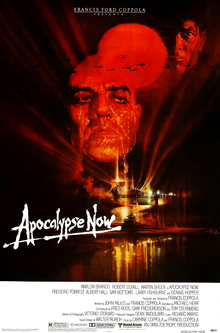
Theatrical release poster by Bob Peak |
|
| Directed by | Francis Coppola |
| Written by |
|
| Narration by | Michael Herr |
| Produced by | Francis Coppola |
| Starring |
|
| Cinematography | Vittorio Storaro |
| Edited by |
|
| Music by |
|
|
Production |
Omni Zoetrope |
| Distributed by | United Artists |
|
Release dates |
|
|
Running time |
|
| Country | United States |
| Language | English |
| Budget | $31 million[3] |
| Box office | $100–150 million[4][5] |
Apocalypse Now is a 1979 American epic war film produced and directed by Francis Ford Coppola. The screenplay, co-written by Coppola, John Milius and Michael Herr, is loosely based on the 1899 novella Heart of Darkness by Joseph Conrad, with the setting changed from late 19th-century Congo to the Vietnam War. The film follows a river journey from South Vietnam into Cambodia undertaken by Captain Willard (Martin Sheen), who is on a secret mission to assassinate Colonel Kurtz (Marlon Brando), a renegade Special Forces officer who is accused of murder and presumed insane. The ensemble cast also features Robert Duvall, Frederic Forrest, Albert Hall, Sam Bottoms, Laurence Fishburne and Dennis Hopper.
Milius became interested in adapting Heart of Darkness for a Vietnam War setting in the late 1960s, and initially began developing the film with Coppola as producer and George Lucas as director. After Lucas became unavailable, Coppola took over directorial control, and was influenced by Werner Herzog’s Aguirre, the Wrath of God (1972) in his approach to the material. Initially set to be a five-month shoot in the Philippines starting in March 1976, a series of problems lengthened it to over a year. These problems included expensive sets being destroyed by severe weather, Brando showing up on set overweight and completely unprepared, and Sheen having a breakdown and suffering a near-fatal heart attack on location. After photography was finally finished in May 1977, the release was postponed several times while Coppola edited over a million feet of film. Much of these difficulties are chronicled in the documentary Hearts of Darkness: A Filmmaker’s Apocalypse (1991).
Apocalypse Now was honored with the Palme d’Or at the Cannes Film Festival, where it premiered unfinished. When it was finally released on August 15, 1979, by United Artists, it performed well at the box office, grossing $40 million domestically and eventually over $100 million worldwide. Initial reviews were mixed; while Vittorio Storaro’s cinematography was widely acclaimed, several critics found Coppola’s handling of the story’s major themes anticlimactic and intellectually disappointing. The film was nominated for eight Academy Awards, including Best Picture, Best Director (Coppola), and Best Supporting Actor (Duvall); it went on to win Best Cinematography and Best Sound.
Apocalypse Now is today considered one of the greatest films ever made; for instance, it ranked 14th and 19th in Sight & Sound‘s greatest films poll in 2012 and 2022 respectively.[6] In 2000, the film was selected for preservation in the National Film Registry by the U.S. Library of Congress as «culturally, historically or aesthetically significant».
Plot[edit]
This summary excludes events only seen in the Redux or the Final Cut.
During the Vietnam War, U.S. Army Special Forces Colonel Walter E. Kurtz has apparently gone insane and is waging a brutal guerrilla war against NVA and PLAF forces without permission from his commanders. At an outpost in Cambodia, he commands American and Montagnard troops, who see him as a demigod.
Burnt-out MACV-SOG operative Captain Benjamin L. Willard is summoned to I Field Force headquarters in Nha Trang. He is ordered to «terminate Kurtz’s command… with extreme prejudice».
Ambivalent, Willard joins a U.S. Navy river patrol boat (PBR) commanded by Chief Petty Officer Phillips, with crewmen Lance, «Chef» and «Mr. Clean» to quietly navigate up the Nùng River to Kurtz’s outpost. Before reaching the coastal mouth of the Nùng, they rendezvous with the 1st Squadron, 9th Cavalry Regiment—a helicopter-borne air assault unit commanded by Lieutenant Colonel Bill Kilgore—to discuss safe passage. Kilgore is initially uncooperative as he has not received word about their mission through normal channels, but he becomes more engaged after discovering that Lance is a well-known surfer. The commander is an avid surfer himself and agrees to escort them through the Nùng’s Viet Cong-held coastal mouth. The helicopter squadron, playing «Ride of the Valkyries» on loudspeakers, raids at dawn with a napalm strike. Before Kilgore can lure Lance out to surf on the newly conquered beach, Willard gathers the sailors to the PBR to continue their mission.
Tension arises as Willard believes himself in command of the PBR, while the Chief prioritizes routine patrol objectives over Willard’s. Slowly making their way upriver, Willard partially reveals his mission to the Chief to assuage his concerns about why his mission should proceed. As Willard studies Kurtz’s dossier, he is struck by the mid-career sacrifice Kurtz made by leaving a prestigious Pentagon assignment to join Special Forces, with no prospect of advancing beyond the rank of colonel.
At a remote U.S. Army outpost, Willard and Lance seek information on what is upriver and receive a dispatch bag containing official and personal mail. Unable to find any commanding officer, Willard orders the Chief to continue. Willard learns via the dispatch that another MACV-SOG operative, Special Forces Captain Richard Colby, was sent on an earlier mission identical to Willard’s and has since joined Kurtz.[a]
Lance activates a smoke grenade while under the influence of LSD, attracting enemy fire, and Mr. Clean is killed. Further upriver, Chief is impaled by a spear thrown by Montagnards and attempts to kill Willard by impaling him on the spear point protruding from his own chest before Willard subdues him. Willard reveals his mission to Chef, who is now in charge of the PBR.
The PBR arrives at Kurtz’s outpost, an abandoned Angkor Empire temple compound teeming with Montagnards and strewn with corpses and severed heads. Willard, Chef and Lance are greeted by an American photojournalist, who praises Kurtz’s genius. They encounter a near-catatonic Colby. Willard sets out with Lance to find Kurtz, leaving Chef with orders to call in an airstrike on the outpost if the two do not return.
In the camp, Willard is bound and brought before Kurtz in a darkened temple. Kurtz places Chef’s severed head onto Willard’s lap, preventing the airstrike. Willard is released and Kurtz lectures him on his theories of war, praising the ruthlessness of the Viet Cong. Kurtz discusses his family and asks that Willard tell his son about him after his death.
That night, as the Montagnards ceremonially slaughter a water buffalo, Willard attacks Kurtz with a machete. Mortally wounded, Kurtz utters «… The horror … the horror …» and dies. All in the compound see Willard departing, carrying a collection of Kurtz’s writings, and bow down to him. Willard gathers Lance, boards the PBR, and heads back down river, away from the now leaderless Montagnards.
Cast[edit]
For a list of the rest of the cast members not included in the 153-minute version of the film that was released in theaters, see Apocalypse Now Redux § Cast.
- Marlon Brando as Colonel Walter Kurtz, a highly decorated United States Army Special Forces officer with the 5th Special Forces Group who goes rogue. He runs his own military unit based in Cambodia and is feared as much by the U.S. military as by the North Vietnamese, Viet Cong and Khmer Rouge.
- Robert Duvall as Lieutenant Colonel William «Bill» Kilgore, commander of 1st Squadron, 9th Cavalry Regiment and surfing fanatic. His character is a composite of several characters including Colonel John Stockton, General James F. Hollingsworth and George Patton IV, also a West Point officer whom Robert Duvall knew.[7] Duvall reports that he was upset that a scene where Kilgore saves the life of a Vietnamese baby during the beach assault was cut by Coppola, as he felt that it added to the complexity of his character.[8]
- Martin Sheen as U.S. Army Captain Benjamin Willard, a veteran assassin who is serving his third tour in Vietnam. The soldier who escorts him at the start of the film recites that Willard is from the 505th Battalion, of the elite 173rd Airborne Brigade, assigned to MACV-SOG. The opening scene—which features Willard staggering around his hotel room, culminating in him punching a mirror—was filmed on Sheen’s 36th birthday when he was heavily intoxicated. The mirror that he broke was not a prop and caused his hand to bleed profusely, but he insisted on continuing the scene, despite Coppola’s concerns.[9] Sheen has said this performance where he writhes and smears himself in blood was spontaneous and was an exorcism of his longstanding alcoholism.[10] Sheen’s brother Joe Estevez stood in for Willard in some scenes and performed the character’s voiceover narrations while his son Charlie appears in the film as an extra. Both went uncredited.[11]
- Frederic Forrest as Engineman 3rd Class Jay «Chef» Hicks, a tightly wound former chef from New Orleans who is horrified by his surroundings.
- Albert Hall as Chief Petty Officer George Phillips. The Chief runs a tight ship and frequently clashes with Willard over authority.
- Sam Bottoms as Gunner’s Mate 3rd Class Lance B. Johnson, a former professional surfer from Orange County, California. In the bridge scene, he mentions having taken LSD. As the film progresses Lance scene by scene becomes more and more strung out on drugs to the point that his grip on reality fades to almost nothing, and he becomes completely silent in the last act of the film. At the same time he becomes entranced by the Montagnard tribe and participates in the sacrifice ritual.
- Laurence Fishburne as Gunner’s Mate 3rd Class Tyrone «Mr. Clean» Miller, the cocky seventeen-year-old South Bronx-born crewmember. Fishburne was only 14 when shooting began in March 1976, as he had lied about his age to get the role.[12] The production took so long, he was 18 by the time of its release.
- Dennis Hopper as an American photojournalist, a manic disciple of Kurtz who greets Willard. According to the DVD commentary of Redux, the character is based on Sean Flynn, a famed news correspondent who disappeared in Cambodia in 1970. The character may also have been partially inspired by the British-Australian photojournalist Tim Page.[13]
- G. D. Spradlin as Lieutenant General R. Corman, military intelligence (G-2), an authoritarian officer who fears Kurtz and wants him removed. The character is named after filmmaker Roger Corman, for whom Coppola had previously directed his early works.
- Jerry Ziesmer as Jerry, a mysterious man in civilian attire who sits in on Willard’s initial briefing. His only line in the film is «terminate with extreme prejudice». Ziesmer was also the film’s assistant director.
- Harrison Ford as Colonel G. Lucas, aide to Corman and a general information specialist who gives Willard his orders. The character is named for George Lucas, who had directed Ford in American Graffiti and Star Wars, and with whom Coppola had founded American Zoetrope in 1969.
- Scott Glenn as Captain Richard M. Colby, previously assigned Willard’s current mission before he defected to Kurtz’s private army and sent a message to his wife, intercepted by the U.S. Army, telling her that he was never coming back and to sell everything they owned, including their children.
- James Keane as Kilgore’s Gunner, a man ready to battle to the tune of Ride of the Valkyries.[14]
- Kerry Rossall as Mike from San Diego, a soldier who surfs against incoming attacks.[14]
- Colleen Camp, Cynthia Wood and Linda Beatty as Playboy Playmates. Wood was the 1974 Playmate of the Year, and Beatty was the August 1976 Playmate of the Month.
- Bill Graham as Agent, the announcer in charge of the Playmates’ show.
- Francis Ford Coppola (cameo) as a TV news director filming beach combat; he shouts «Don’t look at the camera, go by like you’re fighting!» Cinematographer Vittorio Storaro plays the cameraman by Coppola’s side.
- R. Lee Ermey (uncredited) as a helicopter pilot. Ermey was himself a former USMC drill instructor and Vietnam War veteran, and later achieved fame for his role as Gunnery Sergeant Hartman in the 1987 film Full Metal Jacket.
Adaptation[edit]
Although inspired by Joseph Conrad’s Heart of Darkness, the film deviates extensively from its source material. The novella, based on Conrad’s experience as a steamboat captain in Africa, is set in the Congo Free State during the 19th century.[15] Kurtz and Marlow (whose corresponding character in the movie is Capt. Willard) work for a Belgian trading company that brutally exploits its native African workers.[citation needed]
After arriving at Kurtz’s outpost, Marlow concludes that Kurtz has gone insane and is lording over a small tribe as a god. The novella ends with Kurtz dying on the trip back and the narrator musing about the darkness of the human psyche: «the heart of an immense darkness».[citation needed]
In the novella, Marlow is the pilot of a river boat sent to collect ivory from Kurtz’s outpost, only gradually becoming infatuated with Kurtz. In fact, when he discovers Kurtz in terrible health, Marlow makes an effort to bring him home safely. In the film, Willard is an assassin dispatched to kill Kurtz. Nevertheless, the depiction of Kurtz as a god-like leader of a tribe of natives and his malarial fever, Kurtz’s written exclamation «Exterminate all the brutes!» (which appears in the film as «Drop the bomb. Exterminate them all!») and his last words «The horror! The horror!» are taken from Conrad’s novella.[citation needed]
Coppola argues that many episodes in the film—the spear and arrow attack on the boat, for example—respect the spirit of the novella and in particular its critique of the concepts of civilization and progress. Other episodes adapted by Coppola, the Playboy Playmates’ (Sirens) exit, the lost souls, «take me home» attempting to reach the boat and Kurtz’s tribe of (white-faced) natives parting the canoes (gates of Hell) for Willard, (with Chef and Lance) to enter the camp are likened to Virgil and «The Inferno» (Divine Comedy) by Dante. While Coppola replaced European colonialism with American interventionism, the message of Conrad’s book is still clear.[16]
It is often speculated that Coppola’s interpretation of the Kurtz character was modeled after Tony Poe, a highly decorated Vietnam-era paramilitary officer from the CIA’s Special Activities Division.[17] Poe’s actions in Vietnam and in the «Secret War» in neighboring Laos, in particular his highly unorthodox and often savage methods of waging war, show many similarities to those of the fictional Kurtz; for example, Poe was known to drop severed heads from helicopters into enemy-controlled villages as a form of psychological warfare and use human ears to record the number of enemies his indigenous troops had killed. He would send these ears back to his superiors as proof of the efficacy of his operations deep inside Laos.[18][19] Coppola denies that Poe was a primary influence and says the character was loosely based on Special Forces Colonel Robert B. Rheault, who was the actual head of 5th Special Forces Group (May to July 1969), and whose 1969 arrest over the murder of suspected double agent Thai Khac Chuyen in Nha Trang generated substantial contemporary news coverage, in the Green Beret Affair,[20] including making public the phrase «terminate with extreme prejudice»,[21] which was used prominently in the movie.[citation needed]
It is considered that the character of Lieutenant Colonel Bill Kilgore is based on several characters, including John B. Stockton, commander of the 1st Squadron, 9th Cavalry Regiment in Vietnam, and legendary infantry general James F. Hollingsworth.[22]
Use of T.S. Eliot’s poetry[edit]
In the film, shortly before Colonel Kurtz dies, he recites part of T. S. Eliot’s poem «The Hollow Men». The poem is preceded in printed editions by the epigraph «Mistah Kurtz – he dead», a quotation from Conrad’s Heart of Darkness.[23]
Two books seen opened on Kurtz’s desk in the film are From Ritual to Romance by Jessie Weston and The Golden Bough by Sir James Frazer, the two books that Eliot cited as the chief sources and inspiration for his poem «The Waste Land». Eliot’s original epigraph for «The Waste Land» was this passage from Heart of Darkness, which ends with Kurtz’s final words:[24]
Did he live his life again in every detail of desire, temptation, and surrender during that supreme moment of complete knowledge? He cried in a whisper at some image, at some vision, – he cried out twice, a cry that was no more than a breath –
«The horror! The horror!»
When Willard is first introduced to Dennis Hopper’s character, the photojournalist describes his own worth in relation to that of Kurtz with: «I should have been a pair of ragged claws/Scuttling across the floors of silent seas», from «The Love Song of J. Alfred Prufrock».[25] Additionally, Dennis Hopper’s character paraphrases the end of «The Hollow Men» to Martin Sheen’s character: «This is the way the fucking world ends! […] Not with a bang, but with a whimper.»[26]
Production[edit]
Development[edit]
While working as an assistant for Francis Ford Coppola on The Rain People in 1967, filmmaker John Milius was encouraged by his friends George Lucas and Steven Spielberg to write a Vietnam War film.[27][1] Milius had wanted to volunteer for the war, and was disappointed when he was rejected for having asthma.[28] He came up with the idea for adapting the plot of Joseph Conrad’s Heart of Darkness to the Vietnam War setting. He had read the novel as a teenager and was reminded about it when his college English professor, Irwin Blacker of USC, mentioned the several unsuccessful attempts to adapt it into a movie. Blacker challenged his class by saying, «No screenwriter has ever perfected a film adaption of Joseph Conrad’s Heart of Darkness.»[29][30][b]
Coppola gave Milius $15,000 to write the screenplay with the promise of an additional $10,000 if it were green-lit.[31][32] Milius claims that he wrote the screenplay in 1969.[29] He wanted to use Conrad’s novel as «a sort of allegory. It would have been too simple to have followed the book completely.»[31] Some sources state that Milius’ original title was The Psychedelic Soldier,[33] but Milius disputed this in a 2010 interview, claiming Apocalypse Now was always the intended title.[34]
Milius based the character of Willard and some of Kurtz’s on a friend of his, Fred Rexer. Rexer claimed to have experienced, first-hand, the scene relayed by Brando’s character wherein the arms of villagers are hacked off by the Viet Cong; and that Kurtz was based on Robert B. Rheault, head of Special Forces in Vietnam.[35] Scholars have never found any evidence to corroborate Rexer’s claim, nor any similar Viet Cong behavior, and consider it an urban legend.[36][37] The title Apocalypse Now was inspired by a button badge popular with hippies during the 1960s that said «Nirvana Now».[38]
At one point, Coppola told Milius, «Write every scene you ever wanted to go into that movie»,[29] and he wrote ten drafts, amounting to over a thousand pages.[39] He was influenced by an article by Michael Herr, «The Battle for Khe Sanh», which referred to drugs, rock ‘n’ roll, and people calling airstrikes down on themselves.[29] He was also inspired by such films as Dr. Strangelove.
Milius says the classic line «Charlie don’t surf» was inspired by a comment Ariel Sharon made during the Six-Day War, when he went skin diving after capturing enemy territory and announced, «We’re eating their fish». He says the line «I love the smell of napalm in the morning» just came to him.[40]
Warner Bros.-Seven Arts acquired the screenplay in 1969 but put it into turnaround.[41][1] Milius had no desire to direct the film himself and felt that Lucas was the right person for the job.[29] Lucas worked with Milius for four years developing the film, while working on other films, including his script for Star Wars.[42] He approached Apocalypse Now as a black comedy,[43] and intended to shoot it after making THX 1138, with principal photography to start in 1971.[31] Lucas’s friend and producer Gary Kurtz traveled to the Philippines, scouting suitable locations. They intended to shoot the film both in the rice fields between Stockton and Sacramento, California, and on-location in South Vietnam, on a $2 million budget, cinéma vérité style, using 16 mm cameras, and real soldiers, while the war was still going on.[29][42][44] However, due to the studios’ safety concerns and Lucas’s involvement with American Graffiti and Star Wars, Lucas decided to put the project on hold.[31][42]
Pre-production[edit]
Coppola was drawn to Milius’s script, which he described as «a comedy and a terrifying psychological horror story», and acquired the rights.[45] In the spring of 1974, he discussed with friends and co-producers Fred Roos and Gray Frederickson the idea of producing the film.[46] He asked Lucas, then Milius, to direct it, but both were involved with other projects.[46] (Lucas had gotten the go-ahead to make Star Wars.[29]) Coppola was determined to make the film and pressed ahead himself. He envisioned it as a definitive statement on the nature of modern war, the contrasts between good and evil, and the impact of American culture on the rest of the world. He said he wanted to take the audience «through an unprecedented experience of war and have them react as much as those who had gone through the war».[45]
In 1975, Coppola hoped for cooperation from the United States Army and scouted military locations in Georgia and Florida;[1] but the Army was not interested. While promoting The Godfather Part II in Australia, Coppola and his producers scouted possible locations for Apocalypse Now in Cairns in northern Queensland, as it had jungle resembling Vietnam’s,[47] and in Malaysia.[1] He decided to make the film in the Philippines for its access to American military equipment and cheap labor. Production coordinator Fred Roos had already made two low-budget films there for Monte Hellman, and had friends and contacts there.[45] Frederickson went to the Philippines and had dinner with President Ferdinand Marcos to formalize support for the production and to allow them to use some of the country’s military equipment.[48] Coppola spent the last few months of 1975 revising Milius’s script and negotiating with United Artists to secure financing for the production. Milius claimed it would be the «most violent film ever made».[1] According to Frederickson, the budget was estimated between $12 and 14 million.[49] Coppola’s American Zoetrope obtained $7.5 million from United Artists for domestic distribution rights and $8 million from international sales, on the assumption that the film would star Marlon Brando, Steve McQueen and Gene Hackman.[45]
Casting[edit]
Steve McQueen was Coppola’s first choice to play Willard, but McQueen did not want to leave America for three months and Coppola was unwilling to pay his $3 million fee.[1] When McQueen dropped out in February 1976, Coppola had to return $5 million of the $21 million he had raised.[1] Al Pacino was also offered the role, but he too did not want to be away that long, and was afraid of falling ill in the jungle as he had done in the Dominican Republic during the shooting of The Godfather Part II.[45] Jack Nicholson, Robert Redford and James Caan were approached to play either Kurtz or Willard.[44] Keith Carradine, Nick Nolte, and Frederic Forrest were also considered for Willard.[50] In a 2015 The Hollywood Reporter interview, Clint Eastwood revealed that Coppola offered him the role of Willard, but much like McQueen and Pacino, he did not want to be away from America for a long time. He also revealed that McQueen tried to convince him to play Willard; McQueen wanted to play Kurtz because he would have to work for only two weeks.[51]
Coppola also offered the role of Colonel Kurtz to Orson Welles and Lee Marvin, both of whom turned it down.[52][53][54]
Coppola and Roos had been impressed by Martin Sheen’s screen test for Michael in The Godfather and he became their top choice to play Willard, but he had already accepted another project. Harvey Keitel was cast in the role based on his work in Martin Scorsese’s Mean Streets.[55] By early 1976, Coppola had persuaded Marlon Brando to play Kurtz, for a fee of $2 million for a month’s work on location in September 1976. Brando also received 10% of the gross theatrical rental and 10% of the TV sale rights, earning him around $9 million.[56][57]
Hackman was set to play Wyatt Khanage, who later became Kilgore, played by Robert Duvall.[1] Dennis Hopper was cast as a war correspondent and observer of Kurtz; when Coppola heard Hopper talking nonstop on location, he remembered putting «the cameras and the Montagnard shirt on him, and [shooting] the scene where he greets them on the boat».[44] James Caan was the first choice to play Colonel Lucas, but Caan wanted too much money for what was considered a minor part, and Harrison Ford was cast instead.
Prior to departure for principal photography, Coppola took out an advertisement in the trade press declaring Keitel, Duvall and others as the «first choices» for the film.[1] It also listed other actors who did not appear in the film, including Harry Dean Stanton, Robby Benson and Michael Learned.[1]
Sam Bottoms, Larry Fishburne and Albert Hall all signed seven-year deals, with Coppola including acting training of their choice in their deal.[1] Bottoms was infected with hookworm while filming in the Philippines, and the parasite «wrecked his liver».[58]
Principal photography[edit]
On March 1, 1976, Coppola and his family flew to Manila and rented a large house there for the planned four-month shoot.[44][1] Sound and photographic equipment had been coming in from California since late 1975. John Ashley assisted with production in the Philippines.[59] The film was due to be released on Coppola’s 38th birthday, April 7, 1977.[1]
Shooting began on March 20, 1976.[41] Within a few days, Coppola was unhappy with Harvey Keitel’s take on Willard, saying that the actor «found it difficult to play him as a passive onlooker».[44] With Brando not due to film until three months later, as he did not want to work while his children were on school vacation, Keitel left the project in April and quit the seven-year deal he had signed as well.[1][60] Coppola returned to Los Angeles and replaced Keitel with Martin Sheen, who arrived in the Philippines on April 24.[60] Only four days of reshoots were reportedly required after the change.[1]
Typhoon Olga wrecked 40–80% of the sets at Iba and on May 26, 1976, production was closed down. Dean Tavoularis remembers that it «started raining harder and harder until finally it was literally white outside, and all the trees were bent at forty-five degrees». Some of the crew were stranded in a hotel and the others were in small houses that were immobilized by the storm. The Playboy Playmate set was destroyed, ruining a month’s scheduled shooting. Most of the cast and crew returned to the United States for six to eight weeks. Tavoularis and his team stayed on to scout new locations and rebuild the Playmate set in a different place. Also, the production had bodyguards watching constantly at night and one day the entire payroll was stolen. According to Coppola’s wife, Eleanor, the film was six weeks behind schedule and $2 million over budget;[61] Coppola filed a $500,000 insurance claim for typhoon damage[1] and took out a loan from United Artists on the condition that if the film did not generate theatrical rentals of over $40 million, he would be liable for the overruns.[62] Despite the increasing costs, Coppola promised the University of the Philippines Film Center 1% of the profits, up to $1 million, for a film study trust fund.[1]
Coppola flew back to the U.S. in June 1976. He read a book about Genghis Khan to get a better handle on the character of Kurtz.[61] When filming commenced in July 1976,[41] Marlon Brando arrived in Manila very overweight and began working with Coppola to rewrite the ending. The director downplayed Brando’s weight by dressing him in black, photographing only his face, and having another, taller actor double for him to portray him as an almost mythical character.[63]
After Christmas 1976, Coppola viewed a rough assembly of the footage but still needed to improvise an ending. He returned to the Philippines in early 1977 and resumed filming.[63]
On March 5 of that year, Sheen, then only 36, had a near-fatal heart attack and struggled for a quarter of a mile to reach help. By then the film was so over-budget, Sheen worried that funding would be halted if word about his condition reached investors, and he claimed that he’d suffered heat stroke instead. Until he returned to the set on April 19, his brother Joe Estevez filled in for him and provided voiceovers for his character. Coppola later admitted that he could no longer tell which scenes were of Joe or Martin.[64] A major sequence in a French plantation cost hundreds of thousands of dollars but was cut from the final film. Rumors began to circulate that Apocalypse Now had several endings, but Richard Beggs, who worked on the sound elements, said, «There were never five endings, but just the one, even if there were differently edited versions». These rumors came from Coppola departing frequently from the original screenplay. Coppola admitted that he had no ending because Brando was too fat to play the scenes as written in the original script[citation needed]. With the help of Dennis Jakob, Coppola decided the ending could be «the classic myth of the murderer who gets up the river, kills the king, and then himself becomes the king – it’s the Fisher King, from The Golden Bough«.[65] Principal photography ended on May 21, 1977,[66] after 238 days.[41]
Post-production and audio[edit]
The budget had doubled to over $25 million, and Coppola’s loan from United Artists to fund the overruns had been extended to over $10 million.[1] UA took out a $15 million life insurance policy on Coppola.[67] By June 1977, Coppola had offered his car, house, and The Godfather profits as security to finish the film.[68][1] When Star Wars became a gigantic hit, Coppola sent a telegram to George Lucas asking for money.[69] The release date was pushed back to spring 1978.[1]
Japanese composer Isao Tomita was signed to provide an original score, with Coppola desiring the film’s soundtrack to sound like Tomita’s electronic adaptation of The Planets by Gustav Holst. Tomita went as far as to accompany the film crew in the Philippines, but label contracts ultimately prevented his involvement.[70] In the summer of 1977, Coppola told Walter Murch that he had four months to assemble the sound. Murch realized that the script had originally been narrated but Coppola abandoned the idea during filming.[66] Murch thought that there was a way to assemble the film without narration but that it would take ten months, and decided to give it another try.[71] He put it back in, recording it all himself. By September, Coppola told his wife that he felt «there is only about a 20% chance [I] can pull the film off».[72] He convinced United Artists executives to delay the premiere from May to October 1978. Author Michael Herr received a call from Zoetrope in January 1978 and was asked to work on the film’s narration based on his well-received book about Vietnam, Dispatches.[72] He said that the narration already written was «totally useless» and spent a year creating a new narration, with Coppola giving him very definite guidelines.[72]
Murch had problems trying to make a stereo soundtrack for Apocalypse Now because sound libraries had no stereo recordings of weapons. The sound material brought back from the Philippines was inadequate because the small location crew lacked the time and resources to record jungle sounds and ambient noises. Murch and his crew fabricated the mood of the jungle on the soundtrack. Apocalypse Now used novel sound techniques for a movie, as Murch insisted on recording the most up-to-date gunfire and employed the Dolby Stereo 70 mm Six Track system for the 70 mm release, which used two channels of sound behind the audience as well as three channels from behind the movie screen.[72] The 35 mm release used the new Dolby Stereo optical stereo system, but due to limitations of the technology at the time, the 35 mm release that played in most theaters did not include surround sound.[73] In May 1978, Coppola postponed the opening until spring of 1979.[74] The cost overruns had reached $18 million, for which Coppola was personally liable, but he had retained rights to the picture in perpetuity.[75]
Controversies[edit]
A water buffalo was slaughtered with a machete for the climactic scene in a ritual performed by a local Ifugao tribe, which Coppola had previously witnessed with his wife Eleanor (who filmed the ritual later shown in the documentary Hearts of Darkness) and film crew. Although it was an American production subject to American animal cruelty laws, such scenes filmed in the Philippines were not policed or monitored; the American Humane Association gave the film an «unacceptable» rating.[76]
Real human corpses were bought from a man who turned out to be a grave-robber. The police questioned the film crew, holding their passports, and soldiers took the bodies away. Instead, extras were used to pose as corpses in the film.[77]
During filming, Dennis Hopper and Marlon Brando did not get along, leading Brando to refuse to be on the set at the same time as Hopper.[78]
Release[edit]
In April 1979, Coppola screened a «work in progress» for 900 people; it was not well received.[74] That year, he was invited to screen Apocalypse Now at the Cannes Film Festival.[79] United Artists was not keen on showing an unfinished version to so many members of the press. However, since his 1974 film The Conversation had won the Palme d’Or, Coppola agreed to screen Apocalypse Now with the festival only a month away.
The week prior to Cannes, Coppola arranged three sneak previews of a 139-minute cut in Westwood, Los Angeles on May 11[1][80] attended by 2,000 paying customers, some of whom lined up for over 6 hours.[81] Other cuts shown in 1979 ran 150 and 165 minutes.[1][41] The film was also shown at the White House for Jimmy Carter on May 10.[81][41] Coppola allowed critics to attend the L.A. screenings and believed they would honor an embargo not to review the work in progress.[41] On May 14, Rona Barrett previewed the film on television on Good Morning America and called it «a disappointing failure».[79][41] This prompted Variety to believe the embargo had been broken, and it published its review the following day, saying it was «worth the wait», calling it a «brilliant and bizarre film». They also noted that it was the first «70mm presentation without credits»,[75] for which Coppola had obtained permission from the various guilds (Screen Actors Guild, Directors Guild, and Writers Guild of America) and instead provided a printed program with credits.[41][81] The title appeared scrawled on a wall on a temple in the last third of the film.[81] Daily Variety reported that the first, 8 p.m. screening was received with «limited, if enthusiastic, applause».[81]
Cannes screening[edit]

At Cannes, Zoetrope technicians worked during the night before the screening to install additional speakers to achieve Murch’s 5.1 soundtrack.[79] A three-hour version of Apocalypse Now was screened as a work in progress at the 1979 Cannes Film Festival on Saturday, May 19, 1979[1] and met with prolonged applause.[82] It was the first work in progress ever shown in competition at the festival.[81] At the subsequent press conference, Coppola criticized the media for releasing premature reviews[41] and for attacking him and the production during their problems filming in the Philippines. He said, «We had access to too much money, too much equipment, and little by little we went insane», and «My film is not about Vietnam, it is Vietnam».[82] His comments upset newspaper critic Rex Reed, who reportedly stormed out of the conference. Apocalypse Now won the Palme d’Or for best film, along with Volker Schlöndorff’s The Tin Drum – a decision reportedly greeted with «some boos and jeers from the audience».[83]
Theatrical release[edit]
On August 15, 1979, Apocalypse Now was released in North America in only three theaters equipped to play the Dolby Stereo 70 mm prints with stereo surround sound:[84] the Ziegfeld Theatre in New York City, the Cinerama Dome in Los Angeles and the University Theatre in Toronto.[41] The film, without credits, ran 147 minutes and tickets were $5, a new high for L.A.[41]
It ran exclusively in these three locations for four weeks before opening in an additional 12 theaters on October 3, 1979.[85] On October 10, 1979, the 35 mm version, with credits, was released in over 300 theatres.[41]
The film had a $9 million advertising campaign, bringing its total costs to $45 million.[41]
Alternative and varied endings[edit]
At the time of the film’s release, discussion and rumors circulated about its supposed various endings. Coppola said the original ending was written in haste, where Kurtz convinced Willard to join him and together they repelled the air strike on the compound. Coppola said he never fully agreed with Kurtz and Willard dying in fatalistic explosive intensity, preferring to end the film in a more positive way.
When Coppola originally organized the ending, he considered two significant versions. One had Willard leading Lance by the hand as everyone in Kurtz’s base threw down their weapons; Willard then piloted the PBR slowly away from Kurtz’s compound, and this final shot was superimposed over the face of a stone idol, which then faded to black. The other version had the base spectacularly blown to bits in an air strike, killing everyone left within it.
The original 1979 70mm exclusive theatrical release ended with Willard’s boat, the stone statue, and the fade to black with no credits, save for ‘»Copyright 1979 Omni Zoetrope»‘ at its very end. This mirrored the lack of opening titles and supposedly stemmed from Coppola’s original intention to «tour» the film as one would a play: The credits appeared on printed programs provided before the screening began.[4]
There have been, to date, many variations of the end credit sequence, beginning with the 35 mm general release, where Coppola elected to show the credits superimposed over shots of the jungle exploding into flames.[4][41] The explosions were from the detonations of the sets.[41] Rental prints circulated with this ending, and can be found in the hands of a few collectors. Some versions had the subtitle «A United Artists release», while others had «An Omni Zoetrope release». The network television version of the credits ended with «… from MGM/UA Entertainment Company» (as it made its network debut shortly after the merger of MGM and UA). Another variation of the end credits can be seen on both YouTube and as a supplement on the current Lionsgate Blu-ray.
When Coppola later heard that the audiences interpreted this as an air strike called by Willard, he pulled the film from its 35 mm run and added credits on a black screen.[41] The «air strike» footage continued to circulate in repertory theaters well into the 1980s, and was included in the 1980s LaserDisc release. In the DVD commentary, Coppola explains that the images of explosions were not intended as part of the story, but were simply a graphic background he had added for the credits.[86]
Coppola explained he had shot the explosion footage during demolition of the sets, whose destruction and removal were required by the Philippine government. He filmed the demolition with cameras fitted with different film stocks and lenses to capture the explosions at different speeds. He wanted to do something with the dramatic footage and decided to add them to the credits.[87]
Re-release[edit]
The film was re-released on August 28, 1987, in six cities, to capitalize on the success of Platoon, Full Metal Jacket, and other Vietnam War movies. New 70 mm prints were shown in Los Angeles, San Francisco, San Jose, Seattle, St. Louis and Cincinnati —cities where the film had done well in 1979. It was given the same kind of release as the exclusive 1979 engagement, with no logo or credits, and audiences were given a printed program.[68]
Reception[edit]
Critical response[edit]
On review aggregator Rotten Tomatoes, Apocalypse Now holds an approval rating of 98% based on 98 reviews, with an average rating of 9.00/10. The website’s critics consensus reads: «Francis Ford Coppola’s haunting, hallucinatory Vietnam War epic is cinema at its most audacious and visionary.»[88] Metacritic, which uses a weighted average, assigned the film a score of 94 out of 100 based on 15 critics, indicating «universal acclaim».[89]
Upon its release, Apocalypse Now received mixed reviews.[90][91][92] In his original review, Roger Ebert wrote: «Apocalypse Now achieves greatness not by analyzing our ‘experience in Vietnam’, but by re-creating, in characters and images, something of that experience.»[93] and named it «The best film of 1979».[94] Ebert concluded by writing: «What’s great in the film, and what will make it live for many years and speak to many audiences, is what Coppola achieves on the levels Truffaut was discussing: the moments of agony and joy in making cinema. Some of those moments occur at the same time; remember again the helicopter assault and its unsettling juxtaposition of horror and exhilaration. Remember the weird beauty of the massed helicopters lifting above the trees in the long shot, and the insane power of Wagner’s music, played loudly during the attack, and you feel what Coppola was getting at: Those moments as common in life as art, when the whole huge grand mystery of the world, so terrible, so beautiful, seems to hang in the balance.» In his review for the Los Angeles Times, Charles Champlin wrote: ‘as a noble use of the medium and as a tireless expression of national anguish, it towers over everything that has been attempted by an American filmmaker in a very long time.’[85] Other reviews were less positive; Frank Rich, writing for Time said: ‘While much of the footage is breathtaking, Apocalypse Now is emotionally obtuse and intellectually empty.’[95] Vincent Canby argued: ‘Mr. Coppola himself describes it as ‘operatic’, but…Apocalypse Now is neither a tone poem nor an opera. It’s an adventure yarn with delusions of grandeur, a movie that ends — in the all-too-familiar words of the poet Mr. Coppola drags in by the bootstraps — not with a bang, but a whimper.’[96]
Ebert added Coppola’s film to his list of The Great Movies, stating: «Apocalypse Now is the best Vietnam film, one of the greatest of all films, because it pushes beyond the others, into the dark places of the soul. It is not about war so much as about how war reveals truths we would be happy never to discover.»[97]
Commentators have debated whether Apocalypse Now is an anti-war or pro-war film. Some evidence of the film’s anti-war message includes the purposeless brutality of the war, the absence of military leadership, and the imagery of machinery destroying nature.[98] Advocates of a pro-war stance view these same elements as a glorification of war and the assertion of American supremacy. According to Frank Tomasulo, ‘the US foisting its culture on Vietnam’, including the destruction of a village so that soldiers could surf, affirms the film’s pro-war message.[98] Anthony Swofford recounted how his marine platoon watched Apocalypse Now before being sent to Iraq in 1990 to get excited for war.[99] Nidesh Lawtoo illustrates the ambiguity of the film by focusing on the contradictory responses the movie in general – and the «Ride of the Valkyries» scene in particular – triggered in a university classroom.[100] According to Coppola, the film may be considered anti-war, but is even more anti-lie: ‘… the fact that a culture can lie about what’s really going on in warfare, that people are being brutalized, tortured, maimed, and killed, and somehow present this as moral is what horrifies me, and perpetuates the possibility of war’.[101] In 2019, however, Coppola told Kevin Perry of The Guardian that he hesitated to call the film anti-war, stating «…an anti-war film, I always thought, should be like [Kon Ichikawa’s 1956 post-second world war drama] The Burmese Harp – something filled with love and peace and tranquillity and happiness. It shouldn’t have sequences of violence that inspire a lust for violence. Apocalypse Now has stirring scenes of helicopters attacking innocent people. That’s not anti-war.»[102]
In May 2011, a new restored digital print of Apocalypse Now was released in UK cinemas, distributed by Optimum Releasing. Total Film magazine gave the film a five-star review, stating: ‘This is the original cut rather than the 2001 ‘Redux’ (be gone, jarring French plantation interlude!), digitally restored to such heights you can, indeed, get a nose full of the napalm.’[103]
Box office[edit]
Apocalypse Now performed well at the box office when it opened on August 15, 1979.[82] It initially opened in three theaters in New York City, Toronto, and Hollywood, grossing $322,489 in its first five days. It grossed over $40 million domestically, with a worldwide total of over $100 million.[4]
Legacy[edit]

Today, the movie is regarded by many as a masterpiece of the New Hollywood era. Roger Ebert considered it the finest film on the Vietnam War and included it on his list for the 2002 Sight & Sound poll for the greatest movie of all time.[104][105] In the 2002 Sight & Sound director’s poll of the «greatest films of all time», it was ranked No. 19.[106][107] It is on the American Film Institute’s 100 Years…100 Movies list at number 28, but dropped to number 30 on their 10th anniversary list. Kilgore’s quote, «I love the smell of napalm in the morning», written by Milius, was number 12 on the AFI’s 100 Years … 100 Movie Quotes list and was also voted the greatest movie speech of all time in a 2004 poll.[108] In 2006, Writers Guild of America ranked the screenplay, by John Milius and Francis Ford Coppola, the 55th greatest ever.[109] It is number 7 on Empire‘s 2008 list of the 500 greatest movies of all time.[110] Empire re-ranked it at #20 in their 2014 list of The 301 Greatest Movies of All Time,[111] and again at #22 on their 2018 list of The 100 Greatest Movies.[112] It was voted No. 66 on the list of «100 Greatest Films» by the prominent French magazine Cahiers du cinéma in 2008.[113] In 2010, The Guardian named Apocalypse Now «the best action and war film of all time».[114] In 2016, The Hollywood Reporter ranked it 11th among 69 winners of the Palme d’Or.[115] The New York Times included it on its Best 1000 Movies Ever list.[116] Entertainment Weekly ranked it as having one of the «10 Best Surfing Scenes» in cinema.[117]
In 2002, Sight and Sound magazine invited several critics to name the best film of the last 25 years, and Apocalypse Now was named number one. It was also listed as the second-best war film by viewers on Channel 4’s 100 Greatest War Films, and was the second-best war movie of all time based on the Movifone list (after Schindler’s List) and the IMDb War movie list (after The Longest Day). It is ranked number 1 on Channel 4’s 50 Films to See Before You Die. In a 2004 poll of UK film fans, Blockbuster listed Kilgore’s eulogy to napalm as the best movie speech.[118] The helicopter attack scene with the Ride of the Valkyries soundtrack was chosen as the most memorable film scene ever by Empire magazine. (The scene is recalled in one of the last acts of the 2012 video game Far Cry 3, when the music is played while the character shoots from a helicopter.[119] It was likewise adapted for the Cat’s Eye anime episode «From Runan Island with Love» and the Battle of Italica scene in Gate: Jieitai Kano Chi nite, Kaku Tatakaeri.)
In 2009, the London Film Critics’ Circle voted Apocalypse Now the best film of the last 30 years.[120] It was also included in BBC’s 2015 list of the 100 greatest American films.[121]
In 2011, actor Charlie Sheen, son of the film’s leading actor Martin, started playing clips from the film on his live tour and played the film in its entirety during post-show parties. One of Sheen’s films, the 1993 comedy Hot Shots! Part Deux, includes a brief scene where Charlie is riding a boat up a river in Iraq while on a rescue mission and passes Martin, as Captain Willard, going the other way. As they pass, each man shouts to the other «I loved you in Wall Street!», referring to the 1987 film that featured both of them. Additionally, the promotional material for Hot Shots! Part Deux included a mockumentary that aired on HBO titled Hearts of Hot Shots! Part Deux—A Filmmaker’s Apology, a parody of the 1991 documentary Hearts of Darkness: A Filmmaker’s Apocalypse about the making of Apocalypse Now.[122]
The film is credited with creating the Philippines surfing culture around the town of Baler, where the helicopter attack and surfing sequences were filmed.[123]
On January 25, 2017, Coppola announced that he was seeking funding through Kickstarter for a horror role-playing video game based on Apocalypse Now.[124] It was later canceled by Montgomery Markland, the game’s director, as revealed on its official Tumblr page.[125]
The Sympathizer, a Pulitzer Prize-winning novel by Vietnamese-American author Viet Thanh Nguyen, features a subplot that Nguyen describes as a critique of Apocalypse Now. He told the New York Times that «Apocalypse Now is an important work of art, but that doesn’t mean I’m going to bow down before it. I’m going to fight with it because it fought with me.» He said that the film centered on American perspectives of the war rather than Vietnamese experiences. He was especially critical of the scene where all the passengers of a boat were unjustly killed by the traveling party: «People just like me were being slaughtered. I felt violated.»[126]
The Seiko 6105 and its subsequent reissues have been nicknamed the «Captain Willard», in reference to its use by the eponymous character.[127][128]
Awards and honors[edit]
| Award | Category | Nominee | Result |
|---|---|---|---|
| 52nd Academy Awards[129] | Best Picture | Francis Ford Coppola, Fred Roos, Gray Frederickson, and Tom Sternberg | Nominated |
| Best Director | Francis Ford Coppola | Nominated | |
| Best Actor in a Supporting Role | Robert Duvall | Nominated | |
| Best Writing – Screenplay Based on Material from Another Medium | John Milius and Francis Ford Coppola | Nominated | |
| Best Art Direction | Art Direction: Dean Tavoularis and Angelo P. Graham; Set Decoration: George R. Nelson | Nominated | |
| Best Cinematography | Vittorio Storaro | Won | |
| Best Film Editing | Richard Marks, Walter Murch, Gerald B. Greenberg and Lisa Fruchtman | Nominated | |
| Best Sound | Walter Murch, Mark Berger, Richard Beggs, and Nat Boxer | Won | |
| 1979 Cannes Film Festival[130] | Palme d’Or | Apocalypse Now | Won |
| 33rd British Academy Film Awards[131] | Best Film | Apocalypse Now | Nominated |
| Best Actor | Martin Sheen | Nominated | |
| Best Supporting Actor | Robert Duvall | Won | |
| Best Direction | Francis Ford Coppola | Won | |
| Best Original Film Music | Carmine Coppola and Francis Ford Coppola | Nominated | |
| Best Cinematography | Vittorio Storaro | Nominated | |
| Best Editing | Richard Marks, Walter Murch, Gerald B. Greenberg, and Lisa Fruchtman | Nominated | |
| Best Production Design | Dean Tavoularis | Nominated | |
| Best Soundtrack | Nathan Boxer, Richard Cirincione, Walter Murch | Nominated | |
| 5th César Awards[132] | Best Foreign Film (Meilleur film étranger) | Francis Ford Coppola | Nominated |
| David di Donatello Awards[133] | Best Foreign Director (Migliore Regista Straniero) | Francis Ford Coppola | Won |
| 32nd Directors Guild of America Awards[134] | Outstanding Directorial Achievement in Motion Pictures | Francis Ford Coppola | Nominated |
| 37th Golden Globe Awards[135] | Best Motion Picture – Drama | Francis Ford Coppola, Fred Roos, Gray Frederickson, and Tom Sternberg | Nominated |
| Best Director | Francis Ford Coppola | Won | |
| Best Supporting Actor | Robert Duvall | Won[c] | |
| Best Original Score | Carmine Coppola and Francis Ford Coppola | Won | |
| 22nd Annual Grammy Awards[136] | Best Original Score Written for a Motion Picture | Carmine Coppola and Francis Ford Coppola | Nominated |
| 1979 National Society of Film Critics Awards | Best Supporting Actor | Frederic Forrest | Won |
| 32nd Writers Guild of America Awards[137] | Best Drama Written Directly for the Screen | John Milius and Francis Ford Coppola | Nominated |
| London Film Critics’ Circle Awards | Film of the Year | Francis Ford Coppla | Won |
- American Film Institute lists
- AFI’s 100 Years…100 Movies – No. 28
- AFI’s 100 Years…100 Movie Quotes:
- «I love the smell of napalm in the morning.» – No. 12
- AFI’s 100 Years…100 Movies (10th Anniversary Edition) – No. 30
Other versions[edit]
Apocalypse Now Redux[edit]
In 2001, Coppola released Apocalypse Now Redux in cinemas and subsequently on DVD. This is an extended version that restores 49 minutes of scenes cut from the original film. Coppola has continued to circulate the original version as well: the two versions are packaged together in the Complete Dossier DVD, released on August 15, 2006, and in the Blu-ray edition released on October 19, 2010.
The longest section of added footage in the Redux version is the «French Plantation» sequence, a chapter involving the de Marais family’s rubber plantation, a holdover from the colonization of French Indochina, featuring Coppola’s two sons Gian-Carlo and Roman as children of the family. Around the dinner table, a young French child recites a poem by Charles Baudelaire entitled L’albatros. The French family patriarch is not satisfied with the child’s recitation. The child is sent away. These scenes were removed from the 1979 cut, which premiered at Cannes. In behind-the-scenes footage in Hearts of Darkness, Coppola expresses his anger, on the set, at the technical limitations of the scenes, the result of shortage of money. At the time of the Redux version, it was possible to digitally enhance the footage to accomplish Coppola’s vision. In the scenes, the French family patriarchs argue about the positive side of colonialism in Indochina and denounce the betrayal of the military men in the First Indochina War. Hubert de Marais argues that French politicians sacrificed entire battalions at Điện Biên Phủ, and tells Willard that the US created the Viet Cong (as the Viet Minh) to fend off Japanese invaders.
Other added material includes extra combat footage before Willard meets Kilgore, a scene in which Willard’s team steals Kilgore’s surfboard (which sheds some light on the hunt for the mangoes), a follow-up scene to the dance of the Playboy Playmates, in which Willard’s team finds the Playmates stranded after their helicopter has run out of fuel (trading two barrels of fuel for two hours with the Bunnies), and a scene of Kurtz reading from a Time magazine article about the war, surrounded by Cambodian children.
A deleted scene titled «Monkey Sampan» shows Willard and the PBR crew suspiciously eyeing an approaching sampan juxtaposed to Montagnard villagers joyfully singing «Light My Fire» by The Doors. As the sampan gets closer, Willard realizes there are monkeys on it and no helmsman. Finally, just as the two boats pass, the wind turns the sail and exposes a naked dead Viet Cong (VC) nailed to the sail boom. His body is mutilated and looks as though the man had been flogged and castrated. The singing stops. As they pass on by, Chief notes out loud, «That’s comin’ from where we goin’, Captain.» The boat then slowly passes the giant tail of a shot down B-52 bomber as the noise of engines high in the sky is heard. Coppola said that he made up for cutting this scene by having the PBR pass under an aircraft tail in the final cut.
First Assembly[edit]
A 289-minute First Assembly circulates as a video bootleg, containing extra material not included in either the original theatrical release or the «redux» version.[138] This cut of the film does not feature Carmine Coppola’s score, instead using several Doors tracks.[139]
Apocalypse Now Final Cut[edit]
In April 2019, Coppola showed Apocalypse Now Final Cut for the 40th anniversary screening at the Tribeca Film Festival.[140] This new version is Coppola’s preferred version of the film and has a runtime of three hours and three minutes, with Coppola having cut 20 minutes of the added material from Redux; the scenes deleted include the second encounter with the Playmates, parts of the plantation sequence, and Kurtz’s reading of Time magazine.[141] It is also the first time the film has been restored from the original camera negative at 4K; previous transfers were made from an interpositive.[142] It was released in autumn 2019, along with an extended cut of The Cotton Club.[143] It also had a release in select IMAX theaters on August 15 and 18, 2019, in a collaboration between IMAX and Lionsgate.[144]
Home media[edit]
Lionsgate released a 6-disc 40th anniversary edition on August 27, 2019. It includes two 4K Ultra HD Blu-ray discs and four standard Blu-ray discs, containing the theatrical version, Redux, and the Final Cut featuring 4K restorations from the original camera negative. Previous extras (including the Hearts of Darkness documentary) have been re-used for this release, along with brand new content including a Tribeca Film Festival Q&A with Francis Ford Coppola and Steven Soderbergh and never-before-seen B-roll footage.[145]
Documentaries[edit]
Hearts of Darkness: A Filmmaker’s Apocalypse (American Zoetrope/Cineplex Odeon Films) (1991) Directed by Eleanor Coppola, George Hickenlooper, and Fax Bahr
Apocalypse Now – The Complete Dossier DVD (Paramount Home Entertainment) (2006). Disc 2 extras include:
- The Post Production of Apocalypse Now: Documentary (four featurettes covering the editing, music, and sound of the film through Coppola and his team)
- «A Million Feet of Film: The Editing of Apocalypse Now» (18 minutes). Written and directed by Kim Aubry.
- «The Music of Apocalypse Now» (15 minutes)
- «Heard Any Good Movies Lately? The Sound Design of Apocalypse Now» (15 minutes)
- «The Final Mix» (3 minutes)
See also[edit]
- Heart of Darkness, Nicolas Roeg’s 1993 film adaptation of the Conrad novel.
- List of films considered the best
Notes[edit]
- ^ A few days before Willard received this dispatch, the Chief had told him that about six months prior to Willard’s mission, he (Chief) had taken another man north of the Do Long Bridge. Chief had heard this man shot himself in the head.
- ^ However, filmmaker Carroll Ballard claims that Apocalypse Now was his idea in 1967 before Milius had written his screenplay. Ballard had a deal with producer Joel Landon and they tried to get the rights to Conrad’s book but were unsuccessful. Lucas acquired the rights but failed to tell Ballard and Landon.[29]
- ^ Tied with Melvyn Douglas for Being There.
References[edit]
- ^ a b c d e f g h i j k l m n o p q r s t u v w x Pollock, Dale (May 23, 1979). «An Archival Detailing Of UA’s ‘Apocalypse Now’ Since 1967 Start». Variety. p. 5.
- ^ «APOCALYPSE NOW». British Board of Film Classification. Archived from the original on April 2, 2015. Retrieved December 20, 2014. Retrieved December 3, 2017
- ^ Appelo, Tim (August 30, 2014). «Telluride: Francis Ford Coppola Spills ‘Apocalypse Now’ Secrets on 35th Anniversary». The Hollywood Reporter. Archived from the original on September 2, 2014. Retrieved August 5, 2019.
- ^ a b c d Cowie 1990, p. 132.
- ^ Hinson, Hal (January 17, 1992). «‘Hearts of Darkness: A Filmmaker’s Apocalypse’«. The Washington Post. Retrieved August 1, 2021.
- ^ «The Greatest Films of All Time». BFI.
- ^ French, Karl (1998) Apocalypse Now, Bloomsbury, London. ISBN 978-0-7475-3804-2
- ^ «Robert Duvall (Apocalypse Now), 1991». YouTube. February 23, 2010. Archived from the original on December 21, 2021. Retrieved April 8, 2021.
- ^ Appelo, Tim (August 30, 2014). «Telluride: Francis Ford Coppola Spills ‘Apocalypse Now’ Secrets on 35th Anniversary». The Hollywood Reporter. Archived from the original on September 2, 2014. Retrieved August 25, 2018.
- ^ «Martin Sheen (Apocalypse Now)». YouTube. February 23, 2010. Archived from the original on December 21, 2021. Retrieved April 9, 2021.
- ^ DeadBySense, Joe Estevez shares an incredible story., archived from the original on March 7, 2016, retrieved October 10, 2019
- ^ Cowie 2001, p. 19.
- ^ Gaby Wood, ‘»Mourning Vietnam», The Observer, September 23, 2001.
- ^ a b Kantor, Jonathan H. (September 28, 2022). «The Only Actors Still Alive From The Cast Of Apocalypse Now». Looper. Retrieved November 2, 2022.
- ^ Murfin, Ross C (ed.) (1989): Joseph Conrad: Heart of Darkness. A Case Study in Contemporary Criticism. Boston: St. Martin’s Press, pp. 3–16.
- ^ «Heart of Darkness & Apocalypse Now: A comparative analysis of novella and film». Cyberpat.com. Archived from the original on January 3, 2010. Retrieved March 6, 2010.
- ^ Leary, William L. «Death of a Legend». Air America Archive. Retrieved June 10, 2007.
- ^ Warner, Roger. Shooting at the Moon.
- ^ Ehrlich, Richard S. (July 8, 2003). «CIA operative stood out in ‘secret war’ in Laos». Bangkok Post. Archived from the original on August 6, 2009. Retrieved June 10, 2007.
- ^ Isaacs, Matt (November 17, 1999). «Agent Provocative». SF Weekly. Archived from the original on June 12, 2009. Retrieved May 2, 2009.
- ^ Smith, Terence (August 14, 1969). «Details of Green Beret Case Are Reported in Saigon» (PDF). The New York Times. pp. 1–2. Retrieved November 30, 2015.
His status as a double agent was reportedly confirmed by the Central Intelligence Agency, which, according to the sources, suggested that he either be isolated or ‘terminated with extreme prejudice.’ This term is said to be an intelligence euphemism for execution.
- ^ «Anatomy of a Scene: Apocalypse Now». Archived from the original on October 29, 2017. Retrieved October 10, 2020.
- ^ «The Hollow Men by T S Eliot – Famous poems, famous poets». All Poetry. Retrieved July 17, 2022.
- ^ Davidson, Harriet. «Improper desire: reading The Waste Land» in Anthony David Moody (ed.). The Cambridge companion to T. S. Eliot. Cambridge University Press, 1995, p. 121.
- ^ «The Love Song of J. Alfred Prufrock by T. S. Eliot». August 24, 2021.
- ^ «Apocalypse Now – Dennis Hopper: Photojournalist». imdb.com. Archived from the original on August 13, 2021. Retrieved October 7, 2021.
- ^ Cowie 2001, p. 2.
- ^ Ken Plume, «Interview with John Milius», IGN, 7 May 2003 Archived February 16, 2013, at archive.today. Retrieved January 5, 2012
- ^ a b c d e f g h Cowie 1990, p. 120.
- ^ DeadBySense, Apocalypse Now – Interview with John Milius, archived from the original on May 29, 2019, retrieved December 9, 2018
- ^ a b c d Cowie 2001, p. 5.
- ^ *Medavoy, Mike with Josh Young, You’re Only as Good as Your Next One, Astria, 2002 p 8
- ^ Cowie 2001, p. 3.
- ^ DeadBySense, Apocalypse Now – Interview with John Milius, archived from the original on May 29, 2019, retrieved December 5, 2020
- ^ Charles Higham (May 15, 1977). «Coppola’s Vietnam Movie Is a Battle Royal: Francis Ford Coppola’s Battle Royal». The New York Times. p. 77.
- ^ «Apocryphal Viet-Cong Attrocity Story – Vietnam Studies Group». sites.google.com. Archived from the original on December 21, 2016. Retrieved December 18, 2016.
- ^ «Welcome to MarkFreemanFilms.com» (PDF). www-rohan.sdsu.edu. Archived from the original on November 14, 2020. Retrieved October 4, 2017.
- ^ «17 Facts About Apocalypse Now On Its 40th Anniversary». Mental Floss. August 15, 2019. Archived from the original on August 6, 2020. Retrieved August 9, 2020.
- ^ Cowie 2001, p. 7.
- ^ Thom Patterson, «Apocalypse writer: Most scripts today ‘are garbage’ » Archived February 5, 2013, at the Wayback Machine, CNN, March 9, 2009. Retrieved 2012
- ^ a b c d e f g h i j k l m n o p q Apocalypse Now at the American Film Institute Catalog
- ^ a b c Lucas, George (2004). A Legacy of Filmmakers: The Early Years of American Zoetrope (DVD). Warner Bros. Home Video.
- ^ Marcus Hearn (2005). The Cinema of George Lucas. New York City: Harry N. Abrams, Inc. pp. 79–80. ISBN 0-8109-4968-7.
- ^ a b c d e Cowie 1990, p. 122.
- ^ a b c d e Cowie 1990, p. 121.
- ^ a b Cowie 2001, p. 6.
- ^ Cowie 2001, p. 12.
- ^ Cowie 2001, p. 16.
- ^ Cowie 2001, p. 13.
- ^ Tapp, Tom (May 25, 2001). «Review: ‘The Apocalypse Now Book’«. Variety. Archived from the original on August 13, 2017. Retrieved June 27, 2017.
- ^ «Clint Eastwood Describes His Near-Death Experience, Says ‘American Sniper’ Is Anti-War (Exclusive)». The Hollywood Reporter. March 16, 2015. Retrieved March 27, 2018.
- ^ «Apocalypse Now». Turner Classic Movies. Archived from the original on March 4, 2016.
- ^ Bettinger, Brendan (April 28, 2010). «What If Lee Marvin Starred in a Brando-less Apocalypse Now?». Collider. Archived from the original on July 9, 2021. Retrieved October 8, 2021.
- ^ Goldstein, Patrick (July 31, 2001). «‘Apocalypse,’ Now and Then». Los Angeles Times. Archived from the original on September 27, 2019. Retrieved October 8, 2021.
- ^ Cowie 2001, p. 18.
- ^ «New York Sound Track». Variety. November 21, 1979. p. 37.
- ^ Ascher-Walsh, Rebecca (July 2, 2004). «Millions for Marlon Brando». Entertainment Weekly. Archived from the original on August 3, 2020. Retrieved May 30, 2020.
- ^ Biskind 1998, p. 132.
- ^ Vagg, Stephen (December 2019). «A Hell of a Life: The Nine Lives of John Ashley». Diabolique Magazine. Archived from the original on December 30, 2019. Retrieved January 3, 2020.
- ^ a b Biskind 1998, p. 348.
- ^ a b Cowie 1990, p. 123.
- ^ Biskind 1998, p. 352.
- ^ a b Cowie 1990, p. 124.
- ^ DeadBySense, Apocalypse Now – Conversation Martin Sheen and Francis Ford Coppola Rus sub, archived from the original on December 6, 2018, retrieved December 9, 2018
- ^ Cowie 1990, p. 125.
- ^ a b Cowie 1990, p. 126.
- ^ Biskind 1998, p. 361.
- ^ a b Harmetz, Aljean (August 20, 1987). «Apocalypse Now to Be Re-released». The New York Times. Archived from the original on December 16, 2008. Retrieved November 24, 2008.
- ^ Biskind 1998, p. 336-337, 343.
- ^ «Isao Tomita (2014 RBMA Tokyo Lecture)». YouTube. November 13, 2014. Archived from the original on April 25, 2016. Retrieved November 29, 2016.
- ^ Cowie 1990, p. 126-7.
- ^ a b c d Cowie 1990, p. 127.
- ^ Eric Dienstfrey (2016). «The Myth of the Speakers: A Critical Reexamination of Dolby History». Film History. Film HIstory: An International Journal. 28 (1): 167–193. doi:10.2979/filmhistory.28.1.06. JSTOR 10.2979/filmhistory.28.1.06. S2CID 192940527.
- ^ a b Cowie 1990, p. 128.
- ^ a b Poll (May 16, 1979). «Film Reviews: Apocalyspe Now». Variety. p. 21.
- ^ AmericanHumane. «Apocalypse Now». humanehollywood.org. Archived from the original on February 23, 2017. Retrieved February 22, 2017.
- ^ «The strained making of ‘Apocalypse Now’«. The Independent. July 24, 2009. Archived from the original on August 17, 2017. Retrieved August 9, 2020.
- ^ «Marlon Brando and Dennis Hopper Nearly Came to Blows on ‘Apocalypse Now’«. The Hollywood Reporter. April 3, 2020. Archived from the original on August 9, 2020. Retrieved August 9, 2020.
- ^ a b c Cowie 1990, p. 129.
- ^ Archerd, Army (May 14, 1979). «Just For Variety». Daily Variety. p. 3.
- ^ a b c d e f Pollock, Dale (May 14, 1979). «‘This Is My Version,’ Says Coppola At ‘Apocalypse’ Bow». Daily Variety. p. 3.
- ^ a b c Cowie 1990, p. 130.
- ^ «Sweeping Cannes». Time. June 4, 1979. Archived from the original on December 16, 2008. Retrieved November 22, 2008.
- ^ Dienstfrey 2016, p. 171
- ^ a b Cowie 1990, p. 131.
- ^ Destruction of the Kurtz Compound w/ commentary by director Francis Ford Coppola [DVD Extras]. Apocalypse Now Redux (DVD). November 20, 2001.
- ^ «DVD Review Apocalypse Now – Apocalypse Now DVD Review». Homevideo.about.com. March 5, 2014. Archived from the original on July 7, 2011. Retrieved July 16, 2014.
- ^ «Apocalypse Now (1979)». Rotten Tomatoes. Fandango. Archived from the original on June 28, 2020. Retrieved June 17, 2020.
- ^ «Apocalypse Now (1979)». Metacritic. Archived from the original on May 23, 2020. Retrieved August 5, 2019.
- ^ Billson, Anne (October 19, 2010). «Apocalypse Now: the best action and war film of all time». The Guardian. Archived from the original on May 7, 2017. Retrieved June 5, 2017.
Reviews were mixed, but within a year or so it had established itself as a modern classic …
- ^ Rainey, Venetia (May 27, 2011). «Apocalypse Now: the original 1979 reviews». The Week. Archived from the original on August 18, 2017. Retrieved June 5, 2017.
- ^ Fristoe, Roger. «Apocalypse Now». Turner Classic Movies, Inc. Archived from the original on October 14, 2017. Retrieved June 5, 2017.
- ^ Ebert, Roger (June 1, 1979). «Apocalypse Now«. RogerEbert.com. Archived from the original on December 16, 2008. Retrieved December 27, 2022.
- ^ «Ebert’s 10 Best Lists: 1967–present». Chicago Sun-Times. Archived from the original on September 8, 2006.
- ^ Frank Rich (August 27, 1979). «Cinema: The Making of a Quagmire by Frank Rich». Time. Archived from the original on May 31, 2010. Retrieved March 6, 2010.
- ^ Canby, Vincent (August 15, 1979). «APOCALYPSE NOW». New York Times. Archived from the original on September 10, 2017. Retrieved June 5, 2017.
- ^ Ebert, Roger (November 28, 1999). «Great Movies: Apocalypse Now«. Chicago Sun-Times. Archived from the original on December 16, 2008. Retrieved November 24, 2008.
- ^ a b Frank P. Tomasulo (1990). The Politics of Ambivalence: Apocalypse Now as Prowar and Antiwar Film. Rutgers.
- ^ Marilyn B. Young (October 2004). Now Playing:Vietnam. Organization of American Historians. OAH.
- ^ Nidesh Lawtoo, The Phantom of the Ego: Modernism and the Mimetic Unconscious, East Lansing: Michigan State University Press, 2013, pp. 85–90
- ^ Mark J. Lacy (November–December 2003). «War, Cinema, and Moral Anxiety». Alternatives: Global, Local, Political. 28 (5): 611–636. doi:10.1177/030437540302800504. JSTOR 40645126. S2CID 142538404.
- ^ «Francis Ford Coppola: ‘Apocalypse Now is not an anti-war film’«. the Guardian. August 9, 2019. Retrieved October 1, 2022.
- ^ «Apocalypse Now Review». Total Film. Archived from the original on May 19, 2011. Retrieved June 8, 2011.
- ^ «How the directors and critics voted». Archived from the original on March 10, 2007. Retrieved October 18, 2010.
- ^ «Apocalypse Now (1979) by Roger Ebert». RogerEbert.com. Retrieved December 27, 2022.
- ^ «Sight & Sound 2002 Directors’ Greatest Films poll». listal.com.
- ^ «Sight & Sound Top Ten Poll 2002 The Rest of Director’s List». old.bfi.org.uk. Archived from the original on February 1, 2017. Retrieved July 27, 2021.
- ^ ««Napalm» Speech Tops Movie Poll». BBC News. January 2, 2004. Archived from the original on July 8, 2009. Retrieved September 19, 2007.
- ^ «101 Greatest Screenplays». Writers Guild of America. Retrieved March 8, 2017.
- ^ Empire’s The 500 Greatest Movies of All Time. Empire via Internet Archive. Retrieved August 5, 2010.
- ^ Empire’s The 301 Greatest Movies of All Time. Empire. Retrieved September 22, 2020.
- ^ Empire’s The 100 Greatest Movies of All Time. Archived July 29, 2020, at the Wayback Machine Empire. Published March 20, 2018. Retrieved September 22, 2020.
- ^ «Cahiers du cinéma’s 100 Greatest Films». November 23, 2008.
- ^ Billson, Anne (October 19, 2010). «Apocalypse Now: the best action and war film of all time». The Guardian. Retrieved July 12, 2021.
- ^ THR Staff (May 10, 2016). «Cannes: All the Palme d’Or Winners, Ranked». The Hollywood Reporter. Retrieved September 20, 2016.
- ^ The Best 1,000 Movies Ever Made. The New York Times via Internet Archive. Published April 29, 2003. Retrieved June 12, 2008.
- ^ «10 Best Surfing Scenes». Entertainment Weekly. August 8, 2002. Archived from the original on December 11, 2008. Retrieved April 24, 2009.
- ^ ‘Napalm’ speech tops movie poll Archived October 18, 2007, at the Wayback Machine, January 2, 2004, BBC News. Retrieved February 18, 2008.
- ^ «‘Far Cry 3’ Review – Part Two: Through The Looking Glass». Forbes. August 8, 2013. Archived from the original on December 7, 2013. Retrieved December 3, 2013.
- ^ «War epic Apocalypse Now tops UK film critics poll». BBC. December 1, 2009. Archived from the original on December 4, 2009. Retrieved December 2, 2009.
- ^ «The 100 Greatest American Films». bbc. July 20, 2015.
- ^ «Hearts of Hot Shots! Part Deux – A Filmmaker’s Apology Television show – Hearts of Hot Shots! Part Deux – A Filmmaker’s Apology TV Show – Yahoo!! TV». Yahoo!. April 20, 2011. Archived from the original on March 20, 2012. Retrieved July 16, 2014.
- ^ Kate McGeown (April 16, 2013). «How Apocalypse Now inspired Filipino surfers». BBC News. Archived from the original on October 2, 2019. Retrieved September 26, 2019.
- ^ Spangler, Todd (January 25, 2017). ««Apocalypse Now» Video Game in Works From Francis Ford Coppola». Variety. Archived from the original on January 26, 2017. Retrieved January 25, 2017.
- ^ «Apocalypse Now». Archived from the original on February 25, 2018.
- ^ Streitfeld, David (June 21, 2016). «For Viet Thanh Nguyen, Author of ‘The Sympathizer,’ a Pulitzer but No Peace». The New York Times.
- ^ Pennington, Cole. «Introducing: The Seiko SPB151 and SPB153 ‘Captain Willard’ Prospex Models». HODINKEE. Retrieved August 28, 2022.
- ^ Yeung, Jeff (October 4, 2020). «Seiko Crafts Another More Affordable «Captain Willard» Alternative». HYPEBEAST. Retrieved August 28, 2022.
- ^ «The 52nd Academy Awards (1980) Nominees and Winners». Academy of Motion Picture Arts and Sciences. Archived from the original on April 2, 2015. Retrieved October 7, 2011.
- ^ «Festival de Cannes: Apocalypse Now». festival-cannes.com. Archived from the original on March 9, 2012. Retrieved May 23, 2009.
- ^ «33rd BAFTA Awards – Film». BAFTA.org. Archived from the original on August 8, 2014. Retrieved March 31, 2013.
- ^ «Prix et nominations : César 1980». Allocine. Archived from the original on August 9, 2020. Retrieved August 5, 2020.
- ^ «David di Donatello Awards 1980». Film Affinity. Archived from the original on June 30, 2020. Retrieved August 5, 2020.
- ^ «32nd Directors Guild of America Awards». Directors Guild of America Awards. Archived from the original on August 4, 2020. Retrieved August 5, 2020.
- ^ «37th Golden Globes Awards (1980) – Movies from 1979». Film Affinity. Archived from the original on June 29, 2020. Retrieved August 5, 2020.
- ^ «1979 Grammy Award Winners». Grammy.com. Archived from the original on September 23, 2012. Retrieved May 1, 2011.
- ^ «Awards Winners». wga.org. Writers Guild of America. Archived from the original on December 5, 2012. Retrieved June 6, 2010.
- ^ Coates, Gordon (October 17, 2008). «Coppola’s slow boat on the Nung». The Guardian. London. Archived from the original on October 18, 2008. Retrieved October 17, 2008.
- ^ «The Holy Grail of Workprints: The Five-Hour Rough Version of ‘Apocalypse Now’«. Cinephilia & Beyond. October 12, 2015. Retrieved December 9, 2021.
- ^ Lewis, Gordon (March 14, 2019). «Tribeca: Danny Boyle’s Beatles Movie ‘Yesterday’ Set as Closing Night Film». The Hollywood Reporter. Archived from the original on November 14, 2020. Retrieved April 24, 2019.
- ^ «Apocalypse Now Comparison: Final Cut – Redux Version». Movie Censorship. September 15, 2019. Archived from the original on April 12, 2020. Retrieved January 9, 2020.
- ^ O’Falt, Chris (April 29, 2019). «‘Apocalypse Now’: 5 Things You Need to Know About Coppola’s New ‘Final Cut’«. IndieWire. Archived from the original on April 30, 2019. Retrieved April 30, 2019.
- ^ Fleming, Mike Jr. (May 13, 2019). «Francis Ford Coppola: How Winning Cannes 40 Years Ago Saved ‘Apocalypse Now,’ Making ‘Megalopolis,’ Why Scorsese Almost Helmed ‘Godfather Part II’ & Re-Cutting Three Past Films». Deadline. Archived from the original on May 16, 2019. Retrieved May 18, 2019.
- ^ «Restored ‘Apocalypse Now Final Cut’ Coming to IMAX Theaters for the 40th Anniversary». Collider. July 25, 2019. Archived from the original on August 6, 2019. Retrieved August 6, 2019.
- ^ «Apocalypse Now 40th Anniversary 4K Blu-ray». Blu-ray.com. April 29, 2019. Archived from the original on May 1, 2019. Retrieved October 29, 2020.
Further reading[edit]
- Adair, Gilbert (1981) Vietnam on Film: From The Green Berets to Apocalypse Now. Proteus. ISBN 0-906071-86-0
- Biskind, Peter (1998). Easy Riders, Raging Bulls. Simon & Schuster. ISBN 0-684-85708-1.
- Coppola, Eleanor (1979) Notes on the Making of Apocalypse Now. Simon & Schuster. ISBN 0-87910-150-4
- Cowie, Peter (1990). Coppola. New York: Scribner. ISBN 0-684-19193-8.
- Cowie, Peter (2001). The Apocalypse Now Book. New York: Da Capo Press. ISBN 978-0-306-81046-6.
- Fraser, George MacDonald (1988) The Hollywood History of the World: from One Million Years B.C. to Apocalypse Now. Kobal Collection /Beech Tree Books. ISBN 0-688-07520-7
- French, Karl (1999) Karl French on Apocalypse Now: A Bloomsbury Movie Guide. Bloomsbury Publishing ISBN 1-58234-014-5
- Milius, John & Coppola, Francis Ford (2001) Apocalypse Now Redux: An Original Screenplay. Talk Miramax Books/Hyperion ISBN 0-7868-8745-1
- Tosi, Umberto & Glaser, Milton. (1979) Apocalypse Now – Program distributed in connection with the opening of the film. United Artists
- Travers, Steven Coppola’s Monster Film: The Making of Apocalypse Now, McFarland 2016, ISBN 978-1-4766-6425-5
External links[edit]
- Apocalypse Now at the American Film Institute Catalog
- Apocalypse Now at AllMovie
- Apocalypse Now at Box Office Mojo
- Apocalypse Now at IMDb
- Apocalypse Now at Metacritic

- Apocalypse Now at Rotten Tomatoes
- The strained making of Apocalypse Now at www.independent.co.uk.
- Apocalypse Now essay by Daniel Eagan in America’s Film Legacy: The Authoritative Guide to the Landmark Movies in the National Film Registry, A&C Black, 2010 ISBN 0826429777, pages 756–758 [1]

| Apocalypse Now | |
|---|---|
|
Theatrical release poster by Bob Peak |
|
| Directed by | Francis Coppola |
| Written by |
|
| Narration by | Michael Herr |
| Produced by | Francis Coppola |
| Starring |
|
| Cinematography | Vittorio Storaro |
| Edited by |
|
| Music by |
|
|
Production |
Omni Zoetrope |
| Distributed by | United Artists |
|
Release dates |
|
|
Running time |
|
| Country | United States |
| Language | English |
| Budget | $31 million[3] |
| Box office | $100–150 million[4][5] |
Apocalypse Now is a 1979 American epic war film produced and directed by Francis Ford Coppola. The screenplay, co-written by Coppola, John Milius and Michael Herr, is loosely based on the 1899 novella Heart of Darkness by Joseph Conrad, with the setting changed from late 19th-century Congo to the Vietnam War. The film follows a river journey from South Vietnam into Cambodia undertaken by Captain Willard (Martin Sheen), who is on a secret mission to assassinate Colonel Kurtz (Marlon Brando), a renegade Special Forces officer who is accused of murder and presumed insane. The ensemble cast also features Robert Duvall, Frederic Forrest, Albert Hall, Sam Bottoms, Laurence Fishburne and Dennis Hopper.
Milius became interested in adapting Heart of Darkness for a Vietnam War setting in the late 1960s, and initially began developing the film with Coppola as producer and George Lucas as director. After Lucas became unavailable, Coppola took over directorial control, and was influenced by Werner Herzog’s Aguirre, the Wrath of God (1972) in his approach to the material. Initially set to be a five-month shoot in the Philippines starting in March 1976, a series of problems lengthened it to over a year. These problems included expensive sets being destroyed by severe weather, Brando showing up on set overweight and completely unprepared, and Sheen having a breakdown and suffering a near-fatal heart attack on location. After photography was finally finished in May 1977, the release was postponed several times while Coppola edited over a million feet of film. Much of these difficulties are chronicled in the documentary Hearts of Darkness: A Filmmaker’s Apocalypse (1991).
Apocalypse Now was honored with the Palme d’Or at the Cannes Film Festival, where it premiered unfinished. When it was finally released on August 15, 1979, by United Artists, it performed well at the box office, grossing $40 million domestically and eventually over $100 million worldwide. Initial reviews were mixed; while Vittorio Storaro’s cinematography was widely acclaimed, several critics found Coppola’s handling of the story’s major themes anticlimactic and intellectually disappointing. The film was nominated for eight Academy Awards, including Best Picture, Best Director (Coppola), and Best Supporting Actor (Duvall); it went on to win Best Cinematography and Best Sound.
Apocalypse Now is today considered one of the greatest films ever made; for instance, it ranked 14th and 19th in Sight & Sound‘s greatest films poll in 2012 and 2022 respectively.[6] In 2000, the film was selected for preservation in the National Film Registry by the U.S. Library of Congress as «culturally, historically or aesthetically significant».
Plot[edit]
This summary excludes events only seen in the Redux or the Final Cut.
During the Vietnam War, U.S. Army Special Forces Colonel Walter E. Kurtz has apparently gone insane and is waging a brutal guerrilla war against NVA and PLAF forces without permission from his commanders. At an outpost in Cambodia, he commands American and Montagnard troops, who see him as a demigod.
Burnt-out MACV-SOG operative Captain Benjamin L. Willard is summoned to I Field Force headquarters in Nha Trang. He is ordered to «terminate Kurtz’s command… with extreme prejudice».
Ambivalent, Willard joins a U.S. Navy river patrol boat (PBR) commanded by Chief Petty Officer Phillips, with crewmen Lance, «Chef» and «Mr. Clean» to quietly navigate up the Nùng River to Kurtz’s outpost. Before reaching the coastal mouth of the Nùng, they rendezvous with the 1st Squadron, 9th Cavalry Regiment—a helicopter-borne air assault unit commanded by Lieutenant Colonel Bill Kilgore—to discuss safe passage. Kilgore is initially uncooperative as he has not received word about their mission through normal channels, but he becomes more engaged after discovering that Lance is a well-known surfer. The commander is an avid surfer himself and agrees to escort them through the Nùng’s Viet Cong-held coastal mouth. The helicopter squadron, playing «Ride of the Valkyries» on loudspeakers, raids at dawn with a napalm strike. Before Kilgore can lure Lance out to surf on the newly conquered beach, Willard gathers the sailors to the PBR to continue their mission.
Tension arises as Willard believes himself in command of the PBR, while the Chief prioritizes routine patrol objectives over Willard’s. Slowly making their way upriver, Willard partially reveals his mission to the Chief to assuage his concerns about why his mission should proceed. As Willard studies Kurtz’s dossier, he is struck by the mid-career sacrifice Kurtz made by leaving a prestigious Pentagon assignment to join Special Forces, with no prospect of advancing beyond the rank of colonel.
At a remote U.S. Army outpost, Willard and Lance seek information on what is upriver and receive a dispatch bag containing official and personal mail. Unable to find any commanding officer, Willard orders the Chief to continue. Willard learns via the dispatch that another MACV-SOG operative, Special Forces Captain Richard Colby, was sent on an earlier mission identical to Willard’s and has since joined Kurtz.[a]
Lance activates a smoke grenade while under the influence of LSD, attracting enemy fire, and Mr. Clean is killed. Further upriver, Chief is impaled by a spear thrown by Montagnards and attempts to kill Willard by impaling him on the spear point protruding from his own chest before Willard subdues him. Willard reveals his mission to Chef, who is now in charge of the PBR.
The PBR arrives at Kurtz’s outpost, an abandoned Angkor Empire temple compound teeming with Montagnards and strewn with corpses and severed heads. Willard, Chef and Lance are greeted by an American photojournalist, who praises Kurtz’s genius. They encounter a near-catatonic Colby. Willard sets out with Lance to find Kurtz, leaving Chef with orders to call in an airstrike on the outpost if the two do not return.
In the camp, Willard is bound and brought before Kurtz in a darkened temple. Kurtz places Chef’s severed head onto Willard’s lap, preventing the airstrike. Willard is released and Kurtz lectures him on his theories of war, praising the ruthlessness of the Viet Cong. Kurtz discusses his family and asks that Willard tell his son about him after his death.
That night, as the Montagnards ceremonially slaughter a water buffalo, Willard attacks Kurtz with a machete. Mortally wounded, Kurtz utters «… The horror … the horror …» and dies. All in the compound see Willard departing, carrying a collection of Kurtz’s writings, and bow down to him. Willard gathers Lance, boards the PBR, and heads back down river, away from the now leaderless Montagnards.
Cast[edit]
For a list of the rest of the cast members not included in the 153-minute version of the film that was released in theaters, see Apocalypse Now Redux § Cast.
- Marlon Brando as Colonel Walter Kurtz, a highly decorated United States Army Special Forces officer with the 5th Special Forces Group who goes rogue. He runs his own military unit based in Cambodia and is feared as much by the U.S. military as by the North Vietnamese, Viet Cong and Khmer Rouge.
- Robert Duvall as Lieutenant Colonel William «Bill» Kilgore, commander of 1st Squadron, 9th Cavalry Regiment and surfing fanatic. His character is a composite of several characters including Colonel John Stockton, General James F. Hollingsworth and George Patton IV, also a West Point officer whom Robert Duvall knew.[7] Duvall reports that he was upset that a scene where Kilgore saves the life of a Vietnamese baby during the beach assault was cut by Coppola, as he felt that it added to the complexity of his character.[8]
- Martin Sheen as U.S. Army Captain Benjamin Willard, a veteran assassin who is serving his third tour in Vietnam. The soldier who escorts him at the start of the film recites that Willard is from the 505th Battalion, of the elite 173rd Airborne Brigade, assigned to MACV-SOG. The opening scene—which features Willard staggering around his hotel room, culminating in him punching a mirror—was filmed on Sheen’s 36th birthday when he was heavily intoxicated. The mirror that he broke was not a prop and caused his hand to bleed profusely, but he insisted on continuing the scene, despite Coppola’s concerns.[9] Sheen has said this performance where he writhes and smears himself in blood was spontaneous and was an exorcism of his longstanding alcoholism.[10] Sheen’s brother Joe Estevez stood in for Willard in some scenes and performed the character’s voiceover narrations while his son Charlie appears in the film as an extra. Both went uncredited.[11]
- Frederic Forrest as Engineman 3rd Class Jay «Chef» Hicks, a tightly wound former chef from New Orleans who is horrified by his surroundings.
- Albert Hall as Chief Petty Officer George Phillips. The Chief runs a tight ship and frequently clashes with Willard over authority.
- Sam Bottoms as Gunner’s Mate 3rd Class Lance B. Johnson, a former professional surfer from Orange County, California. In the bridge scene, he mentions having taken LSD. As the film progresses Lance scene by scene becomes more and more strung out on drugs to the point that his grip on reality fades to almost nothing, and he becomes completely silent in the last act of the film. At the same time he becomes entranced by the Montagnard tribe and participates in the sacrifice ritual.
- Laurence Fishburne as Gunner’s Mate 3rd Class Tyrone «Mr. Clean» Miller, the cocky seventeen-year-old South Bronx-born crewmember. Fishburne was only 14 when shooting began in March 1976, as he had lied about his age to get the role.[12] The production took so long, he was 18 by the time of its release.
- Dennis Hopper as an American photojournalist, a manic disciple of Kurtz who greets Willard. According to the DVD commentary of Redux, the character is based on Sean Flynn, a famed news correspondent who disappeared in Cambodia in 1970. The character may also have been partially inspired by the British-Australian photojournalist Tim Page.[13]
- G. D. Spradlin as Lieutenant General R. Corman, military intelligence (G-2), an authoritarian officer who fears Kurtz and wants him removed. The character is named after filmmaker Roger Corman, for whom Coppola had previously directed his early works.
- Jerry Ziesmer as Jerry, a mysterious man in civilian attire who sits in on Willard’s initial briefing. His only line in the film is «terminate with extreme prejudice». Ziesmer was also the film’s assistant director.
- Harrison Ford as Colonel G. Lucas, aide to Corman and a general information specialist who gives Willard his orders. The character is named for George Lucas, who had directed Ford in American Graffiti and Star Wars, and with whom Coppola had founded American Zoetrope in 1969.
- Scott Glenn as Captain Richard M. Colby, previously assigned Willard’s current mission before he defected to Kurtz’s private army and sent a message to his wife, intercepted by the U.S. Army, telling her that he was never coming back and to sell everything they owned, including their children.
- James Keane as Kilgore’s Gunner, a man ready to battle to the tune of Ride of the Valkyries.[14]
- Kerry Rossall as Mike from San Diego, a soldier who surfs against incoming attacks.[14]
- Colleen Camp, Cynthia Wood and Linda Beatty as Playboy Playmates. Wood was the 1974 Playmate of the Year, and Beatty was the August 1976 Playmate of the Month.
- Bill Graham as Agent, the announcer in charge of the Playmates’ show.
- Francis Ford Coppola (cameo) as a TV news director filming beach combat; he shouts «Don’t look at the camera, go by like you’re fighting!» Cinematographer Vittorio Storaro plays the cameraman by Coppola’s side.
- R. Lee Ermey (uncredited) as a helicopter pilot. Ermey was himself a former USMC drill instructor and Vietnam War veteran, and later achieved fame for his role as Gunnery Sergeant Hartman in the 1987 film Full Metal Jacket.
Adaptation[edit]
Although inspired by Joseph Conrad’s Heart of Darkness, the film deviates extensively from its source material. The novella, based on Conrad’s experience as a steamboat captain in Africa, is set in the Congo Free State during the 19th century.[15] Kurtz and Marlow (whose corresponding character in the movie is Capt. Willard) work for a Belgian trading company that brutally exploits its native African workers.[citation needed]
After arriving at Kurtz’s outpost, Marlow concludes that Kurtz has gone insane and is lording over a small tribe as a god. The novella ends with Kurtz dying on the trip back and the narrator musing about the darkness of the human psyche: «the heart of an immense darkness».[citation needed]
In the novella, Marlow is the pilot of a river boat sent to collect ivory from Kurtz’s outpost, only gradually becoming infatuated with Kurtz. In fact, when he discovers Kurtz in terrible health, Marlow makes an effort to bring him home safely. In the film, Willard is an assassin dispatched to kill Kurtz. Nevertheless, the depiction of Kurtz as a god-like leader of a tribe of natives and his malarial fever, Kurtz’s written exclamation «Exterminate all the brutes!» (which appears in the film as «Drop the bomb. Exterminate them all!») and his last words «The horror! The horror!» are taken from Conrad’s novella.[citation needed]
Coppola argues that many episodes in the film—the spear and arrow attack on the boat, for example—respect the spirit of the novella and in particular its critique of the concepts of civilization and progress. Other episodes adapted by Coppola, the Playboy Playmates’ (Sirens) exit, the lost souls, «take me home» attempting to reach the boat and Kurtz’s tribe of (white-faced) natives parting the canoes (gates of Hell) for Willard, (with Chef and Lance) to enter the camp are likened to Virgil and «The Inferno» (Divine Comedy) by Dante. While Coppola replaced European colonialism with American interventionism, the message of Conrad’s book is still clear.[16]
It is often speculated that Coppola’s interpretation of the Kurtz character was modeled after Tony Poe, a highly decorated Vietnam-era paramilitary officer from the CIA’s Special Activities Division.[17] Poe’s actions in Vietnam and in the «Secret War» in neighboring Laos, in particular his highly unorthodox and often savage methods of waging war, show many similarities to those of the fictional Kurtz; for example, Poe was known to drop severed heads from helicopters into enemy-controlled villages as a form of psychological warfare and use human ears to record the number of enemies his indigenous troops had killed. He would send these ears back to his superiors as proof of the efficacy of his operations deep inside Laos.[18][19] Coppola denies that Poe was a primary influence and says the character was loosely based on Special Forces Colonel Robert B. Rheault, who was the actual head of 5th Special Forces Group (May to July 1969), and whose 1969 arrest over the murder of suspected double agent Thai Khac Chuyen in Nha Trang generated substantial contemporary news coverage, in the Green Beret Affair,[20] including making public the phrase «terminate with extreme prejudice»,[21] which was used prominently in the movie.[citation needed]
It is considered that the character of Lieutenant Colonel Bill Kilgore is based on several characters, including John B. Stockton, commander of the 1st Squadron, 9th Cavalry Regiment in Vietnam, and legendary infantry general James F. Hollingsworth.[22]
Use of T.S. Eliot’s poetry[edit]
In the film, shortly before Colonel Kurtz dies, he recites part of T. S. Eliot’s poem «The Hollow Men». The poem is preceded in printed editions by the epigraph «Mistah Kurtz – he dead», a quotation from Conrad’s Heart of Darkness.[23]
Two books seen opened on Kurtz’s desk in the film are From Ritual to Romance by Jessie Weston and The Golden Bough by Sir James Frazer, the two books that Eliot cited as the chief sources and inspiration for his poem «The Waste Land». Eliot’s original epigraph for «The Waste Land» was this passage from Heart of Darkness, which ends with Kurtz’s final words:[24]
Did he live his life again in every detail of desire, temptation, and surrender during that supreme moment of complete knowledge? He cried in a whisper at some image, at some vision, – he cried out twice, a cry that was no more than a breath –
«The horror! The horror!»
When Willard is first introduced to Dennis Hopper’s character, the photojournalist describes his own worth in relation to that of Kurtz with: «I should have been a pair of ragged claws/Scuttling across the floors of silent seas», from «The Love Song of J. Alfred Prufrock».[25] Additionally, Dennis Hopper’s character paraphrases the end of «The Hollow Men» to Martin Sheen’s character: «This is the way the fucking world ends! […] Not with a bang, but with a whimper.»[26]
Production[edit]
Development[edit]
While working as an assistant for Francis Ford Coppola on The Rain People in 1967, filmmaker John Milius was encouraged by his friends George Lucas and Steven Spielberg to write a Vietnam War film.[27][1] Milius had wanted to volunteer for the war, and was disappointed when he was rejected for having asthma.[28] He came up with the idea for adapting the plot of Joseph Conrad’s Heart of Darkness to the Vietnam War setting. He had read the novel as a teenager and was reminded about it when his college English professor, Irwin Blacker of USC, mentioned the several unsuccessful attempts to adapt it into a movie. Blacker challenged his class by saying, «No screenwriter has ever perfected a film adaption of Joseph Conrad’s Heart of Darkness.»[29][30][b]
Coppola gave Milius $15,000 to write the screenplay with the promise of an additional $10,000 if it were green-lit.[31][32] Milius claims that he wrote the screenplay in 1969.[29] He wanted to use Conrad’s novel as «a sort of allegory. It would have been too simple to have followed the book completely.»[31] Some sources state that Milius’ original title was The Psychedelic Soldier,[33] but Milius disputed this in a 2010 interview, claiming Apocalypse Now was always the intended title.[34]
Milius based the character of Willard and some of Kurtz’s on a friend of his, Fred Rexer. Rexer claimed to have experienced, first-hand, the scene relayed by Brando’s character wherein the arms of villagers are hacked off by the Viet Cong; and that Kurtz was based on Robert B. Rheault, head of Special Forces in Vietnam.[35] Scholars have never found any evidence to corroborate Rexer’s claim, nor any similar Viet Cong behavior, and consider it an urban legend.[36][37] The title Apocalypse Now was inspired by a button badge popular with hippies during the 1960s that said «Nirvana Now».[38]
At one point, Coppola told Milius, «Write every scene you ever wanted to go into that movie»,[29] and he wrote ten drafts, amounting to over a thousand pages.[39] He was influenced by an article by Michael Herr, «The Battle for Khe Sanh», which referred to drugs, rock ‘n’ roll, and people calling airstrikes down on themselves.[29] He was also inspired by such films as Dr. Strangelove.
Milius says the classic line «Charlie don’t surf» was inspired by a comment Ariel Sharon made during the Six-Day War, when he went skin diving after capturing enemy territory and announced, «We’re eating their fish». He says the line «I love the smell of napalm in the morning» just came to him.[40]
Warner Bros.-Seven Arts acquired the screenplay in 1969 but put it into turnaround.[41][1] Milius had no desire to direct the film himself and felt that Lucas was the right person for the job.[29] Lucas worked with Milius for four years developing the film, while working on other films, including his script for Star Wars.[42] He approached Apocalypse Now as a black comedy,[43] and intended to shoot it after making THX 1138, with principal photography to start in 1971.[31] Lucas’s friend and producer Gary Kurtz traveled to the Philippines, scouting suitable locations. They intended to shoot the film both in the rice fields between Stockton and Sacramento, California, and on-location in South Vietnam, on a $2 million budget, cinéma vérité style, using 16 mm cameras, and real soldiers, while the war was still going on.[29][42][44] However, due to the studios’ safety concerns and Lucas’s involvement with American Graffiti and Star Wars, Lucas decided to put the project on hold.[31][42]
Pre-production[edit]
Coppola was drawn to Milius’s script, which he described as «a comedy and a terrifying psychological horror story», and acquired the rights.[45] In the spring of 1974, he discussed with friends and co-producers Fred Roos and Gray Frederickson the idea of producing the film.[46] He asked Lucas, then Milius, to direct it, but both were involved with other projects.[46] (Lucas had gotten the go-ahead to make Star Wars.[29]) Coppola was determined to make the film and pressed ahead himself. He envisioned it as a definitive statement on the nature of modern war, the contrasts between good and evil, and the impact of American culture on the rest of the world. He said he wanted to take the audience «through an unprecedented experience of war and have them react as much as those who had gone through the war».[45]
In 1975, Coppola hoped for cooperation from the United States Army and scouted military locations in Georgia and Florida;[1] but the Army was not interested. While promoting The Godfather Part II in Australia, Coppola and his producers scouted possible locations for Apocalypse Now in Cairns in northern Queensland, as it had jungle resembling Vietnam’s,[47] and in Malaysia.[1] He decided to make the film in the Philippines for its access to American military equipment and cheap labor. Production coordinator Fred Roos had already made two low-budget films there for Monte Hellman, and had friends and contacts there.[45] Frederickson went to the Philippines and had dinner with President Ferdinand Marcos to formalize support for the production and to allow them to use some of the country’s military equipment.[48] Coppola spent the last few months of 1975 revising Milius’s script and negotiating with United Artists to secure financing for the production. Milius claimed it would be the «most violent film ever made».[1] According to Frederickson, the budget was estimated between $12 and 14 million.[49] Coppola’s American Zoetrope obtained $7.5 million from United Artists for domestic distribution rights and $8 million from international sales, on the assumption that the film would star Marlon Brando, Steve McQueen and Gene Hackman.[45]
Casting[edit]
Steve McQueen was Coppola’s first choice to play Willard, but McQueen did not want to leave America for three months and Coppola was unwilling to pay his $3 million fee.[1] When McQueen dropped out in February 1976, Coppola had to return $5 million of the $21 million he had raised.[1] Al Pacino was also offered the role, but he too did not want to be away that long, and was afraid of falling ill in the jungle as he had done in the Dominican Republic during the shooting of The Godfather Part II.[45] Jack Nicholson, Robert Redford and James Caan were approached to play either Kurtz or Willard.[44] Keith Carradine, Nick Nolte, and Frederic Forrest were also considered for Willard.[50] In a 2015 The Hollywood Reporter interview, Clint Eastwood revealed that Coppola offered him the role of Willard, but much like McQueen and Pacino, he did not want to be away from America for a long time. He also revealed that McQueen tried to convince him to play Willard; McQueen wanted to play Kurtz because he would have to work for only two weeks.[51]
Coppola also offered the role of Colonel Kurtz to Orson Welles and Lee Marvin, both of whom turned it down.[52][53][54]
Coppola and Roos had been impressed by Martin Sheen’s screen test for Michael in The Godfather and he became their top choice to play Willard, but he had already accepted another project. Harvey Keitel was cast in the role based on his work in Martin Scorsese’s Mean Streets.[55] By early 1976, Coppola had persuaded Marlon Brando to play Kurtz, for a fee of $2 million for a month’s work on location in September 1976. Brando also received 10% of the gross theatrical rental and 10% of the TV sale rights, earning him around $9 million.[56][57]
Hackman was set to play Wyatt Khanage, who later became Kilgore, played by Robert Duvall.[1] Dennis Hopper was cast as a war correspondent and observer of Kurtz; when Coppola heard Hopper talking nonstop on location, he remembered putting «the cameras and the Montagnard shirt on him, and [shooting] the scene where he greets them on the boat».[44] James Caan was the first choice to play Colonel Lucas, but Caan wanted too much money for what was considered a minor part, and Harrison Ford was cast instead.
Prior to departure for principal photography, Coppola took out an advertisement in the trade press declaring Keitel, Duvall and others as the «first choices» for the film.[1] It also listed other actors who did not appear in the film, including Harry Dean Stanton, Robby Benson and Michael Learned.[1]
Sam Bottoms, Larry Fishburne and Albert Hall all signed seven-year deals, with Coppola including acting training of their choice in their deal.[1] Bottoms was infected with hookworm while filming in the Philippines, and the parasite «wrecked his liver».[58]
Principal photography[edit]
On March 1, 1976, Coppola and his family flew to Manila and rented a large house there for the planned four-month shoot.[44][1] Sound and photographic equipment had been coming in from California since late 1975. John Ashley assisted with production in the Philippines.[59] The film was due to be released on Coppola’s 38th birthday, April 7, 1977.[1]
Shooting began on March 20, 1976.[41] Within a few days, Coppola was unhappy with Harvey Keitel’s take on Willard, saying that the actor «found it difficult to play him as a passive onlooker».[44] With Brando not due to film until three months later, as he did not want to work while his children were on school vacation, Keitel left the project in April and quit the seven-year deal he had signed as well.[1][60] Coppola returned to Los Angeles and replaced Keitel with Martin Sheen, who arrived in the Philippines on April 24.[60] Only four days of reshoots were reportedly required after the change.[1]
Typhoon Olga wrecked 40–80% of the sets at Iba and on May 26, 1976, production was closed down. Dean Tavoularis remembers that it «started raining harder and harder until finally it was literally white outside, and all the trees were bent at forty-five degrees». Some of the crew were stranded in a hotel and the others were in small houses that were immobilized by the storm. The Playboy Playmate set was destroyed, ruining a month’s scheduled shooting. Most of the cast and crew returned to the United States for six to eight weeks. Tavoularis and his team stayed on to scout new locations and rebuild the Playmate set in a different place. Also, the production had bodyguards watching constantly at night and one day the entire payroll was stolen. According to Coppola’s wife, Eleanor, the film was six weeks behind schedule and $2 million over budget;[61] Coppola filed a $500,000 insurance claim for typhoon damage[1] and took out a loan from United Artists on the condition that if the film did not generate theatrical rentals of over $40 million, he would be liable for the overruns.[62] Despite the increasing costs, Coppola promised the University of the Philippines Film Center 1% of the profits, up to $1 million, for a film study trust fund.[1]
Coppola flew back to the U.S. in June 1976. He read a book about Genghis Khan to get a better handle on the character of Kurtz.[61] When filming commenced in July 1976,[41] Marlon Brando arrived in Manila very overweight and began working with Coppola to rewrite the ending. The director downplayed Brando’s weight by dressing him in black, photographing only his face, and having another, taller actor double for him to portray him as an almost mythical character.[63]
After Christmas 1976, Coppola viewed a rough assembly of the footage but still needed to improvise an ending. He returned to the Philippines in early 1977 and resumed filming.[63]
On March 5 of that year, Sheen, then only 36, had a near-fatal heart attack and struggled for a quarter of a mile to reach help. By then the film was so over-budget, Sheen worried that funding would be halted if word about his condition reached investors, and he claimed that he’d suffered heat stroke instead. Until he returned to the set on April 19, his brother Joe Estevez filled in for him and provided voiceovers for his character. Coppola later admitted that he could no longer tell which scenes were of Joe or Martin.[64] A major sequence in a French plantation cost hundreds of thousands of dollars but was cut from the final film. Rumors began to circulate that Apocalypse Now had several endings, but Richard Beggs, who worked on the sound elements, said, «There were never five endings, but just the one, even if there were differently edited versions». These rumors came from Coppola departing frequently from the original screenplay. Coppola admitted that he had no ending because Brando was too fat to play the scenes as written in the original script[citation needed]. With the help of Dennis Jakob, Coppola decided the ending could be «the classic myth of the murderer who gets up the river, kills the king, and then himself becomes the king – it’s the Fisher King, from The Golden Bough«.[65] Principal photography ended on May 21, 1977,[66] after 238 days.[41]
Post-production and audio[edit]
The budget had doubled to over $25 million, and Coppola’s loan from United Artists to fund the overruns had been extended to over $10 million.[1] UA took out a $15 million life insurance policy on Coppola.[67] By June 1977, Coppola had offered his car, house, and The Godfather profits as security to finish the film.[68][1] When Star Wars became a gigantic hit, Coppola sent a telegram to George Lucas asking for money.[69] The release date was pushed back to spring 1978.[1]
Japanese composer Isao Tomita was signed to provide an original score, with Coppola desiring the film’s soundtrack to sound like Tomita’s electronic adaptation of The Planets by Gustav Holst. Tomita went as far as to accompany the film crew in the Philippines, but label contracts ultimately prevented his involvement.[70] In the summer of 1977, Coppola told Walter Murch that he had four months to assemble the sound. Murch realized that the script had originally been narrated but Coppola abandoned the idea during filming.[66] Murch thought that there was a way to assemble the film without narration but that it would take ten months, and decided to give it another try.[71] He put it back in, recording it all himself. By September, Coppola told his wife that he felt «there is only about a 20% chance [I] can pull the film off».[72] He convinced United Artists executives to delay the premiere from May to October 1978. Author Michael Herr received a call from Zoetrope in January 1978 and was asked to work on the film’s narration based on his well-received book about Vietnam, Dispatches.[72] He said that the narration already written was «totally useless» and spent a year creating a new narration, with Coppola giving him very definite guidelines.[72]
Murch had problems trying to make a stereo soundtrack for Apocalypse Now because sound libraries had no stereo recordings of weapons. The sound material brought back from the Philippines was inadequate because the small location crew lacked the time and resources to record jungle sounds and ambient noises. Murch and his crew fabricated the mood of the jungle on the soundtrack. Apocalypse Now used novel sound techniques for a movie, as Murch insisted on recording the most up-to-date gunfire and employed the Dolby Stereo 70 mm Six Track system for the 70 mm release, which used two channels of sound behind the audience as well as three channels from behind the movie screen.[72] The 35 mm release used the new Dolby Stereo optical stereo system, but due to limitations of the technology at the time, the 35 mm release that played in most theaters did not include surround sound.[73] In May 1978, Coppola postponed the opening until spring of 1979.[74] The cost overruns had reached $18 million, for which Coppola was personally liable, but he had retained rights to the picture in perpetuity.[75]
Controversies[edit]
A water buffalo was slaughtered with a machete for the climactic scene in a ritual performed by a local Ifugao tribe, which Coppola had previously witnessed with his wife Eleanor (who filmed the ritual later shown in the documentary Hearts of Darkness) and film crew. Although it was an American production subject to American animal cruelty laws, such scenes filmed in the Philippines were not policed or monitored; the American Humane Association gave the film an «unacceptable» rating.[76]
Real human corpses were bought from a man who turned out to be a grave-robber. The police questioned the film crew, holding their passports, and soldiers took the bodies away. Instead, extras were used to pose as corpses in the film.[77]
During filming, Dennis Hopper and Marlon Brando did not get along, leading Brando to refuse to be on the set at the same time as Hopper.[78]
Release[edit]
In April 1979, Coppola screened a «work in progress» for 900 people; it was not well received.[74] That year, he was invited to screen Apocalypse Now at the Cannes Film Festival.[79] United Artists was not keen on showing an unfinished version to so many members of the press. However, since his 1974 film The Conversation had won the Palme d’Or, Coppola agreed to screen Apocalypse Now with the festival only a month away.
The week prior to Cannes, Coppola arranged three sneak previews of a 139-minute cut in Westwood, Los Angeles on May 11[1][80] attended by 2,000 paying customers, some of whom lined up for over 6 hours.[81] Other cuts shown in 1979 ran 150 and 165 minutes.[1][41] The film was also shown at the White House for Jimmy Carter on May 10.[81][41] Coppola allowed critics to attend the L.A. screenings and believed they would honor an embargo not to review the work in progress.[41] On May 14, Rona Barrett previewed the film on television on Good Morning America and called it «a disappointing failure».[79][41] This prompted Variety to believe the embargo had been broken, and it published its review the following day, saying it was «worth the wait», calling it a «brilliant and bizarre film». They also noted that it was the first «70mm presentation without credits»,[75] for which Coppola had obtained permission from the various guilds (Screen Actors Guild, Directors Guild, and Writers Guild of America) and instead provided a printed program with credits.[41][81] The title appeared scrawled on a wall on a temple in the last third of the film.[81] Daily Variety reported that the first, 8 p.m. screening was received with «limited, if enthusiastic, applause».[81]
Cannes screening[edit]
At Cannes, Zoetrope technicians worked during the night before the screening to install additional speakers to achieve Murch’s 5.1 soundtrack.[79] A three-hour version of Apocalypse Now was screened as a work in progress at the 1979 Cannes Film Festival on Saturday, May 19, 1979[1] and met with prolonged applause.[82] It was the first work in progress ever shown in competition at the festival.[81] At the subsequent press conference, Coppola criticized the media for releasing premature reviews[41] and for attacking him and the production during their problems filming in the Philippines. He said, «We had access to too much money, too much equipment, and little by little we went insane», and «My film is not about Vietnam, it is Vietnam».[82] His comments upset newspaper critic Rex Reed, who reportedly stormed out of the conference. Apocalypse Now won the Palme d’Or for best film, along with Volker Schlöndorff’s The Tin Drum – a decision reportedly greeted with «some boos and jeers from the audience».[83]
Theatrical release[edit]
On August 15, 1979, Apocalypse Now was released in North America in only three theaters equipped to play the Dolby Stereo 70 mm prints with stereo surround sound:[84] the Ziegfeld Theatre in New York City, the Cinerama Dome in Los Angeles and the University Theatre in Toronto.[41] The film, without credits, ran 147 minutes and tickets were $5, a new high for L.A.[41]
It ran exclusively in these three locations for four weeks before opening in an additional 12 theaters on October 3, 1979.[85] On October 10, 1979, the 35 mm version, with credits, was released in over 300 theatres.[41]
The film had a $9 million advertising campaign, bringing its total costs to $45 million.[41]
Alternative and varied endings[edit]
At the time of the film’s release, discussion and rumors circulated about its supposed various endings. Coppola said the original ending was written in haste, where Kurtz convinced Willard to join him and together they repelled the air strike on the compound. Coppola said he never fully agreed with Kurtz and Willard dying in fatalistic explosive intensity, preferring to end the film in a more positive way.
When Coppola originally organized the ending, he considered two significant versions. One had Willard leading Lance by the hand as everyone in Kurtz’s base threw down their weapons; Willard then piloted the PBR slowly away from Kurtz’s compound, and this final shot was superimposed over the face of a stone idol, which then faded to black. The other version had the base spectacularly blown to bits in an air strike, killing everyone left within it.
The original 1979 70mm exclusive theatrical release ended with Willard’s boat, the stone statue, and the fade to black with no credits, save for ‘»Copyright 1979 Omni Zoetrope»‘ at its very end. This mirrored the lack of opening titles and supposedly stemmed from Coppola’s original intention to «tour» the film as one would a play: The credits appeared on printed programs provided before the screening began.[4]
There have been, to date, many variations of the end credit sequence, beginning with the 35 mm general release, where Coppola elected to show the credits superimposed over shots of the jungle exploding into flames.[4][41] The explosions were from the detonations of the sets.[41] Rental prints circulated with this ending, and can be found in the hands of a few collectors. Some versions had the subtitle «A United Artists release», while others had «An Omni Zoetrope release». The network television version of the credits ended with «… from MGM/UA Entertainment Company» (as it made its network debut shortly after the merger of MGM and UA). Another variation of the end credits can be seen on both YouTube and as a supplement on the current Lionsgate Blu-ray.
When Coppola later heard that the audiences interpreted this as an air strike called by Willard, he pulled the film from its 35 mm run and added credits on a black screen.[41] The «air strike» footage continued to circulate in repertory theaters well into the 1980s, and was included in the 1980s LaserDisc release. In the DVD commentary, Coppola explains that the images of explosions were not intended as part of the story, but were simply a graphic background he had added for the credits.[86]
Coppola explained he had shot the explosion footage during demolition of the sets, whose destruction and removal were required by the Philippine government. He filmed the demolition with cameras fitted with different film stocks and lenses to capture the explosions at different speeds. He wanted to do something with the dramatic footage and decided to add them to the credits.[87]
Re-release[edit]
The film was re-released on August 28, 1987, in six cities, to capitalize on the success of Platoon, Full Metal Jacket, and other Vietnam War movies. New 70 mm prints were shown in Los Angeles, San Francisco, San Jose, Seattle, St. Louis and Cincinnati —cities where the film had done well in 1979. It was given the same kind of release as the exclusive 1979 engagement, with no logo or credits, and audiences were given a printed program.[68]
Reception[edit]
Critical response[edit]
On review aggregator Rotten Tomatoes, Apocalypse Now holds an approval rating of 98% based on 98 reviews, with an average rating of 9.00/10. The website’s critics consensus reads: «Francis Ford Coppola’s haunting, hallucinatory Vietnam War epic is cinema at its most audacious and visionary.»[88] Metacritic, which uses a weighted average, assigned the film a score of 94 out of 100 based on 15 critics, indicating «universal acclaim».[89]
Upon its release, Apocalypse Now received mixed reviews.[90][91][92] In his original review, Roger Ebert wrote: «Apocalypse Now achieves greatness not by analyzing our ‘experience in Vietnam’, but by re-creating, in characters and images, something of that experience.»[93] and named it «The best film of 1979».[94] Ebert concluded by writing: «What’s great in the film, and what will make it live for many years and speak to many audiences, is what Coppola achieves on the levels Truffaut was discussing: the moments of agony and joy in making cinema. Some of those moments occur at the same time; remember again the helicopter assault and its unsettling juxtaposition of horror and exhilaration. Remember the weird beauty of the massed helicopters lifting above the trees in the long shot, and the insane power of Wagner’s music, played loudly during the attack, and you feel what Coppola was getting at: Those moments as common in life as art, when the whole huge grand mystery of the world, so terrible, so beautiful, seems to hang in the balance.» In his review for the Los Angeles Times, Charles Champlin wrote: ‘as a noble use of the medium and as a tireless expression of national anguish, it towers over everything that has been attempted by an American filmmaker in a very long time.’[85] Other reviews were less positive; Frank Rich, writing for Time said: ‘While much of the footage is breathtaking, Apocalypse Now is emotionally obtuse and intellectually empty.’[95] Vincent Canby argued: ‘Mr. Coppola himself describes it as ‘operatic’, but…Apocalypse Now is neither a tone poem nor an opera. It’s an adventure yarn with delusions of grandeur, a movie that ends — in the all-too-familiar words of the poet Mr. Coppola drags in by the bootstraps — not with a bang, but a whimper.’[96]
Ebert added Coppola’s film to his list of The Great Movies, stating: «Apocalypse Now is the best Vietnam film, one of the greatest of all films, because it pushes beyond the others, into the dark places of the soul. It is not about war so much as about how war reveals truths we would be happy never to discover.»[97]
Commentators have debated whether Apocalypse Now is an anti-war or pro-war film. Some evidence of the film’s anti-war message includes the purposeless brutality of the war, the absence of military leadership, and the imagery of machinery destroying nature.[98] Advocates of a pro-war stance view these same elements as a glorification of war and the assertion of American supremacy. According to Frank Tomasulo, ‘the US foisting its culture on Vietnam’, including the destruction of a village so that soldiers could surf, affirms the film’s pro-war message.[98] Anthony Swofford recounted how his marine platoon watched Apocalypse Now before being sent to Iraq in 1990 to get excited for war.[99] Nidesh Lawtoo illustrates the ambiguity of the film by focusing on the contradictory responses the movie in general – and the «Ride of the Valkyries» scene in particular – triggered in a university classroom.[100] According to Coppola, the film may be considered anti-war, but is even more anti-lie: ‘… the fact that a culture can lie about what’s really going on in warfare, that people are being brutalized, tortured, maimed, and killed, and somehow present this as moral is what horrifies me, and perpetuates the possibility of war’.[101] In 2019, however, Coppola told Kevin Perry of The Guardian that he hesitated to call the film anti-war, stating «…an anti-war film, I always thought, should be like [Kon Ichikawa’s 1956 post-second world war drama] The Burmese Harp – something filled with love and peace and tranquillity and happiness. It shouldn’t have sequences of violence that inspire a lust for violence. Apocalypse Now has stirring scenes of helicopters attacking innocent people. That’s not anti-war.»[102]
In May 2011, a new restored digital print of Apocalypse Now was released in UK cinemas, distributed by Optimum Releasing. Total Film magazine gave the film a five-star review, stating: ‘This is the original cut rather than the 2001 ‘Redux’ (be gone, jarring French plantation interlude!), digitally restored to such heights you can, indeed, get a nose full of the napalm.’[103]
Box office[edit]
Apocalypse Now performed well at the box office when it opened on August 15, 1979.[82] It initially opened in three theaters in New York City, Toronto, and Hollywood, grossing $322,489 in its first five days. It grossed over $40 million domestically, with a worldwide total of over $100 million.[4]
Legacy[edit]
Today, the movie is regarded by many as a masterpiece of the New Hollywood era. Roger Ebert considered it the finest film on the Vietnam War and included it on his list for the 2002 Sight & Sound poll for the greatest movie of all time.[104][105] In the 2002 Sight & Sound director’s poll of the «greatest films of all time», it was ranked No. 19.[106][107] It is on the American Film Institute’s 100 Years…100 Movies list at number 28, but dropped to number 30 on their 10th anniversary list. Kilgore’s quote, «I love the smell of napalm in the morning», written by Milius, was number 12 on the AFI’s 100 Years … 100 Movie Quotes list and was also voted the greatest movie speech of all time in a 2004 poll.[108] In 2006, Writers Guild of America ranked the screenplay, by John Milius and Francis Ford Coppola, the 55th greatest ever.[109] It is number 7 on Empire‘s 2008 list of the 500 greatest movies of all time.[110] Empire re-ranked it at #20 in their 2014 list of The 301 Greatest Movies of All Time,[111] and again at #22 on their 2018 list of The 100 Greatest Movies.[112] It was voted No. 66 on the list of «100 Greatest Films» by the prominent French magazine Cahiers du cinéma in 2008.[113] In 2010, The Guardian named Apocalypse Now «the best action and war film of all time».[114] In 2016, The Hollywood Reporter ranked it 11th among 69 winners of the Palme d’Or.[115] The New York Times included it on its Best 1000 Movies Ever list.[116] Entertainment Weekly ranked it as having one of the «10 Best Surfing Scenes» in cinema.[117]
In 2002, Sight and Sound magazine invited several critics to name the best film of the last 25 years, and Apocalypse Now was named number one. It was also listed as the second-best war film by viewers on Channel 4’s 100 Greatest War Films, and was the second-best war movie of all time based on the Movifone list (after Schindler’s List) and the IMDb War movie list (after The Longest Day). It is ranked number 1 on Channel 4’s 50 Films to See Before You Die. In a 2004 poll of UK film fans, Blockbuster listed Kilgore’s eulogy to napalm as the best movie speech.[118] The helicopter attack scene with the Ride of the Valkyries soundtrack was chosen as the most memorable film scene ever by Empire magazine. (The scene is recalled in one of the last acts of the 2012 video game Far Cry 3, when the music is played while the character shoots from a helicopter.[119] It was likewise adapted for the Cat’s Eye anime episode «From Runan Island with Love» and the Battle of Italica scene in Gate: Jieitai Kano Chi nite, Kaku Tatakaeri.)
In 2009, the London Film Critics’ Circle voted Apocalypse Now the best film of the last 30 years.[120] It was also included in BBC’s 2015 list of the 100 greatest American films.[121]
In 2011, actor Charlie Sheen, son of the film’s leading actor Martin, started playing clips from the film on his live tour and played the film in its entirety during post-show parties. One of Sheen’s films, the 1993 comedy Hot Shots! Part Deux, includes a brief scene where Charlie is riding a boat up a river in Iraq while on a rescue mission and passes Martin, as Captain Willard, going the other way. As they pass, each man shouts to the other «I loved you in Wall Street!», referring to the 1987 film that featured both of them. Additionally, the promotional material for Hot Shots! Part Deux included a mockumentary that aired on HBO titled Hearts of Hot Shots! Part Deux—A Filmmaker’s Apology, a parody of the 1991 documentary Hearts of Darkness: A Filmmaker’s Apocalypse about the making of Apocalypse Now.[122]
The film is credited with creating the Philippines surfing culture around the town of Baler, where the helicopter attack and surfing sequences were filmed.[123]
On January 25, 2017, Coppola announced that he was seeking funding through Kickstarter for a horror role-playing video game based on Apocalypse Now.[124] It was later canceled by Montgomery Markland, the game’s director, as revealed on its official Tumblr page.[125]
The Sympathizer, a Pulitzer Prize-winning novel by Vietnamese-American author Viet Thanh Nguyen, features a subplot that Nguyen describes as a critique of Apocalypse Now. He told the New York Times that «Apocalypse Now is an important work of art, but that doesn’t mean I’m going to bow down before it. I’m going to fight with it because it fought with me.» He said that the film centered on American perspectives of the war rather than Vietnamese experiences. He was especially critical of the scene where all the passengers of a boat were unjustly killed by the traveling party: «People just like me were being slaughtered. I felt violated.»[126]
The Seiko 6105 and its subsequent reissues have been nicknamed the «Captain Willard», in reference to its use by the eponymous character.[127][128]
Awards and honors[edit]
| Award | Category | Nominee | Result |
|---|---|---|---|
| 52nd Academy Awards[129] | Best Picture | Francis Ford Coppola, Fred Roos, Gray Frederickson, and Tom Sternberg | Nominated |
| Best Director | Francis Ford Coppola | Nominated | |
| Best Actor in a Supporting Role | Robert Duvall | Nominated | |
| Best Writing – Screenplay Based on Material from Another Medium | John Milius and Francis Ford Coppola | Nominated | |
| Best Art Direction | Art Direction: Dean Tavoularis and Angelo P. Graham; Set Decoration: George R. Nelson | Nominated | |
| Best Cinematography | Vittorio Storaro | Won | |
| Best Film Editing | Richard Marks, Walter Murch, Gerald B. Greenberg and Lisa Fruchtman | Nominated | |
| Best Sound | Walter Murch, Mark Berger, Richard Beggs, and Nat Boxer | Won | |
| 1979 Cannes Film Festival[130] | Palme d’Or | Apocalypse Now | Won |
| 33rd British Academy Film Awards[131] | Best Film | Apocalypse Now | Nominated |
| Best Actor | Martin Sheen | Nominated | |
| Best Supporting Actor | Robert Duvall | Won | |
| Best Direction | Francis Ford Coppola | Won | |
| Best Original Film Music | Carmine Coppola and Francis Ford Coppola | Nominated | |
| Best Cinematography | Vittorio Storaro | Nominated | |
| Best Editing | Richard Marks, Walter Murch, Gerald B. Greenberg, and Lisa Fruchtman | Nominated | |
| Best Production Design | Dean Tavoularis | Nominated | |
| Best Soundtrack | Nathan Boxer, Richard Cirincione, Walter Murch | Nominated | |
| 5th César Awards[132] | Best Foreign Film (Meilleur film étranger) | Francis Ford Coppola | Nominated |
| David di Donatello Awards[133] | Best Foreign Director (Migliore Regista Straniero) | Francis Ford Coppola | Won |
| 32nd Directors Guild of America Awards[134] | Outstanding Directorial Achievement in Motion Pictures | Francis Ford Coppola | Nominated |
| 37th Golden Globe Awards[135] | Best Motion Picture – Drama | Francis Ford Coppola, Fred Roos, Gray Frederickson, and Tom Sternberg | Nominated |
| Best Director | Francis Ford Coppola | Won | |
| Best Supporting Actor | Robert Duvall | Won[c] | |
| Best Original Score | Carmine Coppola and Francis Ford Coppola | Won | |
| 22nd Annual Grammy Awards[136] | Best Original Score Written for a Motion Picture | Carmine Coppola and Francis Ford Coppola | Nominated |
| 1979 National Society of Film Critics Awards | Best Supporting Actor | Frederic Forrest | Won |
| 32nd Writers Guild of America Awards[137] | Best Drama Written Directly for the Screen | John Milius and Francis Ford Coppola | Nominated |
| London Film Critics’ Circle Awards | Film of the Year | Francis Ford Coppla | Won |
- American Film Institute lists
- AFI’s 100 Years…100 Movies – No. 28
- AFI’s 100 Years…100 Movie Quotes:
- «I love the smell of napalm in the morning.» – No. 12
- AFI’s 100 Years…100 Movies (10th Anniversary Edition) – No. 30
Other versions[edit]
Apocalypse Now Redux[edit]
In 2001, Coppola released Apocalypse Now Redux in cinemas and subsequently on DVD. This is an extended version that restores 49 minutes of scenes cut from the original film. Coppola has continued to circulate the original version as well: the two versions are packaged together in the Complete Dossier DVD, released on August 15, 2006, and in the Blu-ray edition released on October 19, 2010.
The longest section of added footage in the Redux version is the «French Plantation» sequence, a chapter involving the de Marais family’s rubber plantation, a holdover from the colonization of French Indochina, featuring Coppola’s two sons Gian-Carlo and Roman as children of the family. Around the dinner table, a young French child recites a poem by Charles Baudelaire entitled L’albatros. The French family patriarch is not satisfied with the child’s recitation. The child is sent away. These scenes were removed from the 1979 cut, which premiered at Cannes. In behind-the-scenes footage in Hearts of Darkness, Coppola expresses his anger, on the set, at the technical limitations of the scenes, the result of shortage of money. At the time of the Redux version, it was possible to digitally enhance the footage to accomplish Coppola’s vision. In the scenes, the French family patriarchs argue about the positive side of colonialism in Indochina and denounce the betrayal of the military men in the First Indochina War. Hubert de Marais argues that French politicians sacrificed entire battalions at Điện Biên Phủ, and tells Willard that the US created the Viet Cong (as the Viet Minh) to fend off Japanese invaders.
Other added material includes extra combat footage before Willard meets Kilgore, a scene in which Willard’s team steals Kilgore’s surfboard (which sheds some light on the hunt for the mangoes), a follow-up scene to the dance of the Playboy Playmates, in which Willard’s team finds the Playmates stranded after their helicopter has run out of fuel (trading two barrels of fuel for two hours with the Bunnies), and a scene of Kurtz reading from a Time magazine article about the war, surrounded by Cambodian children.
A deleted scene titled «Monkey Sampan» shows Willard and the PBR crew suspiciously eyeing an approaching sampan juxtaposed to Montagnard villagers joyfully singing «Light My Fire» by The Doors. As the sampan gets closer, Willard realizes there are monkeys on it and no helmsman. Finally, just as the two boats pass, the wind turns the sail and exposes a naked dead Viet Cong (VC) nailed to the sail boom. His body is mutilated and looks as though the man had been flogged and castrated. The singing stops. As they pass on by, Chief notes out loud, «That’s comin’ from where we goin’, Captain.» The boat then slowly passes the giant tail of a shot down B-52 bomber as the noise of engines high in the sky is heard. Coppola said that he made up for cutting this scene by having the PBR pass under an aircraft tail in the final cut.
First Assembly[edit]
A 289-minute First Assembly circulates as a video bootleg, containing extra material not included in either the original theatrical release or the «redux» version.[138] This cut of the film does not feature Carmine Coppola’s score, instead using several Doors tracks.[139]
Apocalypse Now Final Cut[edit]
In April 2019, Coppola showed Apocalypse Now Final Cut for the 40th anniversary screening at the Tribeca Film Festival.[140] This new version is Coppola’s preferred version of the film and has a runtime of three hours and three minutes, with Coppola having cut 20 minutes of the added material from Redux; the scenes deleted include the second encounter with the Playmates, parts of the plantation sequence, and Kurtz’s reading of Time magazine.[141] It is also the first time the film has been restored from the original camera negative at 4K; previous transfers were made from an interpositive.[142] It was released in autumn 2019, along with an extended cut of The Cotton Club.[143] It also had a release in select IMAX theaters on August 15 and 18, 2019, in a collaboration between IMAX and Lionsgate.[144]
Home media[edit]
Lionsgate released a 6-disc 40th anniversary edition on August 27, 2019. It includes two 4K Ultra HD Blu-ray discs and four standard Blu-ray discs, containing the theatrical version, Redux, and the Final Cut featuring 4K restorations from the original camera negative. Previous extras (including the Hearts of Darkness documentary) have been re-used for this release, along with brand new content including a Tribeca Film Festival Q&A with Francis Ford Coppola and Steven Soderbergh and never-before-seen B-roll footage.[145]
Documentaries[edit]
Hearts of Darkness: A Filmmaker’s Apocalypse (American Zoetrope/Cineplex Odeon Films) (1991) Directed by Eleanor Coppola, George Hickenlooper, and Fax Bahr
Apocalypse Now – The Complete Dossier DVD (Paramount Home Entertainment) (2006). Disc 2 extras include:
- The Post Production of Apocalypse Now: Documentary (four featurettes covering the editing, music, and sound of the film through Coppola and his team)
- «A Million Feet of Film: The Editing of Apocalypse Now» (18 minutes). Written and directed by Kim Aubry.
- «The Music of Apocalypse Now» (15 minutes)
- «Heard Any Good Movies Lately? The Sound Design of Apocalypse Now» (15 minutes)
- «The Final Mix» (3 minutes)
See also[edit]
- Heart of Darkness, Nicolas Roeg’s 1993 film adaptation of the Conrad novel.
- List of films considered the best
Notes[edit]
- ^ A few days before Willard received this dispatch, the Chief had told him that about six months prior to Willard’s mission, he (Chief) had taken another man north of the Do Long Bridge. Chief had heard this man shot himself in the head.
- ^ However, filmmaker Carroll Ballard claims that Apocalypse Now was his idea in 1967 before Milius had written his screenplay. Ballard had a deal with producer Joel Landon and they tried to get the rights to Conrad’s book but were unsuccessful. Lucas acquired the rights but failed to tell Ballard and Landon.[29]
- ^ Tied with Melvyn Douglas for Being There.
References[edit]
- ^ a b c d e f g h i j k l m n o p q r s t u v w x Pollock, Dale (May 23, 1979). «An Archival Detailing Of UA’s ‘Apocalypse Now’ Since 1967 Start». Variety. p. 5.
- ^ «APOCALYPSE NOW». British Board of Film Classification. Archived from the original on April 2, 2015. Retrieved December 20, 2014. Retrieved December 3, 2017
- ^ Appelo, Tim (August 30, 2014). «Telluride: Francis Ford Coppola Spills ‘Apocalypse Now’ Secrets on 35th Anniversary». The Hollywood Reporter. Archived from the original on September 2, 2014. Retrieved August 5, 2019.
- ^ a b c d Cowie 1990, p. 132.
- ^ Hinson, Hal (January 17, 1992). «‘Hearts of Darkness: A Filmmaker’s Apocalypse’«. The Washington Post. Retrieved August 1, 2021.
- ^ «The Greatest Films of All Time». BFI.
- ^ French, Karl (1998) Apocalypse Now, Bloomsbury, London. ISBN 978-0-7475-3804-2
- ^ «Robert Duvall (Apocalypse Now), 1991». YouTube. February 23, 2010. Archived from the original on December 21, 2021. Retrieved April 8, 2021.
- ^ Appelo, Tim (August 30, 2014). «Telluride: Francis Ford Coppola Spills ‘Apocalypse Now’ Secrets on 35th Anniversary». The Hollywood Reporter. Archived from the original on September 2, 2014. Retrieved August 25, 2018.
- ^ «Martin Sheen (Apocalypse Now)». YouTube. February 23, 2010. Archived from the original on December 21, 2021. Retrieved April 9, 2021.
- ^ DeadBySense, Joe Estevez shares an incredible story., archived from the original on March 7, 2016, retrieved October 10, 2019
- ^ Cowie 2001, p. 19.
- ^ Gaby Wood, ‘»Mourning Vietnam», The Observer, September 23, 2001.
- ^ a b Kantor, Jonathan H. (September 28, 2022). «The Only Actors Still Alive From The Cast Of Apocalypse Now». Looper. Retrieved November 2, 2022.
- ^ Murfin, Ross C (ed.) (1989): Joseph Conrad: Heart of Darkness. A Case Study in Contemporary Criticism. Boston: St. Martin’s Press, pp. 3–16.
- ^ «Heart of Darkness & Apocalypse Now: A comparative analysis of novella and film». Cyberpat.com. Archived from the original on January 3, 2010. Retrieved March 6, 2010.
- ^ Leary, William L. «Death of a Legend». Air America Archive. Retrieved June 10, 2007.
- ^ Warner, Roger. Shooting at the Moon.
- ^ Ehrlich, Richard S. (July 8, 2003). «CIA operative stood out in ‘secret war’ in Laos». Bangkok Post. Archived from the original on August 6, 2009. Retrieved June 10, 2007.
- ^ Isaacs, Matt (November 17, 1999). «Agent Provocative». SF Weekly. Archived from the original on June 12, 2009. Retrieved May 2, 2009.
- ^ Smith, Terence (August 14, 1969). «Details of Green Beret Case Are Reported in Saigon» (PDF). The New York Times. pp. 1–2. Retrieved November 30, 2015.
His status as a double agent was reportedly confirmed by the Central Intelligence Agency, which, according to the sources, suggested that he either be isolated or ‘terminated with extreme prejudice.’ This term is said to be an intelligence euphemism for execution.
- ^ «Anatomy of a Scene: Apocalypse Now». Archived from the original on October 29, 2017. Retrieved October 10, 2020.
- ^ «The Hollow Men by T S Eliot – Famous poems, famous poets». All Poetry. Retrieved July 17, 2022.
- ^ Davidson, Harriet. «Improper desire: reading The Waste Land» in Anthony David Moody (ed.). The Cambridge companion to T. S. Eliot. Cambridge University Press, 1995, p. 121.
- ^ «The Love Song of J. Alfred Prufrock by T. S. Eliot». August 24, 2021.
- ^ «Apocalypse Now – Dennis Hopper: Photojournalist». imdb.com. Archived from the original on August 13, 2021. Retrieved October 7, 2021.
- ^ Cowie 2001, p. 2.
- ^ Ken Plume, «Interview with John Milius», IGN, 7 May 2003 Archived February 16, 2013, at archive.today. Retrieved January 5, 2012
- ^ a b c d e f g h Cowie 1990, p. 120.
- ^ DeadBySense, Apocalypse Now – Interview with John Milius, archived from the original on May 29, 2019, retrieved December 9, 2018
- ^ a b c d Cowie 2001, p. 5.
- ^ *Medavoy, Mike with Josh Young, You’re Only as Good as Your Next One, Astria, 2002 p 8
- ^ Cowie 2001, p. 3.
- ^ DeadBySense, Apocalypse Now – Interview with John Milius, archived from the original on May 29, 2019, retrieved December 5, 2020
- ^ Charles Higham (May 15, 1977). «Coppola’s Vietnam Movie Is a Battle Royal: Francis Ford Coppola’s Battle Royal». The New York Times. p. 77.
- ^ «Apocryphal Viet-Cong Attrocity Story – Vietnam Studies Group». sites.google.com. Archived from the original on December 21, 2016. Retrieved December 18, 2016.
- ^ «Welcome to MarkFreemanFilms.com» (PDF). www-rohan.sdsu.edu. Archived from the original on November 14, 2020. Retrieved October 4, 2017.
- ^ «17 Facts About Apocalypse Now On Its 40th Anniversary». Mental Floss. August 15, 2019. Archived from the original on August 6, 2020. Retrieved August 9, 2020.
- ^ Cowie 2001, p. 7.
- ^ Thom Patterson, «Apocalypse writer: Most scripts today ‘are garbage’ » Archived February 5, 2013, at the Wayback Machine, CNN, March 9, 2009. Retrieved 2012
- ^ a b c d e f g h i j k l m n o p q Apocalypse Now at the American Film Institute Catalog
- ^ a b c Lucas, George (2004). A Legacy of Filmmakers: The Early Years of American Zoetrope (DVD). Warner Bros. Home Video.
- ^ Marcus Hearn (2005). The Cinema of George Lucas. New York City: Harry N. Abrams, Inc. pp. 79–80. ISBN 0-8109-4968-7.
- ^ a b c d e Cowie 1990, p. 122.
- ^ a b c d e Cowie 1990, p. 121.
- ^ a b Cowie 2001, p. 6.
- ^ Cowie 2001, p. 12.
- ^ Cowie 2001, p. 16.
- ^ Cowie 2001, p. 13.
- ^ Tapp, Tom (May 25, 2001). «Review: ‘The Apocalypse Now Book’«. Variety. Archived from the original on August 13, 2017. Retrieved June 27, 2017.
- ^ «Clint Eastwood Describes His Near-Death Experience, Says ‘American Sniper’ Is Anti-War (Exclusive)». The Hollywood Reporter. March 16, 2015. Retrieved March 27, 2018.
- ^ «Apocalypse Now». Turner Classic Movies. Archived from the original on March 4, 2016.
- ^ Bettinger, Brendan (April 28, 2010). «What If Lee Marvin Starred in a Brando-less Apocalypse Now?». Collider. Archived from the original on July 9, 2021. Retrieved October 8, 2021.
- ^ Goldstein, Patrick (July 31, 2001). «‘Apocalypse,’ Now and Then». Los Angeles Times. Archived from the original on September 27, 2019. Retrieved October 8, 2021.
- ^ Cowie 2001, p. 18.
- ^ «New York Sound Track». Variety. November 21, 1979. p. 37.
- ^ Ascher-Walsh, Rebecca (July 2, 2004). «Millions for Marlon Brando». Entertainment Weekly. Archived from the original on August 3, 2020. Retrieved May 30, 2020.
- ^ Biskind 1998, p. 132.
- ^ Vagg, Stephen (December 2019). «A Hell of a Life: The Nine Lives of John Ashley». Diabolique Magazine. Archived from the original on December 30, 2019. Retrieved January 3, 2020.
- ^ a b Biskind 1998, p. 348.
- ^ a b Cowie 1990, p. 123.
- ^ Biskind 1998, p. 352.
- ^ a b Cowie 1990, p. 124.
- ^ DeadBySense, Apocalypse Now – Conversation Martin Sheen and Francis Ford Coppola Rus sub, archived from the original on December 6, 2018, retrieved December 9, 2018
- ^ Cowie 1990, p. 125.
- ^ a b Cowie 1990, p. 126.
- ^ Biskind 1998, p. 361.
- ^ a b Harmetz, Aljean (August 20, 1987). «Apocalypse Now to Be Re-released». The New York Times. Archived from the original on December 16, 2008. Retrieved November 24, 2008.
- ^ Biskind 1998, p. 336-337, 343.
- ^ «Isao Tomita (2014 RBMA Tokyo Lecture)». YouTube. November 13, 2014. Archived from the original on April 25, 2016. Retrieved November 29, 2016.
- ^ Cowie 1990, p. 126-7.
- ^ a b c d Cowie 1990, p. 127.
- ^ Eric Dienstfrey (2016). «The Myth of the Speakers: A Critical Reexamination of Dolby History». Film History. Film HIstory: An International Journal. 28 (1): 167–193. doi:10.2979/filmhistory.28.1.06. JSTOR 10.2979/filmhistory.28.1.06. S2CID 192940527.
- ^ a b Cowie 1990, p. 128.
- ^ a b Poll (May 16, 1979). «Film Reviews: Apocalyspe Now». Variety. p. 21.
- ^ AmericanHumane. «Apocalypse Now». humanehollywood.org. Archived from the original on February 23, 2017. Retrieved February 22, 2017.
- ^ «The strained making of ‘Apocalypse Now’«. The Independent. July 24, 2009. Archived from the original on August 17, 2017. Retrieved August 9, 2020.
- ^ «Marlon Brando and Dennis Hopper Nearly Came to Blows on ‘Apocalypse Now’«. The Hollywood Reporter. April 3, 2020. Archived from the original on August 9, 2020. Retrieved August 9, 2020.
- ^ a b c Cowie 1990, p. 129.
- ^ Archerd, Army (May 14, 1979). «Just For Variety». Daily Variety. p. 3.
- ^ a b c d e f Pollock, Dale (May 14, 1979). «‘This Is My Version,’ Says Coppola At ‘Apocalypse’ Bow». Daily Variety. p. 3.
- ^ a b c Cowie 1990, p. 130.
- ^ «Sweeping Cannes». Time. June 4, 1979. Archived from the original on December 16, 2008. Retrieved November 22, 2008.
- ^ Dienstfrey 2016, p. 171
- ^ a b Cowie 1990, p. 131.
- ^ Destruction of the Kurtz Compound w/ commentary by director Francis Ford Coppola [DVD Extras]. Apocalypse Now Redux (DVD). November 20, 2001.
- ^ «DVD Review Apocalypse Now – Apocalypse Now DVD Review». Homevideo.about.com. March 5, 2014. Archived from the original on July 7, 2011. Retrieved July 16, 2014.
- ^ «Apocalypse Now (1979)». Rotten Tomatoes. Fandango. Archived from the original on June 28, 2020. Retrieved June 17, 2020.
- ^ «Apocalypse Now (1979)». Metacritic. Archived from the original on May 23, 2020. Retrieved August 5, 2019.
- ^ Billson, Anne (October 19, 2010). «Apocalypse Now: the best action and war film of all time». The Guardian. Archived from the original on May 7, 2017. Retrieved June 5, 2017.
Reviews were mixed, but within a year or so it had established itself as a modern classic …
- ^ Rainey, Venetia (May 27, 2011). «Apocalypse Now: the original 1979 reviews». The Week. Archived from the original on August 18, 2017. Retrieved June 5, 2017.
- ^ Fristoe, Roger. «Apocalypse Now». Turner Classic Movies, Inc. Archived from the original on October 14, 2017. Retrieved June 5, 2017.
- ^ Ebert, Roger (June 1, 1979). «Apocalypse Now«. RogerEbert.com. Archived from the original on December 16, 2008. Retrieved December 27, 2022.
- ^ «Ebert’s 10 Best Lists: 1967–present». Chicago Sun-Times. Archived from the original on September 8, 2006.
- ^ Frank Rich (August 27, 1979). «Cinema: The Making of a Quagmire by Frank Rich». Time. Archived from the original on May 31, 2010. Retrieved March 6, 2010.
- ^ Canby, Vincent (August 15, 1979). «APOCALYPSE NOW». New York Times. Archived from the original on September 10, 2017. Retrieved June 5, 2017.
- ^ Ebert, Roger (November 28, 1999). «Great Movies: Apocalypse Now«. Chicago Sun-Times. Archived from the original on December 16, 2008. Retrieved November 24, 2008.
- ^ a b Frank P. Tomasulo (1990). The Politics of Ambivalence: Apocalypse Now as Prowar and Antiwar Film. Rutgers.
- ^ Marilyn B. Young (October 2004). Now Playing:Vietnam. Organization of American Historians. OAH.
- ^ Nidesh Lawtoo, The Phantom of the Ego: Modernism and the Mimetic Unconscious, East Lansing: Michigan State University Press, 2013, pp. 85–90
- ^ Mark J. Lacy (November–December 2003). «War, Cinema, and Moral Anxiety». Alternatives: Global, Local, Political. 28 (5): 611–636. doi:10.1177/030437540302800504. JSTOR 40645126. S2CID 142538404.
- ^ «Francis Ford Coppola: ‘Apocalypse Now is not an anti-war film’«. the Guardian. August 9, 2019. Retrieved October 1, 2022.
- ^ «Apocalypse Now Review». Total Film. Archived from the original on May 19, 2011. Retrieved June 8, 2011.
- ^ «How the directors and critics voted». Archived from the original on March 10, 2007. Retrieved October 18, 2010.
- ^ «Apocalypse Now (1979) by Roger Ebert». RogerEbert.com. Retrieved December 27, 2022.
- ^ «Sight & Sound 2002 Directors’ Greatest Films poll». listal.com.
- ^ «Sight & Sound Top Ten Poll 2002 The Rest of Director’s List». old.bfi.org.uk. Archived from the original on February 1, 2017. Retrieved July 27, 2021.
- ^ ««Napalm» Speech Tops Movie Poll». BBC News. January 2, 2004. Archived from the original on July 8, 2009. Retrieved September 19, 2007.
- ^ «101 Greatest Screenplays». Writers Guild of America. Retrieved March 8, 2017.
- ^ Empire’s The 500 Greatest Movies of All Time. Empire via Internet Archive. Retrieved August 5, 2010.
- ^ Empire’s The 301 Greatest Movies of All Time. Empire. Retrieved September 22, 2020.
- ^ Empire’s The 100 Greatest Movies of All Time. Archived July 29, 2020, at the Wayback Machine Empire. Published March 20, 2018. Retrieved September 22, 2020.
- ^ «Cahiers du cinéma’s 100 Greatest Films». November 23, 2008.
- ^ Billson, Anne (October 19, 2010). «Apocalypse Now: the best action and war film of all time». The Guardian. Retrieved July 12, 2021.
- ^ THR Staff (May 10, 2016). «Cannes: All the Palme d’Or Winners, Ranked». The Hollywood Reporter. Retrieved September 20, 2016.
- ^ The Best 1,000 Movies Ever Made. The New York Times via Internet Archive. Published April 29, 2003. Retrieved June 12, 2008.
- ^ «10 Best Surfing Scenes». Entertainment Weekly. August 8, 2002. Archived from the original on December 11, 2008. Retrieved April 24, 2009.
- ^ ‘Napalm’ speech tops movie poll Archived October 18, 2007, at the Wayback Machine, January 2, 2004, BBC News. Retrieved February 18, 2008.
- ^ «‘Far Cry 3’ Review – Part Two: Through The Looking Glass». Forbes. August 8, 2013. Archived from the original on December 7, 2013. Retrieved December 3, 2013.
- ^ «War epic Apocalypse Now tops UK film critics poll». BBC. December 1, 2009. Archived from the original on December 4, 2009. Retrieved December 2, 2009.
- ^ «The 100 Greatest American Films». bbc. July 20, 2015.
- ^ «Hearts of Hot Shots! Part Deux – A Filmmaker’s Apology Television show – Hearts of Hot Shots! Part Deux – A Filmmaker’s Apology TV Show – Yahoo!! TV». Yahoo!. April 20, 2011. Archived from the original on March 20, 2012. Retrieved July 16, 2014.
- ^ Kate McGeown (April 16, 2013). «How Apocalypse Now inspired Filipino surfers». BBC News. Archived from the original on October 2, 2019. Retrieved September 26, 2019.
- ^ Spangler, Todd (January 25, 2017). ««Apocalypse Now» Video Game in Works From Francis Ford Coppola». Variety. Archived from the original on January 26, 2017. Retrieved January 25, 2017.
- ^ «Apocalypse Now». Archived from the original on February 25, 2018.
- ^ Streitfeld, David (June 21, 2016). «For Viet Thanh Nguyen, Author of ‘The Sympathizer,’ a Pulitzer but No Peace». The New York Times.
- ^ Pennington, Cole. «Introducing: The Seiko SPB151 and SPB153 ‘Captain Willard’ Prospex Models». HODINKEE. Retrieved August 28, 2022.
- ^ Yeung, Jeff (October 4, 2020). «Seiko Crafts Another More Affordable «Captain Willard» Alternative». HYPEBEAST. Retrieved August 28, 2022.
- ^ «The 52nd Academy Awards (1980) Nominees and Winners». Academy of Motion Picture Arts and Sciences. Archived from the original on April 2, 2015. Retrieved October 7, 2011.
- ^ «Festival de Cannes: Apocalypse Now». festival-cannes.com. Archived from the original on March 9, 2012. Retrieved May 23, 2009.
- ^ «33rd BAFTA Awards – Film». BAFTA.org. Archived from the original on August 8, 2014. Retrieved March 31, 2013.
- ^ «Prix et nominations : César 1980». Allocine. Archived from the original on August 9, 2020. Retrieved August 5, 2020.
- ^ «David di Donatello Awards 1980». Film Affinity. Archived from the original on June 30, 2020. Retrieved August 5, 2020.
- ^ «32nd Directors Guild of America Awards». Directors Guild of America Awards. Archived from the original on August 4, 2020. Retrieved August 5, 2020.
- ^ «37th Golden Globes Awards (1980) – Movies from 1979». Film Affinity. Archived from the original on June 29, 2020. Retrieved August 5, 2020.
- ^ «1979 Grammy Award Winners». Grammy.com. Archived from the original on September 23, 2012. Retrieved May 1, 2011.
- ^ «Awards Winners». wga.org. Writers Guild of America. Archived from the original on December 5, 2012. Retrieved June 6, 2010.
- ^ Coates, Gordon (October 17, 2008). «Coppola’s slow boat on the Nung». The Guardian. London. Archived from the original on October 18, 2008. Retrieved October 17, 2008.
- ^ «The Holy Grail of Workprints: The Five-Hour Rough Version of ‘Apocalypse Now’«. Cinephilia & Beyond. October 12, 2015. Retrieved December 9, 2021.
- ^ Lewis, Gordon (March 14, 2019). «Tribeca: Danny Boyle’s Beatles Movie ‘Yesterday’ Set as Closing Night Film». The Hollywood Reporter. Archived from the original on November 14, 2020. Retrieved April 24, 2019.
- ^ «Apocalypse Now Comparison: Final Cut – Redux Version». Movie Censorship. September 15, 2019. Archived from the original on April 12, 2020. Retrieved January 9, 2020.
- ^ O’Falt, Chris (April 29, 2019). «‘Apocalypse Now’: 5 Things You Need to Know About Coppola’s New ‘Final Cut’«. IndieWire. Archived from the original on April 30, 2019. Retrieved April 30, 2019.
- ^ Fleming, Mike Jr. (May 13, 2019). «Francis Ford Coppola: How Winning Cannes 40 Years Ago Saved ‘Apocalypse Now,’ Making ‘Megalopolis,’ Why Scorsese Almost Helmed ‘Godfather Part II’ & Re-Cutting Three Past Films». Deadline. Archived from the original on May 16, 2019. Retrieved May 18, 2019.
- ^ «Restored ‘Apocalypse Now Final Cut’ Coming to IMAX Theaters for the 40th Anniversary». Collider. July 25, 2019. Archived from the original on August 6, 2019. Retrieved August 6, 2019.
- ^ «Apocalypse Now 40th Anniversary 4K Blu-ray». Blu-ray.com. April 29, 2019. Archived from the original on May 1, 2019. Retrieved October 29, 2020.
Further reading[edit]
- Adair, Gilbert (1981) Vietnam on Film: From The Green Berets to Apocalypse Now. Proteus. ISBN 0-906071-86-0
- Biskind, Peter (1998). Easy Riders, Raging Bulls. Simon & Schuster. ISBN 0-684-85708-1.
- Coppola, Eleanor (1979) Notes on the Making of Apocalypse Now. Simon & Schuster. ISBN 0-87910-150-4
- Cowie, Peter (1990). Coppola. New York: Scribner. ISBN 0-684-19193-8.
- Cowie, Peter (2001). The Apocalypse Now Book. New York: Da Capo Press. ISBN 978-0-306-81046-6.
- Fraser, George MacDonald (1988) The Hollywood History of the World: from One Million Years B.C. to Apocalypse Now. Kobal Collection /Beech Tree Books. ISBN 0-688-07520-7
- French, Karl (1999) Karl French on Apocalypse Now: A Bloomsbury Movie Guide. Bloomsbury Publishing ISBN 1-58234-014-5
- Milius, John & Coppola, Francis Ford (2001) Apocalypse Now Redux: An Original Screenplay. Talk Miramax Books/Hyperion ISBN 0-7868-8745-1
- Tosi, Umberto & Glaser, Milton. (1979) Apocalypse Now – Program distributed in connection with the opening of the film. United Artists
- Travers, Steven Coppola’s Monster Film: The Making of Apocalypse Now, McFarland 2016, ISBN 978-1-4766-6425-5
External links[edit]
- Apocalypse Now at the American Film Institute Catalog
- Apocalypse Now at AllMovie
- Apocalypse Now at Box Office Mojo
- Apocalypse Now at IMDb
- Apocalypse Now at Metacritic
- Apocalypse Now at Rotten Tomatoes
- The strained making of Apocalypse Now at www.independent.co.uk.
- Apocalypse Now essay by Daniel Eagan in America’s Film Legacy: The Authoritative Guide to the Landmark Movies in the National Film Registry, A&C Black, 2010 ISBN 0826429777, pages 756–758 [1]
20 июня в 19:00 в Московской школе кино пройдет показ документального фильма Элинор Копполы «Апокалипсис кинематографиста» — о съемках «Апокалипсиса сегодня». Перед показом главный редактор журнала «Искусство кино» Станислав Дединский и куратор программы «Практическая кинокритика» в МШК Всеволод Коршунов представят книгу Элинор Копполы «Заметки о создании фильма «Апокалипсис сегодня»».
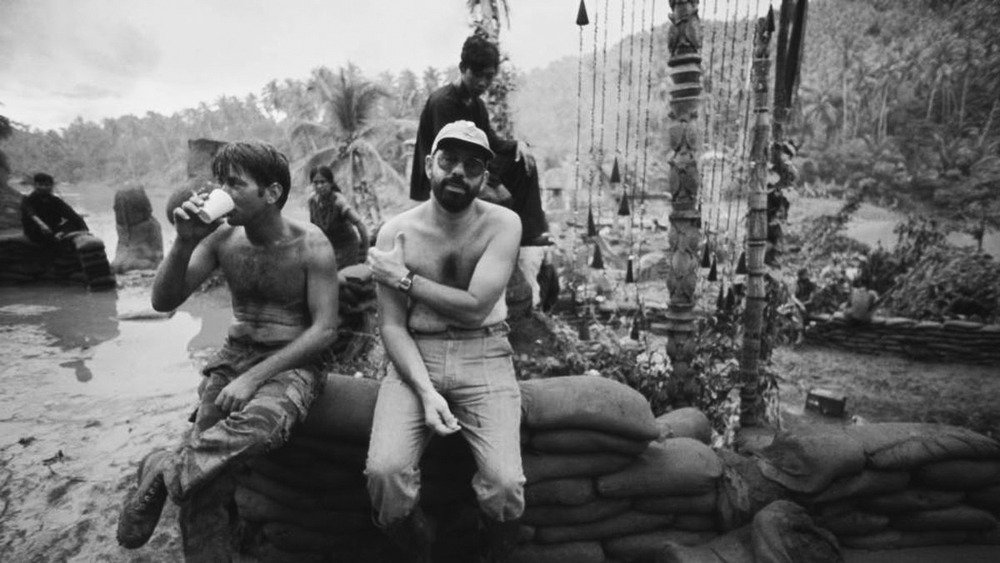
Весной 1976 года Фрэнсис и Элинор Коппола вместе с тремя детьми отправились на Филиппины, где Коппола должен был снимать «Апокалипсис сегодня». Его супругу Элинор попросили подготовить документальный фильм об этих съемках — в связи с этим она и начала вести заметки, в которых фиксировала происходящее. Месяцы превращались в годы, и заметки Элинор Копполы перестали быть лишь хроникой создания «Апокалипсиса сегодня» — они сделались еще и необычайным свидетельством эмоциональных и психологических испытаний, которые выпали на долю всех участников съемок. История самого фильма быстро приобрела ореол легендарности: три года работы и миллионы долларов, потраченные на съемку на Филиппинах; тайфун, разрушивший декорации; сердечный приступ у исполнителя главной роли Мартина Шина; эффектное прибытие невероятно располневшего Марлона Брандо…
Книга Элинор Копполы «Заметки о создании фильма „Апокалипсис сегодня“», которая недавно была опубликована на русском языке, наглядно знакомит с закулисьем съемочного процесса и в то же время раскрывает внутреннюю жизнь кинематографистов, полную вдохновения, боли и преодоления внутренних конфликтов. С разрешения издательства — киноведческой артели 1895.io — «Сеанс» публикует отрывок из книги. Еще один фрагмент вы можете прочитать на сайте «Искусства кино».
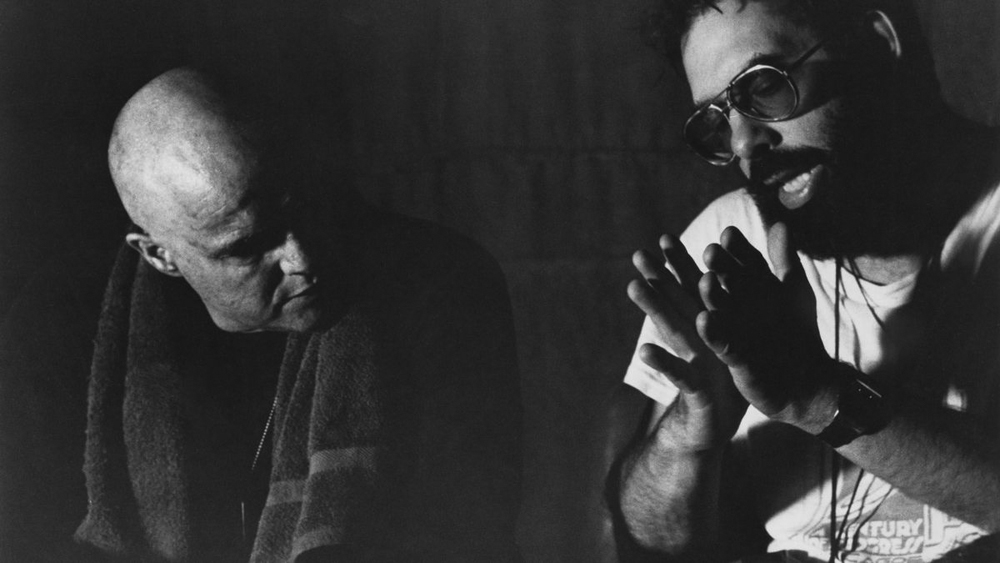
Пролог
Телефонные переговоры — с ноября 1975 г. по февраль 1976 г.
Стив Маккуин считает, что сценарий замечательный, но не видит себя в роли Уилларда. Фрэнсис говорит, что поедет в Малибу и договорится о том, чтобы роль была переписана под Стива.
Десять дней спустя
Стиву Маккуину роль теперь нравится гораздо больше, и сценарий, на его взгляд, отличный, но он никак не сможет уехать из страны на семнадцать недель: Эли не может
вывезти сына за границу, а родной сын Стива в этом году заканчивает школу.
На следующий день
Фрэнсис звонил Брандо — тот не ответил. Потом Фрэнсис связался с агентом Брандо и узнал, что Брандо в роли не заинтересован и обсуждать предложение не собирается.
Тот же день
Фрэнсис связался с Алем Пачино и пообещал выслать ему сценарий. Они обсудили новую любопытную трактовку персонажа.
Фрэнсису очень паршиво. Он собрал все свои «Оскары» и вышвырнул в окно
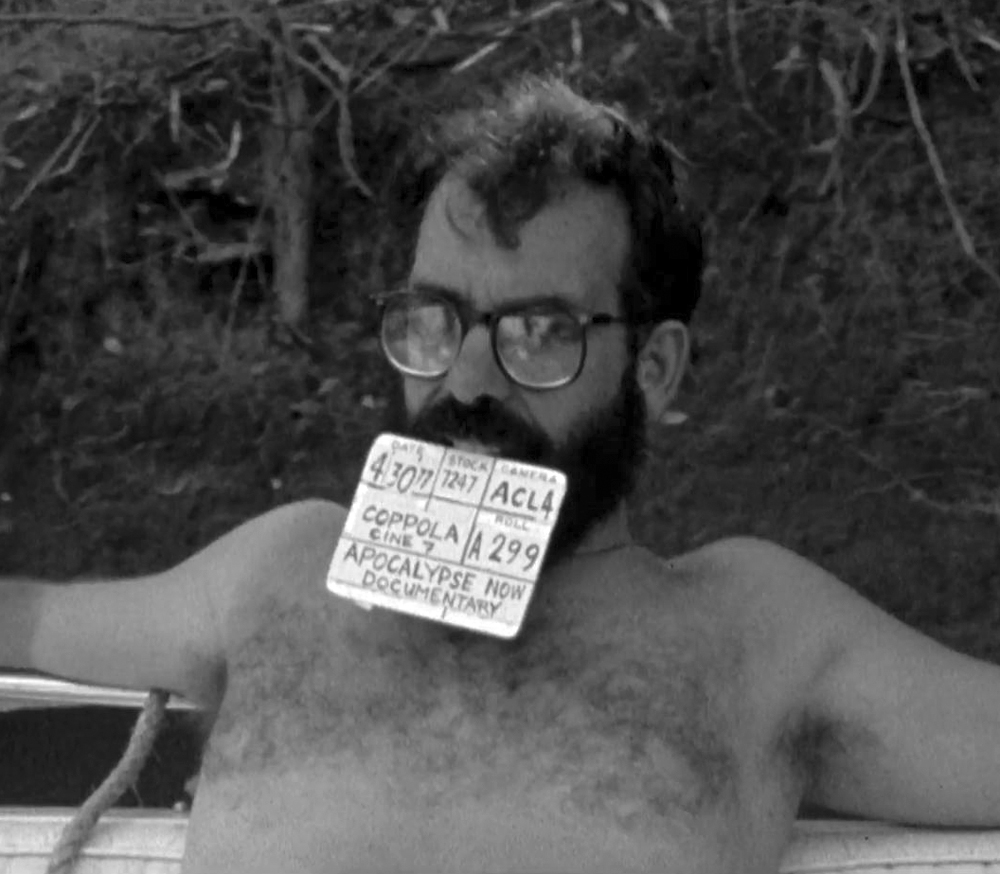
Позже
Аль прочитал сценарий и часами говорит о роли Уилларда, о том, как прекрасно написан сценарий и как он видит эту роль, но в итоге сообщает, что сниматься не сможет, потому что не продержится семнадцать недель в джунглях. Вспомнили, как сильно он заболел за несколько недель в Доминикане во время съемок второго «Крестного отца».
Фрэнсис связался с агентом Маккуина и предложил ему роль Курца, для которой понадобится улететь только на три недели.
Фрэнсис вернулся из Нью-Йорка: он ездил переговорить с Пачино насчет роли Курца
Агент Маккуина сообщил, что Стив готов сниматься, но с условием, что он получит такой же гонорар, как за семнадцать недель съемок, — три миллиона долларов: он считает, что фильм гарантированно отобьет кассу за рубежом.
Фрэнсис звонит Джимми Каану и предлагает роль Уилларда: один с четвертью миллион долларов за семнадцать съемочных недель.
Агент Джимми говорит, что тот хочет два миллиона.
Фрэнсис снова предлагает агенту Джимми миллион с четвертью.
Джимми отказывается и говорит, что его жена беременна и не хочет рожать на Филиппинах.
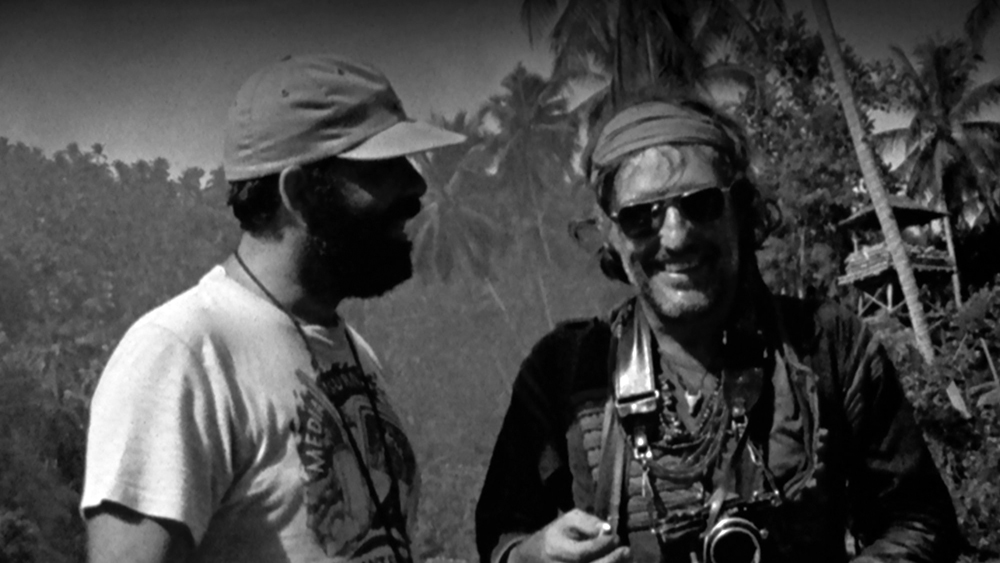
-

Фрэнсис Форд Коппола
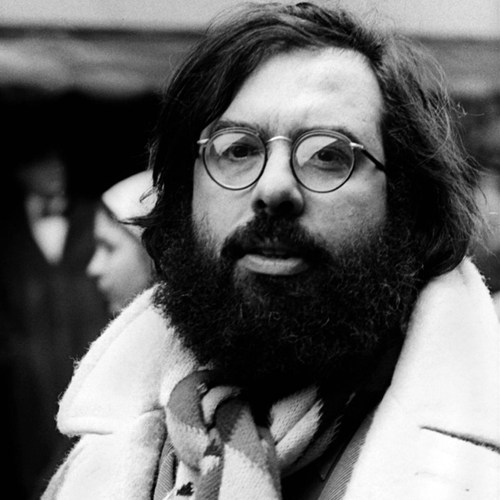
Фрэнсис через агента предлагает роль Уилларда Джеку Николсону. Агент отвечает отказом: Джек не сможет участвовать в фильме, так как будет снимать собственный.
Фрэнсис звонит Редфорду: тот наконец-то прочитал сценарий и в восторге от него. Ему нравится персонаж Курца, однако на роль Уилларда он согласиться не может — его последний фильм еще не закончен, а родным он пообещал, что до конца года не будет надолго уезжать на съемки.
Фрэнсис отказывается от сотрудничества с Маккуином.
Фрэнсис связывается с агентом Джека Николсона и предлагает роль Курца.
Фрэнсис звонит ассистенту по подбору актеров и просит организовать в Нью-Йорке пробы на роль Уилларда для малоизвестных актеров.
Звонит агент Джека: говорит, что тот не будет играть Курца.
София сказала: «Похоже на „Круиз по джунглям“ в „Диснейленде“»
Фрэнсис вернулся из Нью-Йорка: он ездил переговорить с Пачино насчет роли Курца и возможности переписать ее под него. Аль сказал, что пока что персонаж еще не вполне «его». На это Фрэнсис ответил, что, прежде чем писать сценарий дальше, он должен быть уверен в окончательном согласии, так как фильм вот-вот должны запустить в производство. Аль не может решиться. Фрэнсис сказал ему: «Поверь мне, вместе мы сделаем великую картину». В итоге Аль сказал, что все равно не может согласиться.
Фрэнсису очень паршиво. Он собрал все свои «Оскары» и вышвырнул в окно. Потом дети подбирали осколки во дворе. Четыре из пяти статуэток разбиты.
Фрэнсису звонит агент Брандо: говорит, что Брандо хочет встретиться.
По просьбе Фрэнсиса в Лос-Анджелесе также проводятся пробы для малоизвестных актеров.
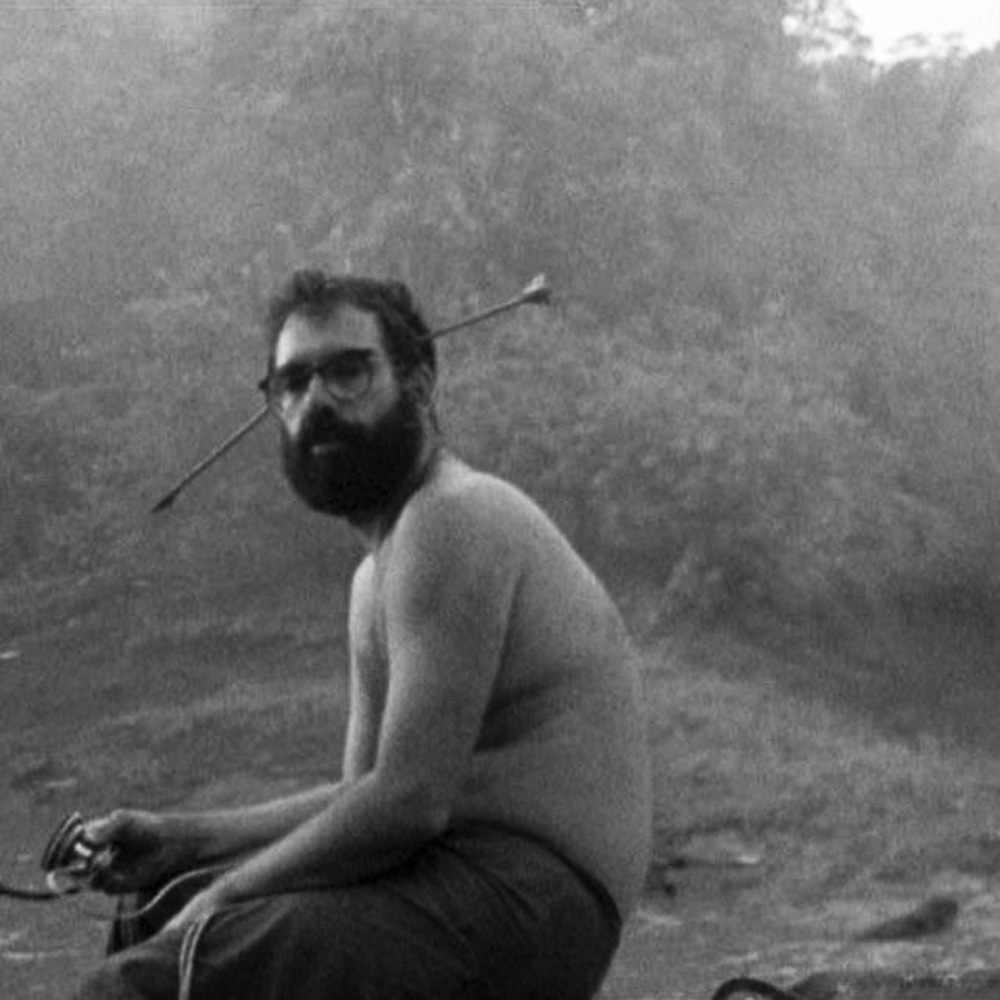
<…>
1976
4 марта, Балер
Сегодня мы все впервые увидели азиатских буйволов, рисовые поля и хижины из листьев пальмы нипа. Мы миновали мост на окраине деревушки и оказались в густых зарослях. София сказала: «Похоже на „Круиз по джунглям“ в „Диснейленде“». У пляжа дорога обрывалась, и наш джип продолжил путь по песку: с одной стороны был океан, с другой — джунгли. Добравшись до лагуны возле устья реки, мы пересели в банку — лодку с бамбуковыми балансирами-«крыльями» — и на ней отправились к натурной декорации «Деревня-2». Там команда Дина уже расчистила заросли, сплавила по реке бревна для постройки моста, показала местным рабочим, как изготавливать кирпич-сырец, привезла из соседней провинции бамбук, выстроила хижины, откачала воду, разбила грядки с овощами — словом, отстроила полноценную вьетнамскую деревню. У дороги рыли землю свиньи, возле домов копошились курицы, на городской площади сушился рис в корзинах, на окнах шелестели шторы, а аккуратно сложенные котелки были готовы к обеду. Я слышала шум ветра в верхушках пальм, но в то же время здесь как будто не хватало звуков: в деревне не было людей.
На одной из площадок кто-то из съемочной группы незадолго до нашего прибытия убил кобру. Интересно, что обо всем этом думают дети
9 марта, Манила
Всей семьей разместились в одном большом доме. Он огромный, просторный и по местным меркам просто роскошный. Наш район, Дасмаринас, — своего рода манильский Беверли Хиллз. Я попросила нашего кинодекоратора обставить его плетеной мебелью, чтобы после съемок можно было забрать ее в наш загородный дом в долине Напа. Он расставил плетеные стулья с высокой спинкой и обитую бархатом мебель из ротанга. В комнатах установили потолочные вентиляторы, а еще в доме множество тропических растений. Производственное совещание проходит за громадным обеденным столом. Мальчик-слуга в белом пиджаке спрашивает каждого гостя, что ему подать: сок каламондина или дольки папайи. Чувствуешь себя словно в зале ресторана «Луау» в Беверли Хиллз.
Мне слышно, как во дворе рабочие вручную копают бассейн, а плотник проверяет на прочность стены новой кинобудки.
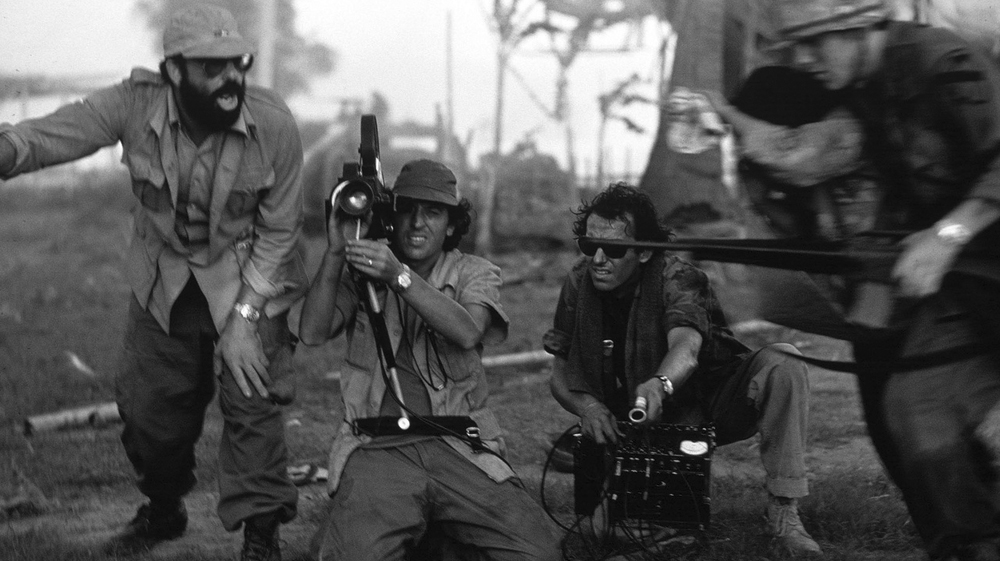
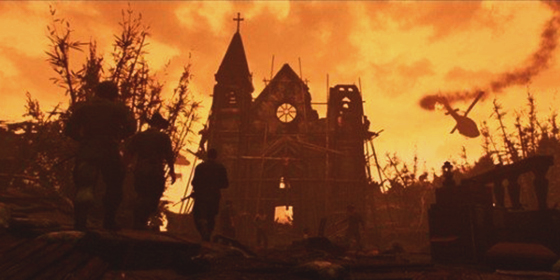
«Апокалипсис сегодня»: вчера и завтра
Последние несколько дней мы путешествовали по местам, где будут проходить съемки, — на самолете и вертолете, в каноэ, на джипе и пешком. Нам встречались домики из тростника на сваях, рыбацкие лодки, дети верхом на буйволе. Мы пили прямо из свежих кокосов. Мимо проносились банановые деревья, пальмы, непролазные джунгли, необъятные рисовые поля и плантации сахарного тростника, маленькие деревеньки с приветливо улыбающимися и машущими нам жителями. На одной из площадок кто-то из съемочной группы незадолго до нашего прибытия убил кобру. Интересно, что обо всем этом думают дети. Софии четыре года, Роману — десять, Джио — двенадцать. Я будто очутилась в иностранном фильме. Какая-то часть меня ждет, когда эта бобина докрутится до конца, и я снова окажусь в знакомой обстановке в Сан-Франциско или Напе.
Читайте также
-
Глухая балерина — Из книги Бориса Тулинцева «Нестертые следы»
-
Одинокий голос переводчика — О феномене «авторского» киноперевода
-
И-Ти и смотри — «Инопланетянин» 40 лет спустя
-
«Компульсивная красота» — От Бретона к Бунюэлю
-
Ты мне еще Ницше начни цитировать — «Конан-варвар» в России
-
«Люди в воскресенье» — Молодые люди вроде нас

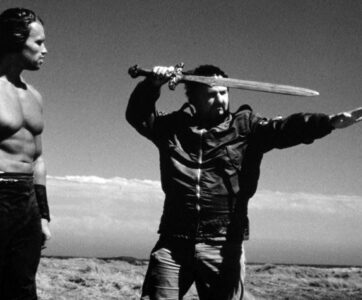

Придержи тьму: гид по «Апокалипсису сегодня» Фрэнсиса Форда Копполы
С 11 апреля в российском прокате можно снова почувствовать запах напалма поутру, познать настоящий ужас и совершить путешествие в самое сердце тьмы: на больших экранах показывают режиссерскую версию «Апокалипсиса сегодня» (1979) Фрэнсиса Форда Копполы. Алексей Филиппов постарался выделить наиболее значимые байки, мифы и компоненты эпохального полотна.
Молитвенность мертвых рук
В мерцаньи кончающейся звезды
«Полые люди» (1925), Томас Стернз Элиот
1969 год, разгар войны во Вьетнаме. Находящегося не в лучшей форме капитана спецназа Уилларда (Мартин Шин) отправляют в джунгли Камбоджи, чтобы он убил полковника Курца (Марлон Брандо). Блестящий военный, как считает американское командование, обезумел, устроил свое мини-государство и вмешивается в военные действия не в пользу США. Уиллард отправляется на речном патрульном катере PBR вверх по реке Меконг, а на самом деле — вплотную к оголенным человеческим инстинктам. Попытаемся отследить хотя бы несколько ключевых рукавов этой метафизической реки.
Конкурс человеческого безумия. Рождение замысла
История создания «Апокалипсиса сегодня» сама напоминает приключенческий роман, записанный агонизирующим от малярии путешественником. В документальной картине «Сердца тьмы: Апокалипсис кинематографиста» (1991) отсчет ведется аж с 1939 года, когда великий Орсон Уэллс хотел поставить фильм по роману Джозефа Конрада «Cердце тьмы» (1902). Роман о моряке Марлоу, который должен вывезти из Центральной Африки сбрендившего торговца слоновой костью Курца, слыл неэкранизируемым. У Уэллса не получилось, и он переключился на «Гражданина Кейна», но мысль адаптировать роман для большого экрана увлекла милитариста Джона Милиуса. Тот учился в киношколе вместе с Джорджем Лукасом, презирал хиппи и уважал серф, хотел героически умереть во Вьетнаме, но не смог из-за такого пустяка, как астма. В итоге он задумал патриотическую комедию «Психоделический солдат», основанную на байках ветеранов Вьетнама (про жару, наркоту и серфинг). Затем этот замысел было решено натянуть на «Cердце тьмы»: как раз из-за мифа о его неэкранизируемости, на котором настаивал преподаватель Милиуса и Лукаса. Режиссировать «Апокалипсис сегодня» должен был будущий постановщик «Звездных войн», а снимать в 1969 году собирались прямо во вьетнамском пекле. К счастью, продюсеры покрутили пальцем у виска и никуда кинематографистов не пустили.
Тем не менее Apocalypse now должен был стать ядерной боеголовкой нарождающегося Нового Голливуда: Фрэнсис Форд Коппола и Джордж Лукас основали в том же 1969-м компанию American Zoetrope, чьим первым хитом и была назначена картина по сценарию Милиуса. Запуск проекта однако затягивался, и из амбициозного юнца, снимавшего фильмы категории Б под патронажем Роджера Кормана, Коппола превратился в весомого (во всех смыслах) кинематографиста, миллионера, автора двух «Крестных отцов», человека с пятью «Оскарами», а также призом Каннского кинофестиваля за «Разговор» (1974). Ему-то и хватило безумия проигнорировать многочисленные отказы артистов (слились Николсон, Пачино, Редфорд, Маккуин), поругаться с американскими военными, договориться с филиппинским диктатором Фердинандом Маркосом и самому полететь в джунгли на юго-востоке Азии снимать якобы войну во Вьетнаме. Джордж Лукас вернулся к проекту космической сказки, которую задумал давным-давно (и которая тоже вписала его в историю кинематографа — как выдающегося мифотворца и бизнесмена).
Идиодиссея, или невероятные приключения американцев в Азии. Съемки
Если препродакшнПодготовка к съемкам — прим. ред. «Апокалипсиса» — это красивое жонглирование громкими именами (Конрад! Уэллс! Лукас!), то сами съемки — то ли репетиция «Дау», то ли менее расхлябанная версия того же проекта о сущности насилия. (Все-таки Коппола наснимал 500 тысяч метров пленки — против 700 у Хржановского — и разобрался с ними на монтажном столе гораздо быстрее российского коллеги.) На Филиппинах съемки и сами напоминали военные действия, порой — буквально. Когда на каннской пресс-конференции Коппола бросил, что этот фильм не о Вьетнаме, а он и есть Вьетнам, режиссер не слишком преувеличивал.
Боевые вертолеты Фердинанда Маркоса периодически улетали прямо во время съемок, чтобы бомбить коммунистов. Съемочная группа находилась в перманентном наркотическом и алкогольном опьянении. 36-летний Мартин Шин, сменивший Харви Кейтеля после первых дней съемок (очень дорогая для производства замена), чуть не умер от сердечного приступа — сказались высокая влажность, изнуряющая работа, излишества всякие нехорошие. Сам Коппола в какой-то момент подумывал покончить с собой — удивительно, что не с первых дней, а лишь ближе к финалу. Ему приходилось без конца бороться с продюсерами и даже заложить ради съемок дом. Мириться с местной войной против партизан и с непогодой: в 1976-м площадку просто уничтожил сильнейший за 40 лет тайфун, из-за чего съемки вообще на несколько месяцев остановили. Заставлять массовку часами лежать в специальных ямах, чтобы те изображали отрезанные головы, и сталкиваться с местным менталитетом: например, на съемки как-то притащили реальные трупы, восприняв фразу про «горы мертвых тел» на площадке буквально. Уговаривать невменяемого Денниса Хоппера, который сыграл фотографа и невольного проповедника идей Курца, импровизировать, раз тот не может выучить слова из-за проблем с наркотиками. Та же проблема возникла с Марлоном Брандо, который прилетел на Филиппины на три недели (гонорар — три миллиона, то есть по одному за семь дней съемок), изрядно растолстел, хотя по замыслу Курц был худ как щепка, а также вел с режиссером бесконечные беседы о характере персонажа и его убеждениях. Добавить сюда возникший вокруг режиссера культ личности, дешевую рабочую силу (филиппинские рабочие за несколько баксов в сутки трудились на постройке декораций), бесконечный кумар и амбиции снять шедевр, который даст под дых ненавистному Голливуду, а заодно и всей внешней политике США, — и несложно увидеть параллель между Копполой и его сумрачным персонажем (то, что Брандо раскабанел, даже символично).
Река времени
Нередко про «Апокалипсис сегодня» можно услышать, что в режиссерской версии он обрел прекрасную цельность, достиг границ авторского замысла. Это не совсем так: как понятно из истории подготовки к запуску и самих съемок, многое в фильме решали не столько идеи Милиуса или Копполы, сколько фатум. Вдобавок сам режиссер без конца переписывал сценарий, надеясь, что фильм сможет ответить на те вопросы, которые, как ему казалось, эта история ставит. Ключевой проблемой был финал: Копполе хотелось какой-то эффектной точки, а в сценарии у Милиуса в конце Уиллард и Курц должны были вместе воевать против вьетконговцев (что?).
Многое рождалось по ходу. Сцену с застрявшими во Вьетнаме еще с 1950-х французами Коппола придумал, так как хотел, чтобы чем дальше заплывали Уиллард сотоварищи, тем сильнее они углублялись в историю Вьетнама (и человечества). Первой остановкой стала некогда могучая держава с богатой колониальной историей, завязшая в этих же джунглях, как и США. Сцена снималась в густых клубах тумана, чтобы походить на дрему цивилизации. Коппола остался страшно недоволен материалом (ему не нравилось освещение и то, что не получилось заполучить на роли французов настоящих земляков Эйфелевой башни). Есть кадры, где он орет, чтобы все забыли про «это говно», однако в версии REDUX (режиссерской и восстановленной; она и идет сейчас в прокате) эпизод вставлен незадолго до встречи с Курцем, который проводит зрителя уже не вглубь современной истории, но куда-то в первобытную реальность.
Кстати, катер PBR носил гордое имя «Эребус», что с латыни переводится как «мрак». Еще одноименный британский бомбардирский корабль при загадочных обстоятельствах пропал во время антарктической экспедиции полтора столетия назад вместе с другим судном под дружелюбным названием «Террор»Корабли, пропавшие примерно в 1845 году, вероятно, затерло льдами, а обнаружили их только в 2016-м. Фантаст Дэн Симмонс написал об этих событиях мистический хоррор «Террор», который в прошлом году превратили в сериал — прим. ред..
Курц-божок
Образ полковника как языческого или ветхозаветного бога, монументальной скульптуры, едва выглядывающей из густой тени цивилизации, тоже родился не от хорошей жизни. Так оператор-виртуоз Витторио Стораро предложил замаскировать новые масштабы гениального артиста Брандо. Вынужденная хитрость, но если бы этого не было — стоило бы выдумать. К такому облику самопровозглашенного правителя, эдакому обезумевшему собрату Лоуренса Аравийского, гораздо лучше клеится характеристика «поэт-воин», как его кличет персонаж Хоппера. Вдобавок Курц цитирует газету Times о военных успехах США во Вьетнаме вперемешку с «Полыми людьми» (1925) поэта Элиота. Сводя воедино ложные факты и поэтическую метафизику, а потом и размышления о подлинном страхе.
Полдень, XX век. Убийства, безнадега и шоу
Как стихотворение Элиота описывает разочарование и утраты людей XX века, так и «Апокалипсис сегодня» собирает в огромную плетеную корзину все хищные вещи столетия. Милитаристская мощь вагнеровского «Полета Валькирий» соседствует с тихим отчаянием The End группы The Doors, с которой все и начинается. Издевка в адрес шестидесятнических лозунгов хиппи «Нирвана сейчас» (Nirvana now), заключенная в названии фильма (колкость Милиуса), и ее обличение войны как грандиозного шоу, которое американцы привносят всюду, куда бы ни направлялись. Противостояние цивилизации и видимой первобытности сводится к невозможности ответить на вопрос, какие крайние убеждения наиболее ужасны. Хоть про «Апокалипсис сегодня» и принято говорить в ключе войны во Вьетнаме, это кино все же в большей степени о войне западной цивилизации с собственными демонами. Потому вьетнамцы фигурируют как одичалая бессловесная массовка наряду с тиграми, видениями и новостями о преступлении Чарльза Миллза Мэнсона.
К слову, именно со зверской выходки «Семьи» и шрамов войны во Вьетнаме массовая культура ведет отсчет психологических недугов нового времени. Мир оказался сложнее, чем принято было думать, и это посеяло в новом человеке подлинный страх.
Это американская сумеречная зона
В списке вдохновителей Копполы принято называть имена золотые: Гомер, Джозеф Конрад, Элиот. Однако не стоит забывать и о телевидении, где в 1950–60-е рождались проекты, которые плотно засядут в подкорке массовой культуры. Если влиятельный во всех отношениях «Cтартрек» (1966) остался за бортом, то другой сериал про открытый космос определенно влияние имел. В интервью Коппола упоминал, что снимал «Апокалипсис» по законам Ирвина Аллена — «мастера стихийных бедствий», сценариста научно-фантастических шоу и фильмов-катастроф. Так, в его сериале «Затерянные в космосе» (1969–1970) типичная американская семья Робинсонов, которая отправляется колонизировать другую планету, оказывается вовлечена в классическую алленовскую драматургию: их преследует одна неприятность за другой.
Еще большее — уже не драматическое, а философское — влияние на Копполу явно оказал сценарист Род Серлинг, автор великой «Cумеречной зоны» (1959–1964). Пусть сюжет «Апокалипсиса сегодня» и складывается из мини-катастроф, но за каждой стоит экзистенциальная проблема, какие Серлинг обнаруживал в лаконичных фантастических сюжетах. Территорию рефлексов, инстинктов, сознательных и подсознательных завихрений сценарист именовал «сумеречной зоной» — территорией «между пропастью человеческого страха и вершиной его знания». Именно страх — фундаментальное понятие «Апокалипсиса» Копполы.
Режиссура — один из последних оплотов диктатуры
Если плыть еще глубже по реке «Апокалипсиса сегодня», то это фильм не только о Вьетнаме, геополитических амбициях США, таланте современной цивилизации превращать в шоу все, к чему она прикоснется, и бесконечной пустоте, которая за этой радостью и блестками скрывается. Как замечает «зайка» Playboy — быть девушкой года крайне одиноко. Это монументальное полотно даже не столько о сидящем в каждом из нас дикаре (как в неприметном капитане Уилларде скрывается вечно пьяный самурай — открывающий пьяный танец вдохновлен японскими ритуалами), но о мерцающей тьме, взглянув в которую только и остается прошептать: «Ужас. Ужас. Ужас».
На своей шкуре этот сюжет испытали не только персонажи Конрада — писателя, чья проза подарила названия кораблям из «Чужого» Ридли Скотта (другой картины про встречу с немигающим кошмаром), но и вся съемочная группа. В «Апокалипсисе кинематографиста» выдвигается теория, что сердечный приступ Шина — следствие не возлияний, а встречи 36-летнего жовиального артиста с собственной тьмой, которую он раскопал в размышлениях о роли. Коппола и сам видел сходство между собой и Курцем. В «Апокалипсисе кинематографиста» он говорит на камеру, что «режиссура — один из последних оплотов диктатуры». Когда же его супруга Элинор рассказывает о совместном снимке филиппинских жрецов и Фрэнсиса, становится немного жутко: фигура постановщика буквально занимает место в смысловом ряду с проводниками мистической силы из прошлого. Многочисленные бастионы и достижения современной цивилизации не способны помешать человеку вглядеться, по завету Ницше, в бездну — и даже шагнуть в нее.
This is the end. Horror. Horror.«Это конец» — фраза из одноименной песни The Doors. Двукратно «Ужас» — последняя реплика Курца — прим. ред.
В свой сорокалетний юбилей в кинотеатры возвращается легендарный шедевр Фрэнсиса Форда Копполы. «КиноРепортер» разбирается в смыслах фильма, которые зачастую идут вразрез с историей его создания.
Очередная правда о войне

Еще в начале работы над сценарием «Апокалипсиса сегодня» анти- и про-военная точки зрения сцепились мертвой хваткой. В основу сюжета легла новелла Джозефа Конрада «Сердце тьмы» (1902) про поездку вглубь Африки за свихнувшимся сборщиком слоновой кости. Типичную историю об опасной экзотике «военизировал» правый нью-эйджер Джон Милиус, который сам рвался поехать во Вьетнам, но не попал туда из-за астмы. На сценарий Милиуса лег закадровый текст, написанный известным военным корреспондентом Майклом Герром, освещавшим Вьетнамскую войну для журнала Esquire. Именно его текст стал важным отвлечением от литературного источника и прибавил проекту внутренней противоречивости. По словам Копполы, закадровые размышления капитана Уилларда (Мартин Шин), отправившегося в ад с заданием ликвидировать безумного полковника Курца (Марлон Брандо), служит «голосом правды», срывающим покровы со спектакля Вьетнамской войны, который устроили власти и телевидение. Противоречие здесь в том, что очередная попытка сказать всю «правду» о войне — едва ли убедительный метод против тех, кто давным-давно научился штамповать «правду».
Этот фильм и есть Вьетнам

Коппола редактировал сценарий, снимал и продюсировал «Апокалипсис», тратил на него личные деньги и писал музыку. По словам обиженного правками Миллиуса, режиссер «терпеть не мог никакого творческого авторитета рядом с собой и хотел единолично спасать человечество, будучи при этом диктатором вроде Муссолини». Съемки проходили на Филиппинах, и как на дрожжах растущие амбиции Копполы растянули их с нескольких месяцев до полутора лет. За это время члены съемочной группы пожили в условиях секты полковника Курца: они скакали через костры под кислотой, спали с местными женщинами, изнывали от жары и насекомых. Неудивительно, что на Каннской пресс-конференции 1979 года Коппола сказал, что его фильм «не о Вьетнаме, он и есть Вьетнам». В меньшей степени это относится к содержанию фильма.
Наркотики как военный симулятор

По словам Копполы, производство «Апокалипсиса» было близко к психологической реальности Вьетнамской войны: «Мы были в джунглях, нас было слишком много, у нас был доступ к слишком большому количеству денег, слишком большому количеству оборудования, и постепенно мы сходили с ума». Коппола и компания истощали себя голодовками и обжорством, алкоголем и ЛСД, из-за чего даже приходилось менять сценарий. Например, персонаж Сэма Боттомса (серфингист Лэнс) был прописан как кислотный наркоман постфактум: Боттомс ни разу не пришел на площадку без марки под языком, так что его героя тоже пришлось посадить на кислоту. Ни в фильме, ни на площадке наркотики не были радужным атрибутом хиппи-досуга. Скорее, за их счет воссоздавалась реальность войны. Важно помнить, что ни одна из войн XX века не обошлась без веществ: Первая мировая держалась на морфии, Вторая — на амфетаминах, Вьетнамскую войну переживали с помощью психоделиков. Бесконтрольное пьянство и трипы съемочной группы «Апокалипсиса» изматывали и доводили до реальных «боевых» травм — у Мартина Шина, например, в один из съемочных дней случился сердечный приступ.
Секта имени Копполы

Коппола несколько раз впадал в депрессию и грозился покончить с собой, а затем тратил кучу денег на бесполезные вещи вроде дрессированного тигра из Голливуда. Импульсивного режиссера побаивались инвесторы и боготворили актеры. Коппола словно сам проживал роль полковника Курца, изменяя жене и грозясь все бросить. Это вело к конкретным этическим противоречиям: среди массовки валялись реальные трупы, купленные у филиппинских мошенников, в финальной сцене резали настоящего, а не бутафорского быка. Но все это еще меньшее из зол.
Как реквизит убивал партизан

Если для съемочной группы «Апокалипсис сегодня» был симулятором Вьетнама, позволявшим переживать предельный опыт, то для менее привилегированных участников проект обернулся почти что натуральной войной. Главным спонсором «Апокалипсиса сегодня» был филиппинский диктатор Фердинанд Маркос, к которому Коппола обратился после отказа Пентагона. Маркос предоставил землю, дешевых работников, не защищенных никакими профсоюзами, разрешил спалить напалмом лес и дал кинематографистам вертолеты филиппинской армии. Договор с Маркосом никогда не был секретом, и жена режиссера спокойно рассказывала о нем в документальном фильме про съемки «Апокалипсиса» («Сердца тьмы: Апокалипсис кинематографиста» — прим. ред.). Зато почти нигде не упоминалось, что Коппола платил за установку пулеметов на филиппинских вертолетах, которые правительство Маркоса то и дело забирало и бомбило ими протестующих левых партизан. Режиссер вряд ли осознавал, что съемки антивоенной картины с саундтреком символа американской контркультуры 1960-х Джима Моррисона помогали воевать против левых повстанцев в странах Азии.
Запад и его взгляд

Команда «Апокалипсиса сегодня» сама, словно армия, дольше года осаждала Филиппины. Местные статисты получали лишь половину той суммы, которая платилась американцам и европейцам, а один филиппинский рабочий даже погиб на съемках. Грубое безразличие к филиппинцам рифмовалось с изображением вьетнамцев в фильме. Коппола сделал из них безголосых дикарей, неотличимых от пейзажа, по которому группа американцев плывет в сердце тьмы. При всем драматизме конфликта, открывающем героям ужас войны, действительно смелым антивоенным жестом было бы другое — признать, что, несмотря на все потраченные США миллиарды, война во Вьетнаме была делом вьетнамцев. Коппола явно не врал, когда говорил, что «Апокалипсис сегодня» — фильм «не о Вьетнаме».
Любование напалмом

Оператор Витторио Стораро, работавший с Дарио Ардженто и Бернардо Бертолуччи, снял войну не как отвратительное кровавое месиво, а как деструктивную красоту. Зритель видит Вьетнам взглядом американского колонизатора, который одновременно восхищен и напуган карнавальным буйством красок, лопастями вертолетов и выжигающим деревни напалмом. Пейзажи «Апокалипсиса сегодня» — это рай в адском огне и розовом дыму, цветовое буйство которых передает растерянность американца на далекой земле. Стораро метил еще дальше: по его словам, когда искусственные цвета захватывают натуральные краски, разворачивается главный конфликт кинематографа. Одни критики восторгались рифмами между фильмом и цветовой философией Стораро, а других возмущала поэтизация войны, превращение напалма в живописный прием.
Война как киномиф

Именно Стораро придумал знаменитый образ капитана Курца. По замыслу Копполы Марлон Брандо должен был играть заблудшего исхудавшего путника, но умудрился располнеть к началу съемок. При этом он отказывался превращать персонажа в толстого чревоугодника и требовал снимать его в изначальном амплуа. Капризы чуть не сорвали съемки, но тут Стораро нашел выход. С помощью света и тени (и двухметрового дублера) он снял Брандо как мифологического великана. Такой образ Курца идеально встроился в планы Копполы снять фильм про мифологическую борьбу темной и светлой сторон в человеке. Сплавление по реке в сердце тьмы (доставшееся сценарию от новеллы Конрада) Коппола показал как путешествие в прошлое. Чем дальше катер Уилларда и компании спускается по реке, тем сильнее замедляется время. Для затерявшихся в джунглях солдат оно теряет линейную направленность, а французы, у которых ночуют герои, и вовсе кажутся призраками из колониального прошлого. Время «Апокалипсиса» закольцовано с самого начала (не зря же фильм открывается словами Джима Моррисона «This is the end»). Это время травмы Уилларда и время мифа, у которого нет конца, но есть центр, где сидит большой и страшный великан. Все это помогло Копполе снять уникальное исследование военной мифологии. Но именно тут многие (в частности, философ Жан Бодрийяр) увидели не критику войны, а зачарованность ею.
Фантасмагория воюет с панорамой

Еще одна визуальная находка (но уже не Стораро, а Копполы) не только добавила мифологизма, но и выделила «Апокалипсис» из ряда прочих военных и антивоенных фильмов. Частным приемом такого кино были панорамные сцены: в «Тропах славы» или в «Самом длинном дне» они создавали иллюзию парящего взгляда, который превращал поле битвы в зрительский аттракцион. «Апокалипсис» отходит от панорамного зрения и вместо этого опирается на фантасмагорию, технику протокинематографа (читай, мифологии кино), разработанную в конце XVIII века. Фантасмагория — это прибор с фонарем за разрисованными ставнями, который проецирует призрачные изображения на окружающие предметы. В кино фантасмагория попала благодаря Жоржу Мельесу и немецким экспрессионистам, на стиль которых сильно опирался Коппола. Технически она воплотилась во внутрикадровом монтаже и игре с цветами (фишка Стораро), которые и сделали «Апокалипсис» скорее мифом о власти, чем эпической баталией.
Война как спектакль

«Апокалипсис сегодня» отражает важнейший нерв двадцатого века — превращение войны в спектакль. Снятые с воздуха фотографии Первой Мировой превратили войну в поразительное зрелище, которое вдохновило кинематографистов (в частности, полевого фотографа Первой Мировой и позже «отца Голливуда» Дэвида Уорка Гриффита) на поиски нового визуального языка. То же продолжили делать кинокамеры, которые подвешивались к пулеметам авиации во время Второй Мировой, чтобы фиксировать мир глазами уничтожающего его бомбардировщика. В это же время война сама становилась технологическим чудом, а воющие государства все яростнее использовали камеры, чтобы демонстрировать чудеса силы в кинотеатрах и особенно по ТВ. Вьетнамская война была сильно искажена телевидением и для простых американцев протекала в формате патриотического спектакля.
«Апокалипсис сегодня» с его до сих пор эффектными вертолетами и взрывами — это часть этой империи технологичных зрелищ. Парадокс заключается в том, что будучи одним из ярчайших военных зрелищ, фильм Копполы ослепительно критикует военный спектакль. Капитан Уиллард, спустившийся с неба под музыку Вагнера, растерянно застывает перед телевизионщиками, которые пытаются заставить его воевать, не замечая камеры (в роли орущего репортера снялся сам Коппола). По ходу фильма Уиллард начинает видеть, как восприятие войны в качестве развлечения заставляет людей участвовать в махинациях власти. Эта чудовищная путаница реальности и ее изображения, подмена одного другим сводит с ума всех персонажей фильма — Уилларда, его команду, фотокорреспондента (!) в исполнении Денниса Хоппера и, конечно, полковника Курца, который, умирая, повторяет одно единственное слово — horror, то есть «ужас». Кажется, это самая точная оценка обращения войны в спектакль, способный заворожить даже самые свободные и пытливые умы. Коппола снял страшный эпохальный фильм, который стоит где-то между надеждами Гриффита на воинственно прекрасные технологии кино и имитационной видеоигрой «Виртуальный Ирак». Если не это horror, то что.
Если вы нашли ошибку, пожалуйста, выделите фрагмент текста и нажмите Ctrl+Enter.
Апокалипсис сегодня
Apocalypse Now
«Апока́липсис сего́дня» (редко «Апокалипсис нашего времени», «Апокалипсис наших дней», буквальный перевод: «Апокалипсис сейчас») — кинофильм о войне во Вьетнаме. Фильм снят Фрэнсисом Фордом Копполой по сценарию самого Копполы, Джона Милиуса и Майкла Херра, который был написан по мотивам новеллы Джозефа Конрада «Сердце тьмы». Фильм был удостоен «Золотой пальмовой ветви» — главного приза Каннского кинофестиваля, и премии «Оскар» за лучшую операторскую работу. «Я уверен, что создал произведение искусства и не мог сделать лучше», — сказал Фрэнсис Коппола об этом фильме.
Главная сюжетная линия фильма — рассказ о капитане американской армии Уилларде, посланном в джунгли Камбоджи, чтобы устранить сошедшего с ума полковника Курца, который командует отрядом из местных жителей и обвиняется в убийстве нескольких американцев. В ходе путешествия с Уиллардом происходит много странных событий, и под воздействием окружающей обстановки он по мере приближения к цели постепенно теряет ощущение реальности и перестаёт понимать, что ему делать дальше. Многие из кинокритиков считают, что фильм, как и новелла Джозефа Конрада, уводит зрителя далеко вглубь человеческой психики, а война служит лишь фоном для проявления тех человеческих качеств, которые обычно не лежат на поверхности.
Капитана Уилларда в фильме играет Мартин Шин, полковника Курца — Марлон Брандо. Также можно выделить яркие персонажи Денниса Хоппера (полусумасшедший фотожурналист-философ в поселении Курца) и Роберта Дюволла (эксцентричный командир «воздушной кавалерии» полковник Килгор). В эпизодических ролях заняты несколько других известных актёров, таких, как Харрисон Форд и Лоуренс Фишбёрн.
Фильм стал широко известен в прессе задолго до его выпуска из-за долгого и трудного процесса его съёмок. Жена Копполы Элеонор позже написала книгу, в которой рассказывала о том, как снимался фильм; она также принимала участие в создании документального фильма «Сердце тьмы: Апокалипсис создателя фильма», повествующем о создании фильма «Апокалипсис сегодня».
Содержание
- 1 Предпосылки
- 2 Съёмки фильма
- 3 Сюжет
- 4 Режиссёрская версия фильма
- 5 Альтернативные концовки
- 6 Отклики
- 7 Фильм и книга
- 8 Награды и номинации
- 9 См. также
- 10 Источники
- 11 Ссылки
Предпосылки[править]
Сценарий для фильма был изначально написан Джоном Милиусом, который позже стал известен как режиссёр фильмов «Ветер и лев» и «Красный рассвет». Милиус рассказывал, что на написание сценария его вдохновили слова профессора, у которого он учился: профессор утверждал, что никому ещё не удавалось снять хороший фильм по книге «Сердце тьмы», несмотря на то, что попытки сделать это предпринимались такими легендарными людьми, как Орсон Уэллс и Ричард Брукс. Сценарий Милиуса вовсе не предполагал, что фильм станет антивоенным, как это впоследствии произошло. Милиус придерживался политически правых взглядов, и сценарий фильма включал несколько монологов, в которых полковник Курц восхвалял достоинства войны и образа жизни воина. Название фильма «Апокалипсис сегодня» (буквально «Апокалипсис сейчас») изначально воспринималось Милиусом как циничный ответ лозунгу хиппи «Нирвана сейчас!».
Сначала предполагалось, что фильм будет снимать Джордж Лукас, который был в то время протеже Копполы в студии American Zoetrope. Коппола основал эту студию в качестве альтернативы основным голливудским студиям и планировал использовать её для поддержки молодых режиссёров, только что закончивших режиссёрские школы и курсы. Война во Вьетнаме была тогда ещё в разгаре, и первоначальный план состоял в том, чтобы снимать картину непосредственно во Вьетнаме, на партизанский манер. Однако компания Уорнер Бразерс, у которой был договор с Zoetrope, отказалась финансировать такой проект, мотивировав это как сомнениями в коммерческом успехе фильма, так и соображениями безопасности — риск в том, что создатели фильма пострадают при съёмках в зоне боевых действий, был немалый. Лукас позже утверждал, что и сама студия Zoetrope смотрела на этот проект как на «сумасбродный», да и к нему самому и его коллегам по проекту относились так же.
Однако идея снять фильм по сценарию Милиуса не оставляла Копполу, и через несколько лет он решил снимать фильм сам. Ходили слухи, что это вызвало некоторые трения между ним и Лукасом, который стал к тому времени успешен и очень известен — сначала благодаря фильму «Американские граффити», а потом блокбастеру «Звёздные войны». Коппола решил снимать фильм целиком на собственные средства, используя деньги, заработанные на съёмке двух «Крёстных отцов», а на недостающую сумму взяв кредит в банке. Он придавал большое значение тому, чтобы в его руках был полный контроль над созданием фильма, и никто не стеснял свободу его творчества.
Съёмки фильма[править]
Съёмочная группа
- Фрэнсис Форд Коппола — режиссёр, продюсер
- Джон Милиус, Фрэнсис Форд Коппола — сценарий
- Майкл Герр — дикторский текст
- Витторио Стораро — оператор-постановщик
- Энрико Уметелли — оператор
- Дин Тавуларис — художник-постановщик
- Ричард Маркс — главный редактор
- Уолтер Мюрх, Джеральд Би Гринберг, Лиза Фрахтман — редакторы
- Дэннис Якоб — креативный консультант
- Дик Уайт, Фред Рексер младший, подполковник в отставке Питер Кама, Пол Грегори, Ричард Диогварди, Дуг Райан — военные консультанты
- Кармайн Коппола, Фрэнсис Форд Коппола — композиторы
- Уолтер Мёрч — звукооператор
- Анджело Грэм — художник
- Джордж Ар Нельсон — декоратор
- Чарльз И Джеймс, Деннис Эм Филл, Джордж Литтл, Ластер Бэйлес, Норман Барза — костюмы
- Джек Янг, Фрэд Си Блау младший — грим
- Джозеф Ломбарди, Эй Ди Флауэрс — спецэффекты (координаторы группы)
- Джерри Цайзмер, Ларри Джэй Франко, Тони Брандт — ассистенты режиссёра
- Фред Рус, Грэй Фредриксон, Том Стернберг — сопродюсеры
- Ким Обри — продюсер режиссёрской версии
Коппола значительно доработал сценарий в соответствии со своим ви́дением темы, убрав из него множество диалогов в стиле мачо и изменив концовку. В концовке Милиуса Уиллард и Курц объединяются, чтобы противостоять воздушной атаке американцев на селение Курца; селение уничтожается массированной бомбардировкой, и раненый Курц умирает на руках Уилларда. Коппола отверг такой финал как слишком упрощённый. Концовка переписывалась множество раз уже в процессе съёмок фильма, и в результате большая часть роли Курца стала импровизацией игравшего его Марлона Брандо. Закадровый текст фильма был написан уже в процессе монтажа Майклом Херром, который до этого, будучи военным корреспондентом во Вьетнаме, написал документальную книгу «Dispatches».
«Апокалипсис сегодня» был первой совместной работой Копполы и оператора Витторио Стораро, снявшего к тому моменту несколько фильмов с Бернардо Бертолуччи.
Фильм снимался с марта 1976 года по август 1977 года на Филиппинах, большей частью на реке Пагсаньян. История его создания стала почти легендой из-за долгого времени съёмок и многочисленных трудностей, которые постоянно приходилось преодолевать. Фильм обошёлся гораздо дороже, чем это планировалось, и снимался гораздо дольше первоначального расписания. Тому было множество причин.
Американское правительство и военное командование, видя, что Коппола собирается снять фильм, который не совпадёт с официальной точкой зрения на войну во Вьетнаме, отказалось каким-либо образом помогать в съёмках фильма. Коппола нашёл поддержку у правительства Филиппин, которое было тогда в натянутых отношениях с США, и филиппинские вооружённые силы согласились предоставить вертолёты вместе с пилотами. Поскольку пилоты плохо представляли себе процесс киносъёмок, требовалось некоторое время, чтобы объяснить им, что от них требуется. В это время правительство Филиппин вело боевые действия против повстанцев, и нередко в тот момент, когда пилоты были обучены и можно было начинать съёмку, их отзывали для участия в этих боях. Затем военное командование присылало вертолёты снова, но в них были уже другие пилоты, которых нужно было обучать заново. Неоднократные попытки Копполы объяснить филиппинским генералам, что нужно присылать одних и тех же пилотов, не возымели успеха. В результате сцена вертолётной атаки на вьетнамскую деревню, которая занимает в фильме около 15 минут, снималась в течение нескольких месяцев.
Вскоре после начала съёмок большинство построенных декораций были разрушены внезапно случившимся тайфуном. Пришлось строить их заново, что потребовало немало времени и денег.
Главную роль должен был играть Харви Кейтель, однако, когда Коппола отснял некоторое количество эпизодов, образ Кейтеля ему совсем не понравился, и Кейтель был заменен на Мартина Шина; уже отснятые сцены с Кейтелем пришлось переснимать.
В процессе съёмок страданий капитана Уилларда в отеле Сайгона Коппола стремился к максимальному правдоподобию, и сам Шин поддерживал его в этом, вгоняя себя в депрессию и намеренно злоупотребляя алкоголем. Большинство сцен в отеле были сняты, когда Мартин Шин на самом деле был пьян и не обращал внимания на то, что его снимают. Всё это привело к тому, что у Шина случился инфаркт, который чуть не стал смертельным. Ему потребовалось несколько недель, чтобы восстановиться и вернуться к работе, и в это время Коппола подумывал даже о том, чтобы свернуть съёмки фильма. Когда съёмки возобновились, Шина стремились сильно не нагружать, и в длинных сценах Мартина подменял его брат Джо Эстевес, который был похож на Шина и внешне и голосом. Позже он также записал некоторые из диалогов фильма.
Вторую главную роль должен был играть Марлон Брандо. Его участие было необходимо только в концовке фильма, и Коппола договорился с Брандо, что тот прибудет на Филиппины к этому моменту. Коппола требовал, чтобы Брандо похудел (поскольку его персонаж описывался как болезненный и истощённый) и прочитал книгу Джозефа Конрада. Когда Брандо приехал на съёмки, выяснилось, что он не только не похудел, но и ещё больше располнел, и не прочитал не только книгу Конрада, но даже и сценарий фильма. У него было немного времени для съёмок, и он отказывался учить текст своей роли. Практически все монологи Курца были чистой импровизацией Брандо, и Копполе пришлось смириться с этим. Чтобы полнота Брандо не так бросалась в глаза, Коппола снимал преимущественно его лицо, всё остальное оставалось затенённым.
Известно высказывание Копполы о съёмках: «Мы делали этот фильм примерно так же, как американцы вели войну — нас было слишком много, мы тратили слишком много денег, и понемногу сходили с ума». Поскольку Коппола вложил в съёмку фильма свои средства, он испытывал беспрецедентное давление — в случае, если бы фильм не был закончен в приемлемые сроки или оказался бы коммерчески неуспешным, режиссёр оказывался перед реальным риском финансового краха и банкротства. Как описывает Элеонор Коппола в документальном фильме «Сердце тьмы: Апокалипсис создателя фильма», брак Копполы за время съёмок практически распался, а сам Коппола пережил серьёзный нервный срыв.
Когда съёмки были закончены, Коппола привёз в Голливуд более семи тонн киноплёнки, на просмотр всего отснятого материала требовалось около 15 часов. Из-за этого монтаж фильма, который обычно занимает около полугода, растянулся на почти двухлетний срок. Когда был готов первый вариант фильма, оказалось, что он длится более пяти часов, и для проката необходимо было сильно сократить его. Коппола вспоминал, что это был весьма тяжёлый для него процесс, приходилось выбрасывать целые сюжетные линии, на съёмку которых было потрачено много времени, сил и средств. В конце концов Коппола смонтировал трёхчасовой вариант фильма, который был показан на фестивале в Каннах в 1979 году в качестве «неоконченной работы». Картина имела ошеломляющий успех и завоевала главный приз фестиваля — «Золотую пальмовую ветвь». На пресс-конференции в Каннах Коппола произнёс ставшие известными слова: «Мой фильм — не о Вьетнаме; он и есть Вьетнам».
Перед выпуском фильма в широкий прокат Копполе пришлось ещё немного сократить фильм, и выпущенная версия шла примерно два с половиной часа. Прокат фильма принёс высокие кассовые сборы и в США, и в других странах — всего около 100 миллионов долларов.
В 2001 году Коппола выпустил новую версию фильма, названную «Апокалипсис сегодня возвращается», в которой восстановил некоторые сцены и диалоги, вырезанные в первой выпущенной версии. В новой редакции фильм идёт 202 минуты. В выпуске этой редакции также принимал участие Витторио Стораро, который придумал свой собственный метод восстановления цвета на киноплёнке, чтобы подготовить фильм к новому выпуску. Стораро утверждает, что новая редакция фильма выглядит лучше, чем оригинальная.
Сюжет[править]
В начале фильма нет ни названия, ни титров. Зритель слышит приглушённый шум вертолёта, который становится всё более отчётливым, и видит военные сцены — бомбардировку леса, множество взрывов; звучит композиция «The End» группы The Doors (а точнее, уникальная её версия, использовавшаяся только в фильме). На этом фоне постепенно появляется лицо человека — главного героя, от имени которого повествует голос за кадром.
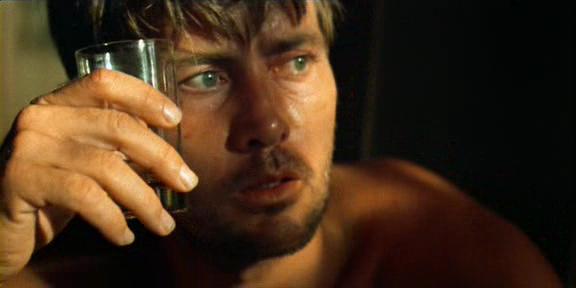
Капитан американской армии Бенджамин Уиллард — ветеран спецназа, угнетённый внутренними проблемами и неприспособленный более к мирной жизни — живёт в отеле в Сайгоне, ожидая следующего задания. Он злоупотребляет алкоголем, предаётся воспоминаниям, иногда в гневе разбивает мебель в номере, иногда плачет. В один из дней к нему приходят несколько офицеров и приказывают следовать с ними в штаб. Там несколько генералов рассказывают Уилларду о новом задании: найти в джунглях Камбоджи бывшего полковника американской армии Уолтера Курца, который служил раньше в специальных войсках. Они утверждают, что полковник Курц, который был когда-то выдающимся офицером, сошёл с ума, и теперь командует группой местных жителей в джунглях нейтральной Камбоджи, которые почитают его, как бога. По их словам, Курц со своими людьми убил нескольких американских разведчиков, а посланный к нему офицер не вернулся, и, по всей видимости, присоединился к нему. В подтверждение они проигрывают несколько радиозаписей, в которых Курц говорит о войне. В заключение генералы говорят, что Уиллард, найдя Курца, должен убить его.
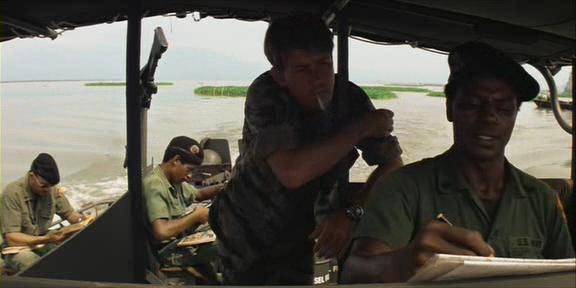
Уиллард начинает путешествие вверх по реке Меконг на патрульном катере. В экипаж катера входят ещё несколько разных людей: чернокожий командир катера Филипс; лейтенант Лэнс Джонсон, увлекающийся сёрфингом; механик Джей Хикс, имеющий прозвище «Шеф»; и чернокожий лейтенант Тирон, которого называют «мистер Клин» (от англ. clean — чистый), 17-летний парень, который, по его словам, родом из «какой-то задницы в Южном Бронксе».
Катер прибывает сначала в «зону высадки», где базируется вертолётный полк — так называемая «воздушная кавалерия», которой командует эксцентричный полковник Билл Килгор. Он должен помочь экипажу катера в проходе через зону активных боевых действий. Полковник Килгор, как и Лэнс Джонсон, увлекается сёрфингом, и они быстро находят общий язык. Один из солдат сообщает полковнику, что пляж чуть выше по реке — замечательное место для сёрфинга, и полковник решает захватить его. Солдаты сообщают ему, что это место хорошо защищено и там много вьетконговцев, но полковник отметает возражения, говоря, что вьетнамцы не занимаются сёрфингом, и отличное место пропадает зря, поэтому нужно обязательно захватить его. На следующий день рано утром воздушная кавалерия начинает атаку на пляж и селение рядом с ним. Эта сцена, известная главным образом из-за того, что атака велась под мелодию Вагнера «Полёт валькирии», заканчивается тем, что солдаты занимаются сёрфингом на том самом пляже, не обращая внимания на продолжающуюся перестрелку между американскими солдатами и вьетконговцами. Когда вертолёты подавляют все очаги сопротивления в селении и на пляже, Килгор вызывает самолёты, которые сбрасывают бомбы с напалмом на близлежащие джунгли. Полковник торжествует и обращается к Уилларду с известной речью:
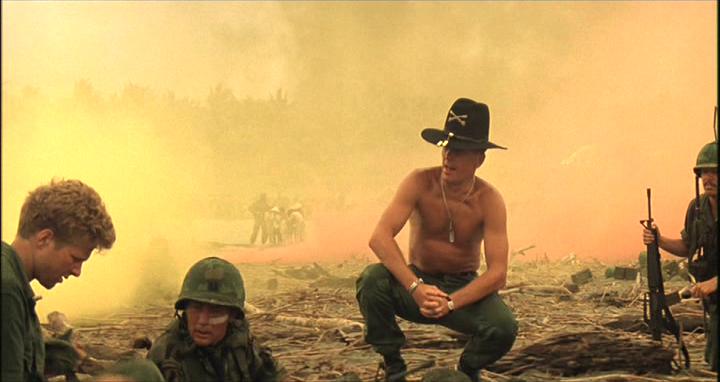
«Я люблю запах напалма поутру»
Чувствуешь запах? Это напалм, сынок. Больше ничто в мире не пахнет так.
Я люблю запах напалма поутру. Однажды мы бомбили одну высоту, двенадцать часов подряд. И когда всё закончилось, я поднялся на неё. Там уже никого не было, даже ни одного вонючего трупа. Но запах! Весь холм был им пропитан. Это был запах… победы!
Когда-нибудь эта война закончится.
По мере путешествия вверх по реке обстановка становится всё мрачнее, и в головах людей происходит то же самое. Уиллард изучает досье на Курца, полученное от генералов в штабе, читает его рапорты командованию, письма жене и сыну, и его интерес к личности Курца всё более возрастает. По пути происходит множество инцидентов, которые ещё более накаляют обстановку: Уиллард и Шеф сталкиваются с тигром, когда идут на берег искать манго; незапланированная проверка вьетнамской лодки заканчивается бойней после того, как маленькая девочка делает резкое движение, а потом выясняется, что девочка волновалась за своего щенка; Уиллард встречает сумасшедшего солдата на последнем рубеже американской армии на реке Меконг. Глядя на всё это, Уиллард всё лучше понимает Курца и его взгляды на жизнь и войну. «Теперь я знал пару вещей о Курце, которых не было в досье», говорит он в одном из эпизодов.
Экипаж катера не избегает потерь: сначала от пули засевшего в засаде вьетконговца погибает Клин, потом брошенное с берега копьё попадает в командира Филипса.
После прибытия в поселение Курца Уиллард встречает полусумасшедшего фотожурналиста (его играет Деннис Хоппер), который рассказывает о величии Курца и его философии, которая побуждает людей идти за ним. Уиллард оставляет своих людей на катере с указанием вызвать бомбардировщики, если он не вернётся, а сам идёт в селение и через некоторое время встречается с Курцем. Курц рассказывает ему о своих философских теориях, своих взглядах на войну, человечество, цивилизацию. Наиболее известен монолог Курца, в котором он вспоминает об одном из эпизодов, произошедших с ним, когда он служил в специальных войсках.

Я видел ужасы… ужасы, которые видел и ты. Но у тебя нет права называть меня убийцей. Ты можешь убить меня, у тебя есть на это право. Но у тебя нет права судить меня. Человеку невозможно объяснить словами, что такое необходимость, если он не знает, что значит ужас. Ужас. Ужас имеет своё лицо… и ужас должен стать твоим другом, иначе он станет твоим врагом, которого ты будешь бояться… злейшим врагом.
Я помню, когда я служил в специальных войсках… кажется, это было тысячу веков назад… мы пришли в одну деревню, чтобы вакцинировать детей от лихорадки. Мы сделали это и ушли, но какой-то старик побежал за нами, он плакал и не мог толком ничего сказать. Мы вернулись в деревню, и увидели, что они пришли и отрубили все руки, в которые делались прививки. Они лежали в кучке… кучка маленьких детских рук. И я помню… я… я плакал, я рыдал, как какая-нибудь старуха. Мне хотелось выбить себе все зубы, я не знал, что мне делать… И я хочу помнить об этом. Я не хочу забывать об этом. И тогда я понял… как будто в меня кто-то выстрелил, выстрелил алмазной пулей прямо мне в лоб. И я думал: боже мой, это гениально. Гениально. Воля, чтобы сделать это — совершенная, кристально чистая. И я понял, что они сильнее нас, потому что они могли вынести это. Это были не монстры, это были люди… тренированные кадры. У них были семьи, у них были дети, их сердца были полны любви… но у них была сила — сила, чтобы сделать это. Если бы у меня было десять дивизий таких людей, наши проблемы здесь закончились бы очень быстро. Нам нужны люди, обладающие высокой моралью, но в то же время способные мобилизовать свои первобытные инстинкты и убивать без чувства, без страсти, не пытаясь судить… не пытаясь судить. Потому что именно желание судить приводит нас к поражению.
Слушая Курца, Уиллард всё лучше понимает его, и понимает, что у них обоих нет никакого выхода, и нет способа вернуться к нормальной жизни. «Что подумали бы его близкие, если бы когда-нибудь узнали, насколько далеко он ушёл от них?», размышляет Уиллард. Это понимает и Курц, и, зная о том, что Уиллард пришёл убить его, он поощряет Уилларда выполнить своё задание. И когда люди Курца исполняют один из своих обрядов, принося в жертву быка, Уиллард убивает Курца при помощи мачете. Курц шепчет последние слова «ужас… ужас…», а рядом с ним Уиллард находит отпечатанный доклад, в котором рукой Курца написано «Сбросьте Бомбу. Уничтожьте их всех!»
Люди, окружавшие Курца, склоняются перед Уиллардом и готовы принять его в качестве нового вождя. Но Уиллард отвергает эту возможность, так как видит на примере Курца, что и этот путь приводит в тупик. Он уходит обратно на катер и вместе с оставшимся в живых Лэнсом плывёт по реке обратно, совершенно не представляя, как жить дальше. Последние слова, которые он произносит в фильме, повторяют предсмертные слова Курца — «ужас… ужас».
Режиссёрская версия фильма[править]
В 2001 году компания Zoetrope Studios выпустила режиссёрскую версию фильма, которая получила название «Апока́липсис сего́дня возвраща́ется» (англ. Apocalypse Now Redux). Эта версия имеет продолжительность 202 минуты, в неё вошли некоторые изначально вырезанные при монтаже материалы. Наиболее важные из них:
- Смешной эпизод, в котором команда катера, на котором плывет Уиллард, крадёт у полковника Килгора доску для сёрфинга.
- После сцены с танцами девушек из «Плейбоя» следует эпизод, когда Уиллард со своей командой встречают этих же девушек и их сопровождающих, у которых в вертолёте закончилось топливо, и они ждут, что кто-нибудь их подберёт. Уиллард договаривается об обмене двух бочек топлива на два часа с девушками для своих солдат. Одна из девушек рассказывает историю своей жизни и говорит о своём восприятии позора и сексуальной эксплуатации.
- Вскоре после смерти мистера Клина команда наталкивается на каучуковую плантацию, которую защищают французы, колонизировавшие эти места много лет назад. Они помогают похоронить Клина и затем приглашают солдат на обед, который длится долго и сопровождается разнообразными разговорами о войне, её причинах и методах её ведения. Потом Уиллард остаётся вдвоём с французской вдовой, они курят опиум и проводят вместе ночь.
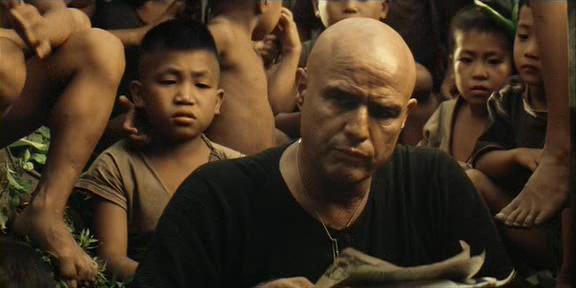
«Журнал „Тайм“, даты нет»
- В селении Курца последний, окружённый вьетнамскими детьми, читает Уилларду статью из журнала «Тайм» о вьетнамской войне. Это единственная сцена, в которой Курц появляется при дневном свете.
Новая версия вызвала ещё более полярные отклики среди критиков, чем оригинальная. Некоторые поклонники фильма критиковали новую версию за то, что она слишком длинная и добавляет в фильм не так уж много нового по сравнению с оригиналом. Коппола продолжает распространять, наряду с новой режиссёрской версией, и оригинальную: они обе присутствуют на DVD «Полное досье», который был выпущен в августе 2006 года.
Наиболее значительное прибавление в версии Redux — антиколониальная линия, представленная эпизодами на французской плантации. Эта щекотливая для французов критика была удалена из фильма в 1979 году, поскольку премьера фильма происходила на фестивале в Каннах — в это время Коммунистическая партия была ведущей политической силой во Франции, и тема войны в Индокитае была под запретом. В фильме патриарх семьи французских колонистов говорит о позитивной стороне колониализма в Индокитае (эти слова приобретают иронический оттенок из-за сопровождающей их ссоры), и в то же время обвиняет коммунистических активистов во Франции в предательстве своих военных в ходе первой войны в Индокитае (вьетнамская война считается второй).
Альтернативные концовки[править]
По законам Филиппин, после завершения съёмок фильма все декорации должны были быть уничтожены. Коппола решил разрушить декорации с помощью серии взрывов и снять это на плёнку, в надежде так или иначе использовать эти кадры впоследствии. Коппола со своими сотрудниками установил несколько камер с различными объективами и фильтрами, и снял взрывы с разных точек и с разной скоростью. На фоне этих кадров в оригинальной версии фильма на 35-мм плёнке шли титры в конце фильма, и многие посчитали это указанием на то, что Уиллард всё же вызвал бомбардировщики. Узнав о такой реакции, Коппола вырезал из концовки фильма эти кадры и оставил просто титры. Он отрицал, что бомбардировка поселения Курца рассматривалась как один из альтернативных вариантов окончания фильма. В своём комментарии на DVD Коппола утверждает, что эти съёмки должны рассматриваться как отдельное мини-произведение, не имеющее прямого отношения к фильму.
Существует несколько различных версий титров в конце фильма. Релиз фильма на плёнке 70 мм не содержит титров в конце (кроме надписи Copyright 1979 Omni Zoetrope), и в последних кадрах фильма Уиллард плывёт на катере мимо статуи каменного идола, которая постепенно растворяется в темноте. В версии на плёнке 35 мм титры показываются на фоне взрывов. Наконец, в последней из версий 1979 года, наиболее распространённой, титры идут на чёрном фоне. В версии Redux титры также показываются на чёрном фоне, но при этом звучит музыка и слышны звуки джунглей.
Отклики[править]
«Апокалипсис сегодня» после премьеры в 1979 году вызвал множество противоречивых откликов у аудитории — одни восторженно хвалили фильм, другие осыпали его бранью. Некоторые критики писали, что фильм слишком претенциозен; другие говорили, что фильм заканчивается непонятно чем после роскошного первого акта. С другой стороны, Роджер Эберт, который объявил «Апокалипсис сегодня» лучшим фильмом 1979 года и добавил его в свой список великих фильмов, писал:
«Апокалипсис сегодня» — лучший фильм о Вьетнаме, и один из величайших когда-либо снятых фильмов, потому что он продвигается гораздо дальше, чем все остальные, в тёмные уголки человеческой души. Он не столько о войне, сколько о том, как война вытаскивает на поверхность такую правду о людях, которую они предпочли бы никогда не узнать.
В наши дни многие считают фильм шедевром эры Нового Голливуда. В списке «100 лет — 100 фильмов», составленном Американским институтом кинематографии (AFI), он занимает 28 место. Слова полковника Килгора «Я люблю запах напалма поутру» занимают 12 место в списке AFI «100 лет — 100 цитат из фильмов». В 2002 году журнал «Сайт энд саунд» провёл опрос кинокритиков, попросив их назвать лучший фильм последней четверти ХХ века, и «Апокалипсис сегодня» оказался на первом месте. В списке 250 лучших фильмов на сайте IMDb он занимает 37 место с рейтингом 8,4 из 10.
Долгие и трудные съёмки фильма сделали его, к сожалению, символом опасности, которой подвергается производство кино, когда режиссёр имеет слишком большой контроль над всем процессом производства. С тех пор ни один масштабный кинопроект не снимался режиссёрами самостоятельно.
Фильм и книга[править]
Хотя «Апокалипсис сегодня» снят по мотивам книги Джозефа Конрада «Сердце тьмы», он значительно отклоняется от исходного материала. Действие новеллы Конрада, которая была написана им по опыту собственных переживаний, происходит в Свободном государстве Конго в ХIХ веке. Курц и Марлоу (который в фильме назван Уиллардом) — оба агенты бельгийской компании, которая занимается заготовкой слоновой кости и жестоко эксплуатирует местные африканские племена. Когда Марлоу прибывает в поселение Курца, он обнаруживает, что человек, бывший когда-то цивилизованным и гуманным, сошёл с ума и вернулся в дикое, первобытное состояние, командуя небольшим племенем местных жителей с использованием жестоких методов (например, забор его поселения был украшен человеческими черепами). Новелла заканчивается тем, что Курц умирает на обратном пути, и рассказчик размышляет о реке, текущей без конца «в сердце необъятной тьмы».

«Сбросьте Бомбу, уничтожьте их всех!»
Одно из основных изменений в фильме по сравнению с новеллой касается мотивации главного персонажа. У Конрада Марлоу просто рулевой катера, посланный к Курцу, чтобы забрать добытую слоновую кость, который постепенно попадает под влияние сильной личности Курца. Когда он обнаруживает, что Курц серьёзно болен, Марлоу предпринимает энергичные усилия, чтобы доставить его домой. В фильме же Уиллард послан, чтобы убить Курца. Кроме того, многие части фильма, такие, как события у моста До-Лунг, вертолётная атака, персонаж полковника Килгора, не имеют похожих образов в книге и были целиком придуманы авторами сценария. Внешний вид Марлона Брандо в фильме также сильно отличается от описания Курца в новелле — у Конрада Курц очень худой и выглядит болезненно. Однако, другие аспекты фильма — персонаж Денниса Хоппера, концепция Курца как лидера местного племени, которое почитает его, как бога, его малярийная лихорадка, написанное им восклицание «Убей их всех!» и последние слова Курца «Ужас… Ужас…» практически слово в слово повторяют содержание книги Конрада.
Коппола утверждал, что многие эпизоды фильма — атака на катер с помощью стрел и копий, например — сделаны из уважения к духу новеллы Конрада и, в частности, к высказываемой в ней критике основ современной цивилизации и прогресса. Хотя европейская колонизация Африки заменена в фильме американской интервенцией, это не меняет смысл универсального послания книги.
Награды и номинации[править]
- Кинофестиваль в Каннах: главный приз («Золотая пальмовая ветвь»), 1979;
- «Оскар» за лучшую операторскую работу (Витторио Стораро), 1979;
- «Золотой глобус» за лучшую режиссуру (Фрэнсис Ф. Коппола), 1980;
- «Золотой глобус» за лучшую роль второго плана (Роберт Дюволл), 1980;
- «Золотой глобус» за лучшую музыку к фильму (Кармин Коппола и Фрэнсис Ф. Коппола), 1980.
Номинировался в 1979 году на «Оскар» в категориях:
- лучший фильм;
- лучший режиссёр (Фрэнсис Ф. Коппола);
- лучший сценарий, основанный на другом произведении (Фрэнсис Ф. Коппола и Джон Милиус);
- лучшая роль второго плана (Роберт Дюволл);
- лучшие декорации (Анжело П. Грэхэм, Джордж Р. Нельсон и Дин Тавуларис);
- лучшая редакторская работа (Лиза Фрухтман, Джеральд Б. Гринберг, Ричард Маркс и Уолтер Мёрч).
Широко распространено мнение, что «Апокалипсис сегодня» не получил премию «Оскар» за лучший фильм в 1979 году лишь потому, что за год до этого «Оскар» достался другому фильму о вьетнамской войне («Охотник на оленей»), и что фильм, получивший «Оскар» 1979 года («Крамер против Крамера») гораздо более слабый, чем «Апокалипсис сегодня».
Также фильм номинировался на:
- «Золотой глобус» за лучший игровой фильм;
- премию «Грэмми» за лучшую музыку к игровому фильму (Кармин Коппола и Фрэнсис Ф. Коппола);
- награду Американской гильдии писателей (WGA) за лучшую драму, написанную непосредственно для съёмок фильма (Фрэнсис Ф. Коппола и Джон Милиус).
См. также[править]
- Известные фразы из фильма Апокалипсис сегодня — координационный список статей для развития темы.
Источники[править]
- Комментарий Ф. Копполы к процессу создания фильма на DVD-диске «Полное досье», 2006.
- Видеозапись телепередачи «Матадор», 1-й канал российского телевидения, 1993 (автор К. Эрнст).
- Документальный фильм «Сердце тьмы: Апокалипсис создателя фильма».
- Статья Роджера Эберта о фильме «Апокалипсис сегодня»(англ.)
Ссылки[править]
- «Апокалипсис сегодня» (англ.) на сайте Internet Movie Database
- Страница фильма на сайте filmsite.org(англ.)
- Коллекция рецензий на фильм на сайте metacritic.com(англ.)
В прокат выходит расширенная версия «Апокалипсиса сегодня» Фрэнсиса Форда Копполы — киноэпопеи о вьетнамской войне, выпущенной в 1979 году и включенной во все мыслимые списки великих фильмов. За прошедшие 40 лет легендарным стал не только сам фильм, но и история его съемок, в процессе которых пострадали практически все. Никита Солдатов рассказывает, как рождался «Апокалипсис сегодня» и почему надо смотреть режиссерскую версию
Как «Апокалипсис сегодня» превратился из комедии в трагедию и при чем тут «Звездные войны»
Сценарий главного антивоенного фильма в истории, по крайней мере — в истории американского кино, написал заядлый милитарист Джон Милиус. Серфер-любитель и бывший пляжный спасатель, обожавший на досуге пострелять из дробовика, Милиус учился вместе с Джорджем Лукасом в киношколе Университета Южной Калифорнии и больше всего на свете хотел попасть во Вьетнам. Когда его однокурсники то женились, то уезжали в Канаду, лишь бы избежать военного призыва, Милиус, не собиравшийся жить больше 26 лет, сам записался в морскую пехоту. Грандиозные планы нарушила астма — пришлось искать альтернативный способ проявить любовь к войне. Милиус выбрал кино.
Диких историй о военном быте у него было навалом: возвращавшиеся из Вьетнама рассказывали, как из-за тропической жары страдали от галлюцинаций, принимали всевозможные наркотики и убивали под кайфом, обстреливали прибрежные деревни, чтобы нормально посерфить на волнах,— в общем, веселились как могли. Уже собрав немало материала для сценария своего «Психоделического солдата», как первоначально назывался фильм, Милиус внезапно обрел и литературную основу. Он поспорил со своим преподавателем, что сможет адаптировать для кино самый неадаптируемый роман — «Сердце тьмы» Джозефа Конрада. Написанная в конце XIX века приключенческая история о торговце слоновой костью, который сходит с ума и создает в джунглях Конго свое мини-государство, давно будоражила умы кинематографистов, но перенести ее на экран так никто и не смог, даже Орсон Уэллс. Милиус попробовал совместить «Сердце тьмы» и «Психоделического солдата» — так в 1969 году получился «Апокалипсис сегодня», история о капитане ВДВ, получающем тайное спецзадание ликвидировать полусумасшедшего полковника Курца, который организовал среди диких туземцев в дебрях Вьетнама собственный культ. Новым названием Милиус, кстати, высмеивал пацифистов-хиппи, выступавших одновременно против войны и за легализацию наркотиков с лозунгом «Нирвана сегодня».
Экранизировать «Апокалипсис сегодня» Милиус предложил своему однокурснику, начинающей звезде независимого кино Джорджу Лукасу. Лукас не просто не разделял милитаристского запала Милиуса, а сам был хиппующим тихим пацифистом и к тому же никогда не слышал ни про какого Конрада. Сценарий Милиуса ему, впрочем, понравился: Лукас предложил снять его как псевдодокументальную сатиру на американскую армию прямо во Вьетнаме во время боевых действий с реальными военными в главных ролях — что-то среднее между «Битвой за Алжир» и «Уловкой-22». Милиус, как ни странно, согласился. Не согласились голливудские студии, побоявшиеся отправлять съемочную группу взрываться на вьетнамских минах и вообще финансировать это неполиткорректное и непатриотичное безумие. Лукас бороться за сценарий не стал: на фоне бессмысленной войны ему все больше хотелось снять оптимистичное кино для всей семьи — желательно не про окружающую жизнь, а, например, про далекую-далекую галактику. Лукас вернулся к своему старому проекту под названием «Звездные войны», а «Апокалипсисом» спустя какое-то время заинтересовался Фрэнсис Форд Коппола, увидевший в сценарии Милиуса историю в духе древнегреческой трагедии об ужасах американского империализма.
Как все голливудские звезды отказались играть у Копполы и он со злости выкинул свои «Оскары»
В 1975 году, когда Коппола вплотную занялся разработкой «Апокалипсиса сегодня», известнее молодого режиссера, чем он, в Америке не было. Джордж Лукас с «Американскими граффити», Мартин Скорсезе со «Злыми улицами», Стивен Спилберг с «Шугарлендским экспрессом» на фоне могучего миллионера Копполы с его охапкой «Оскаров» за «Крестных отцов» и «Золотой пальмовой ветвью» за «Разговор» выглядели хлипкими новичками. Что говорить, к дому Копполы в Сан-Франциско даже возили туристов на автобусах — честь, которой удостаивались только монстры старого Голливуда. Сам Коппола, впрочем, терпеть не мог старый Голливуд с его диктатом студийных продюсеров и мечтал о собственной независимой киностудии, которая будет выпускать фильмы в духе французской новой волны, не боясь, что ничего не понимающий кинобосс заставит все перемонтировать и выкинуть половину. Он даже основал студию American Zoetrope — открытая в 1969 году, она к тому моменту не выпустила еще ни одного прокатного хита и остро нуждалась в блокбастере, чтобы заработать в полную силу. Таким блокбастером и должен был стать «Апокалипсис сегодня» — взрывы, вертолеты, экзотика, по мнению Копполы, не могли не привлечь зрителей в кино. Заработав на «Крестных отцах» миллионы себе и голливудским студиям, Коппола решил наконец снять фильм без назойливого участия сторонних продюсеров и собрать весь бюджет — $13 млн — самостоятельно, продав студии United Artists права на прокат будущего фильма и вложив личные деньги. Большая свобода значила и большую ответственность: в случае кассового провала Коппола обязался возместить ущерб инвесторам из собственного кармана.
Для блокбастера нужна была звезда — и Коппола занялся поисками актера на роль капитана Уилларда, пробирающегося сквозь джунгли Вьетнама, чтобы убить полковника Курца. Джек Николсон, Роберт Редфорд, Стив Маккуин, Джеймс Каан отказали — кто из-за беременной жены, кто из-за низкого гонорара, а кого-то не устроила пассивность персонажа, который на протяжении фильма ничего не делает и только в конце убивает злодея. Когда и старый товарищ Копполы Аль Пачино, своим звездным статусом обязанный «Крестному отцу», отказался от роли из страха подхватить на съемках какую-нибудь тропическую болезнь, взбешенный режиссер выбросил в окно все свои пять «Оскаров». Уцелел один.
Затея со звездой в главной роли не сработала, но Коппола не отчаялся. Играть Уилларда он позвал малоизвестного, но страшно талантливого Харви Кейтеля. Что роль ему совершенно не подходит, станет понятно только на съемках, но до этого Копполе предстояло принять еще несколько неверных решений.
Как министерство обороны отказалось поддержать фильм, а филиппинский диктатор согласился
Решение снимать «Апокалипсис сегодня» на Филиппинах тоже было роковым и тоже вынужденным. Первоначально Коппола надеялся снимать фильм при поддержке Пентагона неподалеку от какой-нибудь американской базы — чтобы иметь возможность пользоваться военным оборудованием. Участие Министерства обороны США в кинопроизводстве было секретом Полишинеля: хотя Пентагон и требовал от продюсеров соблюдения секретности, весь Голливуд знал, кто может бесплатно предоставить танки, оружие, вертолеты для съемок военного фильма в обмен на положительное изображение американского солдата на экране. Именно таким образом главный голливудский апологет американского оружия Джон Уэйн получил технику для своего ура-патриотического боевика о Вьетнаме «Зеленые береты». Коппола решил, что он ничем не хуже Уэйна, и написал главе Пентагона Дональду Рамсфелду, попросив предоставить для съемок «Апокалипсиса» военные вертолеты и солдат для массовки и поклявшись, что его будущий фильм «не антимилитаристский и не антиамериканский, а просто рассказывает правду о войне». Пентагон копполовская правда не устроила — министерство потребовало разрешения изменить сценарий. Несогласный на вмешательство продюсеров, Коппола еще менее был готов подпустить к сценарию военных. От сотрудничества с Пентагоном пришлось отказаться.
Параллельно шли поиски натуры для съемок, которая сошла бы за Вьетнам. Идеальным вариантом казались Филиппины: похожая природа, близкий климат, гражданская война и, что немаловажно, дешевая рабочая сила. Если в Голливуде с его вездесущими профсоюзами нанять сотрудника на ненормированный рабочий день было проблемой, то филиппинцы были готовы почти без отдыха таскать многокилограммовые каменные блоки для строительства декораций прямо в джунглях всего за $2–3 в день. Но главным доводом в пользу Филиппин стала возможность использовать американские военные вертолеты — местный диктатор Фердинанд Маркос согласился дать их в аренду вместе с пилотами. Идея заручиться поддержкой Маркоса пришла в голову продюсеру фильма Фреду Роосу, уже снявшему несколько малобюджетных фильмов на Филиппинах. Вместе с Копполой они слетали на аудиенцию к Маркосу, который оказался только рад американским вливаниям в филиппинский бюджет и согласился предоставить съемочной группе 20 вертолетов.
В начале марта 1976 года Коппола прилетел на Филиппины с женой, тремя детьми и племянником. Казалось, что теперь, когда организационные трудности позади, все наконец смогут насладиться любимым делом в окружении тропических красот. Возможность снимать на открытом воздухе казалась особенно привлекательной: после «Крестного отца — 2» Коппола мечтал выбраться из темных интерьеров. Как вспоминала его жена, он предвкушал, как будет бегать в шортах по джунглям, плавать в океане и снимать картину, не похожую ни на одну из его предыдущих. Тогда никто не подозревал, что трехмесячные съемки растянутся на полтора года, бюджет вырастет в два раза и Копполе придется заложить собственный дом, а тропическая природа окажется серьезным испытанием.
Как исполнитель главной роли истекал кровью на камеру, а медсестра молилась
Спустя две недели после начала съемок Коппола понял, что его главный актер никуда не годится. Бывший моряк Кейтель играл военного так, что не оторвать взгляда, но Коппола хотел, чтобы зритель смотрел не на капитана Уилларда, а как бы его глазами на окружающее безумие войны. Замена актера даже на таком раннем этапе выходила в кругленькую сумму — за каждый день простоя по $70 тыс., но Копполу это не остановило. Режиссер уволил Кейтеля, который только обрадовался возможности свалить из джунглей, а сам полетел в Голливуд искать замену, предварительно сбрив усы и бороду, чтобы журналисты его не узнали и не начали писать о проблемах на съемках.
Замена Кейтелю нашлась быстро — на роль капитана Уилларда согласился 36-летний заядлый курильщик, алкоголик и красавчик Мартин Шин, знакомый Копполе по пробам для «Крестного отца». Шин был готов играть и пассивного наблюдателя, и обезумевшего от скуки военного. Именно таким должен был предстать его герой в открывающей сцене. По сюжету, капитан Бенджамин Уиллард, официально числящийся в 173-й воздушно-десантной бригаде, а на деле исполняющий спецзадания генштаба по устранению нежелательных элементов, сидит в сайгонской гостинице в ожидании нового дела. Из развлечений у него только алкоголь, поэтому он пьет и буянит в одиночестве.
Чтобы помочь Шину войти в роль, Коппола даже предложил ему выпить перед съемками. Актер подошел к заданию со всей ответственность и явился на площадку пьяным вдрызг. Все боялись, что он завалится на камеру, а то и вовсе кинется на режиссера, но Шин оказался профессионалом и даже в пьяном виде не отходил от сценария. Точнее, почти не отходил: в ключевой момент, когда, по сюжету, шатающийся полуголый Уиллард должен был красоваться перед зеркалом, шатающийся полуголый Шин долбанул зеркало, да так, что оно разбилось и глубоко порезало ему руку. Коппола оценил кинематографичность пьяной выходки и после небольшого перерыва возобновил съемку, позволив Шину остаться на площадке измазанным в крови. Когда дубль был снят, Шин так и остался — окровавленный — валяться на кровати и просил съемочную группу помолиться за него. Послушалась только филиппинская медсестра.
По-настоящему молиться за актера пришлось несколько месяцев спустя, когда Шин чуть не умер, настигнутый во время пробежки по лесу сердечным приступом,— сказались невыносимая жара, курение и алкоголь. До ближайшей помощи ему пришлось добираться практически ползком — неудивительно, что, увидев медсестру, он сразу попросил позвать священника. Вместе с исполнителем главной роли фильм чуть не лишился и режиссера — когда Коппола узнал об инфаркте Шина, у него случился эпилептический приступ. Придя (довольно быстро) в себя, Коппола понял, что одного сообщения об инфаркте Шина будет достаточно, чтобы инвесторы — и пресса — похоронили фильм, и запретил членам съемочной группы рассказывать о произошедшем. Официальной версией было, что Шин просто перегрелся на солнце: «Если Марти умрет, делайте вид, что ничего не произошло, пока я не разрешу».
Копполе повезло: Шин выкарабкался и вернулся на площадку спустя полтора месяца, на протяжении которых его брат Джо играл капитана Уилларда на общих планах. Хотя врачи разрешили Шину легкие нагрузки, актер был уверен, что это последний его фильм — даже без нагрузок, сигарет и алкоголя филиппинская жара его точно прикончит,— и впоследствии вспоминал съемки «Апокалипсиса» как страшное испытание.
Как съемочная группа спалила тропический лес и природа им отомстила
От филиппинского климата страдали все — еле проходимые, кишащие кобрами леса, гигантские москиты, прожорливые мухи, облепляющие ноги муравьи, разгуливающие по дому огромные тараканы и такая жара, что к полудню чуть не падаешь в обморок. Для Копполы, однако, все невзгоды филиппинской природы окупались возможностью максимально реалистично снять центральный эпизод фильма, в котором подполковник Килгор, любящий запах напалма по утрам, под вагнеровский «Полет валькирий» пускает с вертолетов бомбы на вьетконговцев. Для инсценировки напалмового пожара Копполе нужно было спалить несколько километров тропических лесов, и Филиппины были в тот момент, вероятно, единственным местом на планете, где это можно было сделать безнаказанно. Президент Маркос, по крайней мере, был не против. Он же тем не менее был и главной проблемой.
Из-за гражданской войны и необходимости подавлять сопротивление повстанцев Маркос то и дело отзывал предоставленные съемочной группе вертолеты. Иногда вернуть их требовали прямо во время съемок, и киношникам приходилось в экстренном порядке стирать с бортов американскую военную символику и рисовать родную филиппинскую. Когда на это не было времени, маркосовские вертолеты так и летели бомбить революционеров под американским флагом. К тому же филиппинские пилоты менялись изо дня в день, и Коппола не успевал объяснить новичкам, что делать. В итоге из 20 вертолетов камере в лучшем случае удавалось поймать штук пять — остальные вечно вылетали из кадра. Но, несмотря на все беды, знаменитую сцену — самую масштабную в карьере Копполы, да просто одну из самых масштабных в истории кино,— удалось снять с помощью 4,5 тыс. литров бензина, спалив небольшой лесной массив всего за 90 секунд.
Филиппинская природа вскоре отомстила за американское вмешательство. Разобравшись наконец с главной сценой в фильме, Коппола уже собирался переносить съемки в новое место и не обратил внимания на предупреждения метеоролога о наступающем шторме. 19 мая 1976 года случился настоящий апокалипсис, когда сильнейший за 40 лет тайфун «Ольга» обрушился на Филиппины: тысячи остались без крова, погибло более 300 человек, и только чудом среди них не оказалось членов съемочной группы. Съемочная площадка была полностью разрушена, весь реквизит улетел, часть команды, отрезанная от остальных, еле спаслась, спрятавшись на несколько дней в полуразрушенном доме без света, воды и еды. Потери исчислялись миллионами долларов, и Коппола принял решение остановить съемки и вернуться в Лос-Анджелес на пару месяцев. В следующий раз на Филиппины группа приедет изрядно поредевшей — все меньше человек верило, что фильм вообще будет доснят до конца.
Как Коппола затащил в фильм Марлона Брандо, а тот отказался учить роль и растолстел
Проблемы на съемочной площадке и неожиданные изменения сценария особенно пугали первую и единственную звезду «Апокалипсиса сегодня» — Марлона Брандо. К концу 70-х Брандо считался, пожалуй, главным актером планеты. Снявшийся в хитах вроде «Крестного отца» и «Последнего танго в Париже», он не сходил с газетных полос, поражая то дурным характером и крепким словцом, то дружбой с «Черными пантерами» и индейцами, чем особенно раздражал обитателей Голливуда. Будучи признанным гением, Брандо не любил много работать, зато любил получать большие гонорары. «Апокалипсис сегодня» был для него идеальным проектом. Коппола согласился заплатить ему баснословные $3 млн за три недели съемок плюс процент от кассовых сборов — задерживаться дольше оговоренного срока в планы Брандо не входило, поэтому он особенно переживал из-за проблем на площадке. Очередной проблемой, однако, оказался он сам.
Для роли исхудавшего психа Курца с его торчащими ребрами и ввалившимися щеками Брандо обещал скинуть вес, но не просто не скинул, а еще и набрал, явившись на Филиппины в совершенно неподобающем виде. Он так поправился, что подготовленный гардероб попросту на него не налезал. Но это было еще полбеды: оказалось, что Брандо и приблизительно не знал сюжета «Сердца тьмы», сценарий же показался ему таким ужасным, что он даже не пытался выучить собственные реплики.
Первая из трех недель ушла на обсуждение того, как подогнать персонаж Курца под актера. Съемки простаивали, все сильнее выходя из графика и бюджета. Коппола предлагал сделать Курца толстым чревоугодником, Брандо отказывался выглядеть на экране толстяком и хотел, чтобы его как-нибудь загримировали под худого. Коппола видел полковника потерявшим связь с реальностью наркоманом, Брандо — гипертрофированным патриотом, убивающим людей ради выдуманного высшего блага. Ничто в полковнике Курце не привлекало Брандо, даже имя казалось дурацким: «Лучше что-нибудь вроде полковник Лели — звучит, как пшеница, развевающаяся на ветру».
Компромисс нашел оператор Витторио Стораро, уже работавший с Брандо на «Последнем танго в Париже». Он предложил представить полковника Курца не высохшим маньяком, как планировалось изначально, и не обрюзгшим чревоугодником, а эдаким могучим мифическим гигантом, возвышающимся над трупами и туземцами в своем сюрреалистическом храме: подсветить лицо, затемнить все остальное, пустить красный дым, Брандо снимать крупными планами по грудь, а для общих планов взять двухметрового дублера.
Все сцены с Брандо удалось снять за оставшиеся две недели. Незнание сценария в итоге не составило проблем: Брандо и впрямь оказался гением и полностью сымпровизировал всю роль. Коппола говорил, что лучше в жизни бы не написал,— от работы Брандо он остался в восторге. Брандо же остался верен себе: после съемок он называл Копполу жадным жирдяем и жаловался, что тот якобы задолжал ему несколько миллионов.
Как съемочная группа подсела на кислоту, а режиссер чуть не покончил с собой
Несмотря на то что съемки с Брандо прошли на удивление хорошо, у Копполы постепенно начиналась паранойя: ему все больше казалось, что все в съемочной группе считают его «идиотом, который не знает, что творит, а фильм — полным говном». Коппола пил, голодал, изменял жене и постепенно терял человеческий вид. Остальным было не лучше. В ожидании, пока впавший в депрессию режиссер придет в себя, члены съемочной группы, лишь бы хоть как-то себя развлечь, прыгали с крыши отеля в бассейн, усыновляли филиппинских детей, ругались с местными и пробовали все наркотики, какие можно было достать: кислота, амфетамин и марихуана стали обычным делом на съемочной площадке, как летающие вокруг 20-сантиметровые бабочки. Главным специалистом по этому делу был Деннис Хоппер.
Недавний кумир молодежи и провозвестник психоделической революции в кино, своим «Беспечным ездоком» открывший эпоху Нового Голливуда, после провала нескольких режиссерских работ Хоппер находился в творческом кризисе — его попросту никто не звал на работу. Разнообразные зависимости карьерному росту тоже не способствовали. Как и в случае с Брандо, дурная слава Хоппера не смутила Копполу, но, как и в случае с Брандо, его роль тоже пришлось подгонять по фигуре. На съемках Деннис Хоппер был настолько под кайфом, что не мог запомнить реплики. Говорят, Коппола однажды чуть не прибил актера, но в итоге решил придумать ему более подходящего персонажа. Вместо американского военного, примкнувшего к полковницу Курцу, Хоппер теперь исполнял роль, в которую не нужно было особенно вживаться,— обдолбанного фотографа-хиппи.
Тем временем в Голливуде вовсю начали писать о проблемах на съемках, что не способствовало борьбе с депрессией. Снимавшийся, казалось, уже целую вечность фильм называли «Апокалипсисом никогда», Копполу представляли свихнувшимся режиссером, потерявшим счет деньгам и готовым потратить все на свой безумный проект.
Справедливости ради стоит отметить, что Коппола и впрямь вел себя не слишком практично: тратил кучу времени и денег на постройку гигантских декораций и толком не успевал их снять, выписал из Лос-Анджелеса дрессированного тигра, который чуть не сбежал в джунгли прямо во время съемок, требовал достать ему слонов и экзотических птиц, а потом говорил, что они ему не нужны. И это не считая неимоверных трат на заказ макарон, помидоров и оливкового масла из Италии и вина, замороженных стейков и кондиционеров из США. Инвесторы из United Artists даже решили застраховать жизнь режиссера на $15 млн, чтобы в случае чего хоть как-то отбить вложения. Тревога инвесторов была более чем обоснованной: однажды Коппола объявил жене и актерам, что они никогда не закончат фильм и не вернутся домой и что он думает либо съесть какую-нибудь отраву, либо застрелиться, либо спрыгнуть с обрыва. До конца съемок оставалось несколько месяцев.
Как Коппола отказался от настоящих трупов, но разрешил зарезать быка
Постепенно на съемочной площадке воцарилась анархия. Коппола говорил: «Я понял, что схожу с ума, что не я снимаю фильм, а фильм снимается сам. Или это ожившие джунгли снимают его для меня». Джунгли или нет, но съемки худо-бедно продолжались: операторы, по колено в грязи и курином помете, продолжали выставлять камеры, пиротехники готовили спецэффекты, а актеры, пусть и не всегда трезвые, репетировали. Без бдительного режиссера, однако, случались жутковатые казусы.
Один из бутафоров, отвечавший за логово полковника Курца, слишком буквально воспринял фразу «усеяно трупами» и раздобыл для съемок несколько настоящих мертвецов. В шоке были не только помощники Копполы, но и местная полиция, которая нагрянула на площадку и на время расследования забрала у всех паспорта. К счастью, никого из киношников к ответственности не привлекли: полицейские довольно быстро нашли филиппинца, который грабил могилы и поставлял трупы не только на съемки, но и в медицинские школы. Не то чтобы местные власти сильно протестовали против использования трупов в качестве реквизита: приехавшие забирать тела солдаты сами не знали, куда их девать — платить за перезахоронение никто не собирался,— и просто вывалили их в первый овраг. Тем не менее Коппола решил пожертвовать натурализмом и использовать в роли мертвецов массовку и муляжи.
Настоящих трупов Коппола не хотел, зато хотел настоящих туземцев, чтобы максимально реалистично представить армию полковника Курца. Недалеко от съемок как раз обитали аборигены из племени ифугао, которые согласились сняться в кино в обмен на кур, свиней и буйволов. Прямо на площадке они устраивали многочасовые обряды в честь Копполы с вином, молитвами, плясками под гонг и жертвоприношениями. Глава племени однажды даже погадал режиссеру на куриных внутренностях и успокоил: фильм заработает много денег и его увидят миллионы людей — желчный пузырь курицы никогда не врет.
Туземцы не только напророчили фильму грандиозное будущее, но вдохновили режиссера на финальную сцену с жертвоприношением. К этому моменту Коппола уже понял, что финал Милиуса, в котором полковник Курц и капитан Уиллард дерутся бок о бок в последней битве против вьетконговцев, не годится. От антивоенного боевика, призванного поднять на ноги независимую студию, в фильме давно ничего не осталось, а для сюрреалистической притчи о власти, насилии и войне простого и зрелищного финала с кучей взрывов, вертолетов и массовки было мало. В новом финале Уиллард должен был все-таки убить сумасшедшего полковника Курца, а затем, не сообщив о выполнении задания и не дав начальству разбомбить его логово, уплыть прочь, оставив туземцев без своего предводителя и божества. В последней сцене туземцы должны были совершить ритуальное убийства быка — рифмующееся с убийством Курца, оно превращало полковника из объекта военной спецоперации в священную жертву для продолжения жизни. Туземцы без всякого сопротивления согласились повторить жертвоприношение на камеру. Мясо убитого животного было приготовлено на ужин для всей съемочной группы, которая отмечала скорое окончание многострадальных съемок.
Как «Апокалипсис сегодня» чуть не умер на монтажном столе и расколол Канн
Когда в 1977 году съемки «Апокалипсиса» наконец подошли к концу — Коппола вспоминал, что никогда в своей жизни не видел такого количества людей, радующихся, что они остались без работы,— оказалось, что самое сложное еще не позади. Следующим испытанием стал монтаж. Коппола просто не понимал, что делать с 500 тыс. метров пленки (для сравнения — Илья Хржановский потратил на монтаж 700 тыс. метров пленки «Дау» около семи лет). Премьера «Апокалипсиса» переносилась четыре раза, близкие друзья Копполы думали, что он никогда не закончит, да и сам он признавался жене, что вероятность увидеть фильм в кинотеатрах — не больше 20%. «Если я умру, тогда мой первый монтажер закончит фильм, если умрет он, тогда второй монтажер закончит фильм, если умрет и он, тогда мой призрак закончит фильм»,— завещал Коппола, недовольный каждой версией фильма и постепенно заново впадавший в депрессию. Чтобы его подбодрить, коллеги однажды пригласили в монтажную знакомого ветерана Вьетнама. Посмотрев немного чернового материала, он вручил Мартину Шину пистолет со словами: «Ты можешь застрелить любого в этой комнате. Решение жить или умереть теперь в твоих руках».
По-настоящему бодрящий эффект оказали инвесторы из United Artists, пригрозившие отобрать у Копполы дом и все остальное имущество, если он снова передвинет дату премьеры. Тогда — после двух лет монтажа — Коппола решил рискнуть и узнать мнение зрителей, устроив предпремьерные показы разных вариантов «Апокалипсиса». Первые два показа прошли в США и не могли оказаться хуже — обе версии не слишком впечатлили обычных зрителей и совсем разочаровали критиков, которых Коппола по глупости пригласил и которые, нарушив договоренность не публиковать отзывы до официальной премьеры, сразу же разнесли картину в пух и прах («сюрреалистическая ерунда», «выкинутые на ветер деньги»). Третий показ недоделанного фильма Коппола — к ужасу инвесторов — решил устроить на Каннском фестивале, где «Апокалипсис сегодня» оказался яблоком раздора.
Дирекция фестиваля, далекая от голливудских сплетен и не следившая за скандальными съемками, считала Копполу главным американским режиссером своего поколения, а представленный на конкурс фильм — шедевром, победа которого увеличит престиж Канна. Напротив, председательнице жюри Франсуазе Саган «Апокалипсис» категорически не понравился: «а как же точка зрения вьетнамского народа?» Главный приз она собиралась отдать «Жестяному барабану», не менее масштабному опусу Фолькера Шлёндорфа о восхождении национал-социализма. Дирекция стала давить на членов жюри, Саган объявила об этом прессе, дирекция отказалась оплачивать счета Саган из бара (10 тыс. франков!), Саган грозилась уехать с фестиваля. Как удалось помирить дирекцию и жюри, доподлинно неизвестно, но победила дружба — 24 мая 1979 года «Апокалипсис сегодня» и «Жестяной барабан» разделили «Золотую пальмовую ветвь», а в устав фестиваля вскоре были внесены изменения — отныне все члены жюри подписывали договор о неразглашении и обязывались самостоятельно оплачивать свою выпивку.
Как «Апокалипсис сегодня» не получил Нобелевскую премию мира и понравился военным
Представляя свой «Апокалипсис» в Канне, Коппола подытожил свой непростой филиппинский опыт: «Мой фильм не о Вьетнаме, мой фильм и есть Вьетнам. Мы снимали его так же, как американцы воевали,— нас было слишком много, мы не вылезали из джунглей, мы были завалены оборудованием и деньгами и тоже постепенно сходили с ума». Коппола надеялся, что его фильм станет для зрителя источником «мучительного, невыносимого опыта, чтобы после выхода из кинотеатра он вел себя так, как будто вернулся с войны». В своем пацифистском пафосе и вере в величие «Апокалипсиса» Коппола был максимально искренен и накануне по-настоящему долгожданной американской премьеры всерьез говорил съемочной группе, что их фильм станет первым в истории, удостоенным Нобелевской премии мира.
К большому удивлению Голливуда и самого Копполы, давно простившегося с мечтой о блокбастере, «Апокалипсис сегодня», в очередной раз перемонтированный после Каннского фестиваля и вышедший в прокат в августе 1979 года, получил на родине если не восторженную, то довольно теплую критику (хвалили в основном за зрелищность) и оказался прокатным хитом. Напротив, антивоенный посыл Копполы считали немногие: одни, включая Жана Бодрийяра, ругали «Апокалипсис» за мифологизацию войны и прославление американского оружия, другие, напротив, хвалили патриотический запал режиссера. С последним, кстати, соглашались и настоящие ветераны Вьетнама, которые осаждали продюсерский офис Копполы с просьбой снять еще один великий фильм на этот раз про их военные будни во Вьетнаме и угрожали вышибить ему мозги в случае отказа.
Сценарист «Апокалипсиса» Джон Милиус, посмотревший фильм как раз с группой ветеранов, тоже был в восторге: «Зрители были парализованы, никто не издал ни звука, ни одного сраного слова за весь фильм. Я посмотрел вокруг: ветераны Вьетнама сидели и плакали. Я и сам был в шоке. И неважно, хороший фильм или плохой, главное, что ветеранов мы не подвели».
Под впечатлением были не только ветераны, но и действующие военные. Благодаря «Апокалипсису сегодня» они наконец расслышали убийственный потенциал Вагнера и впредь при бомбардировках с вертолетов стали включать «Полет валькирий».
Коппола горевал, что его не так поняли, но поделать с этим ничего не мог. Лишь в начале 2000-х он выпустил расширенную почти на час версию, в которой акценты были расставлены так, чтобы ни у кого уже не осталось сомнений в его неприятии войны. 11 апреля эта версия выходит в российский прокат.
Еще больше «Апокалипсиса» — в телеграм-канале Weekend